# 48933
PFISTER, Aloys (Louis)
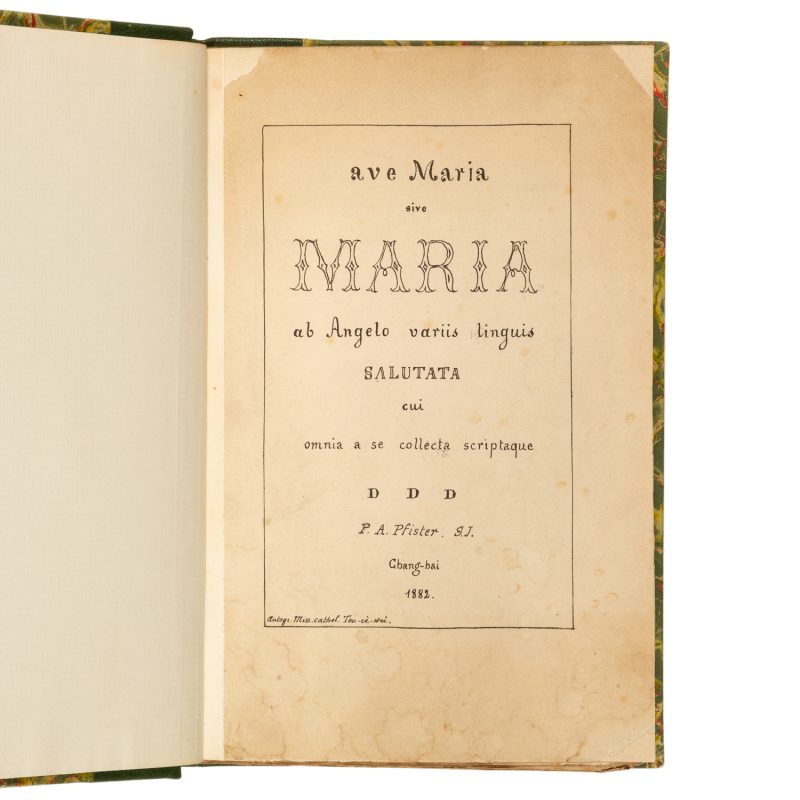
[KAURNA WARRA] Ave Maria, sive Maria ab Angelo variis linguis salutata, cui omnia a se collecta scriptaque D D D, P. A. Pfister, S.J.
$15,000.00 AUD
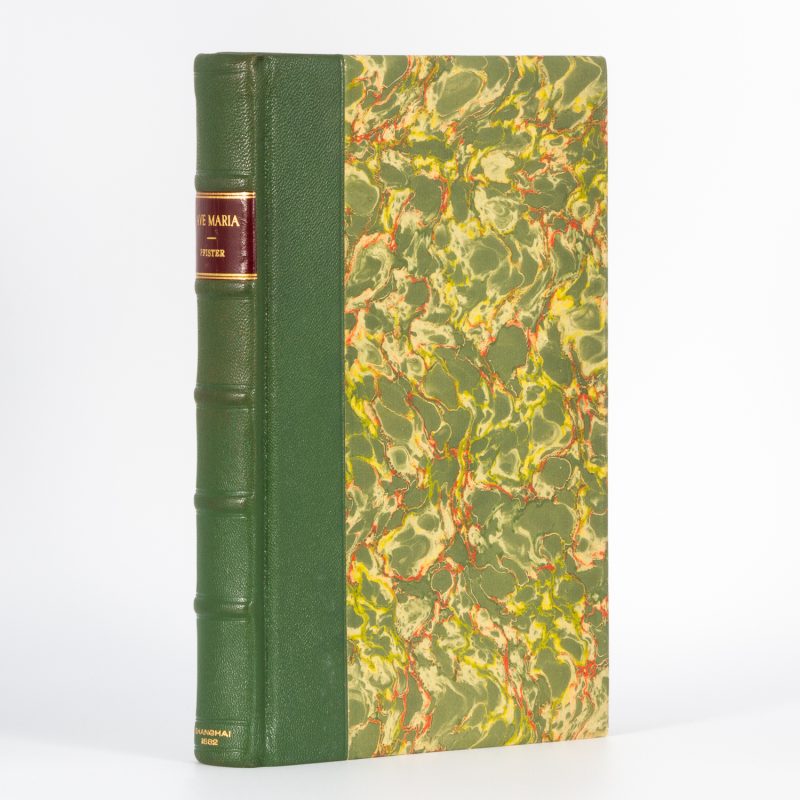
Chang-hai [Shanghai] : Mission catholique de Tou-cé-wei, 1882. Small quarto (260 x 180 mm), recent quarter morocco over marbled papered boards, spine with raised bands and contrasting title label lettered in gilt; lithographically printed manuscript on leaves folded in the traditional Chinese manner; title-leaf, pp. [340], 15 (index); partly unopened; both the title-leaf and the final leaf of the index have been re-margined, with some restoration at corners, otherwise sound and clean throughout.
With a translation of the Ave Maria from Latin into Kaurna Warra, the language of the Kaurna people of the Adelaide Plains.
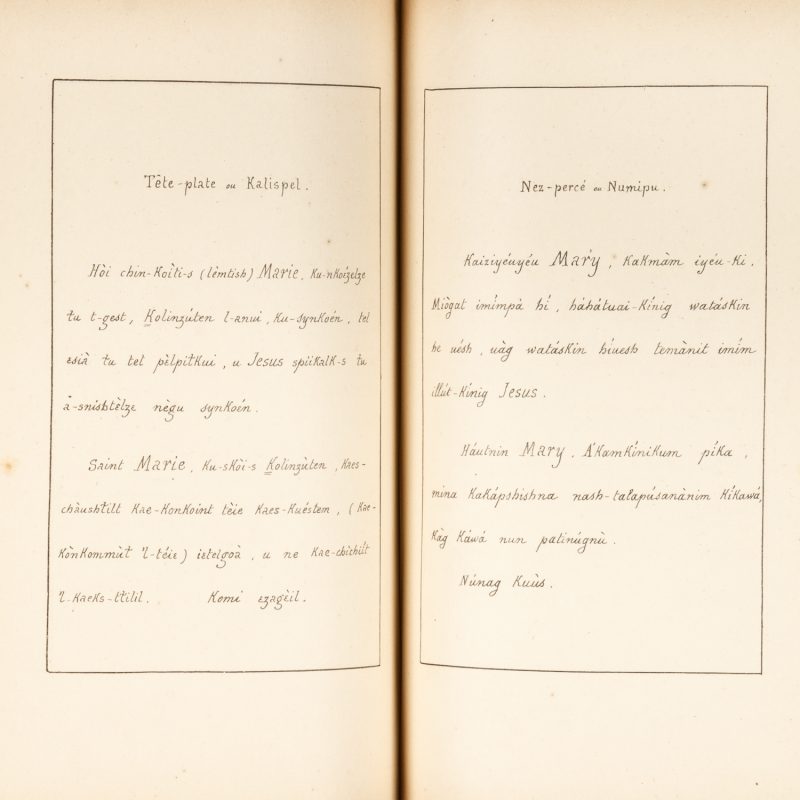
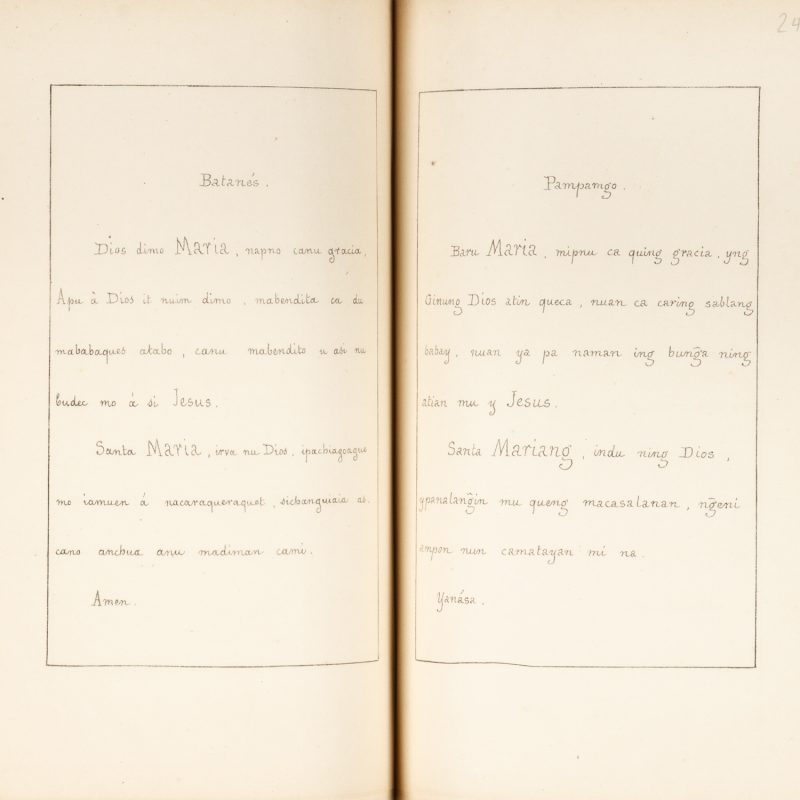
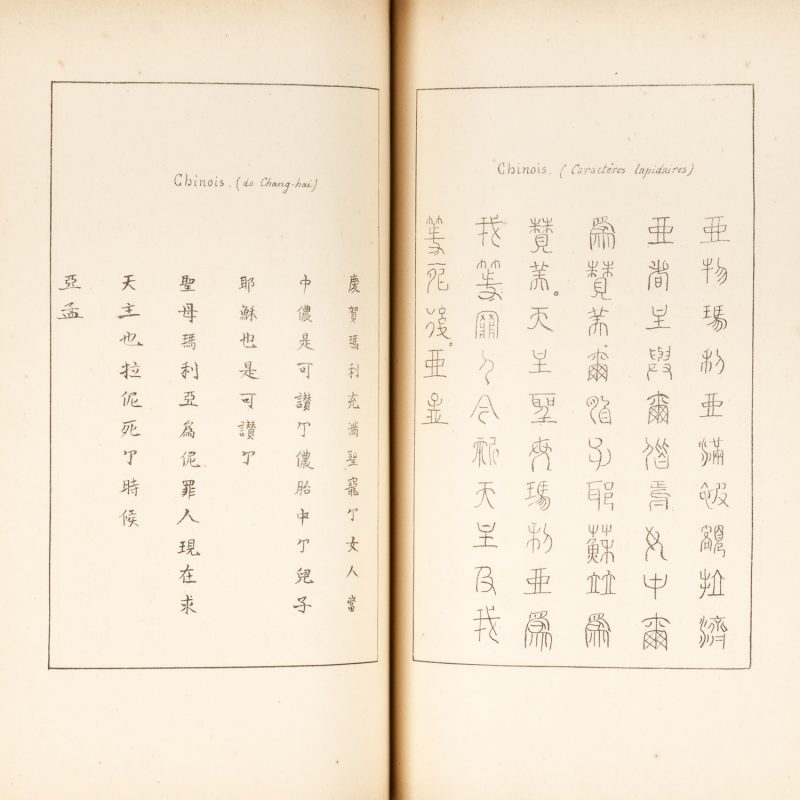
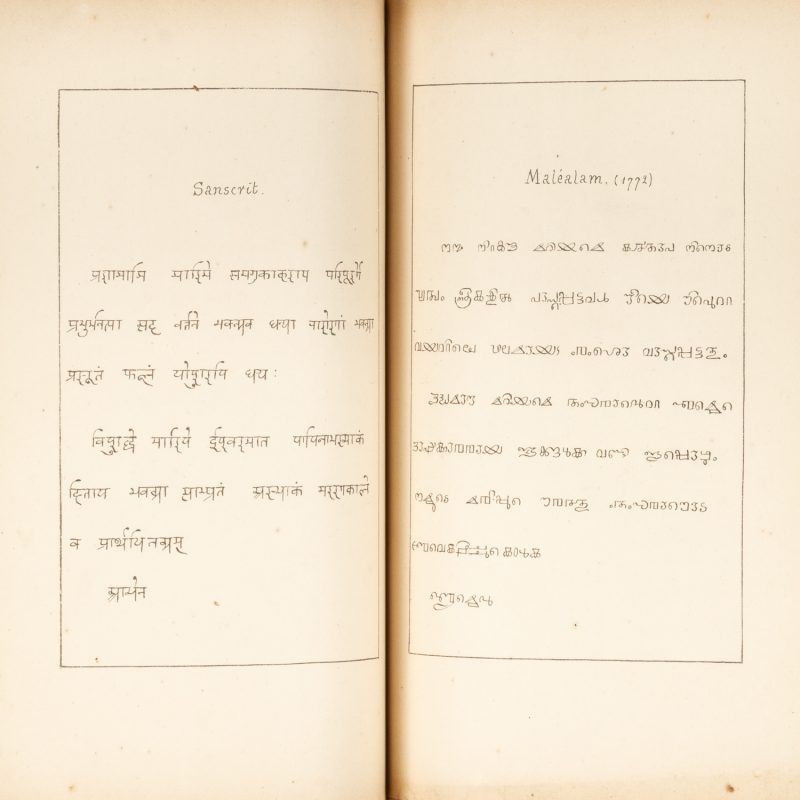
The rare sole edition of this eccentric religious work published by the Catholic Mission in Shanghai. It comprises the Ave Maria (Hail Mary) prayer handwritten in 340 different languages and dialects, employing wherever appropriate the original script for that particular language, and lithographically printed. The work reflects the breadth and depth of Catholic evangelism in all corners of the globe. It was compiled by the French Jesuit missionary, linguist, historian and sinologist Fr. Aloys (Louis) Pfister (1833-1891), also known by his Chinese name Fei Laizhi (Chinese: 費賴之 / 费赖之), who served as librarian at the Catholic Bibliotheca Zikawei of Shanghai (now the Xujiahui Library). Pfister’s project was an extraordinary undertaking, and its publication a remarkable achievement. The great sinologist and bibliographer Henri Cordier paid tribute to him in his essay In memoriam: Aloys Pfister, S.J. (Leiden : Brill, 1891) – although the present work was apparently unknown to Cordier, as it is not included in his Bibliotheca Sinica.
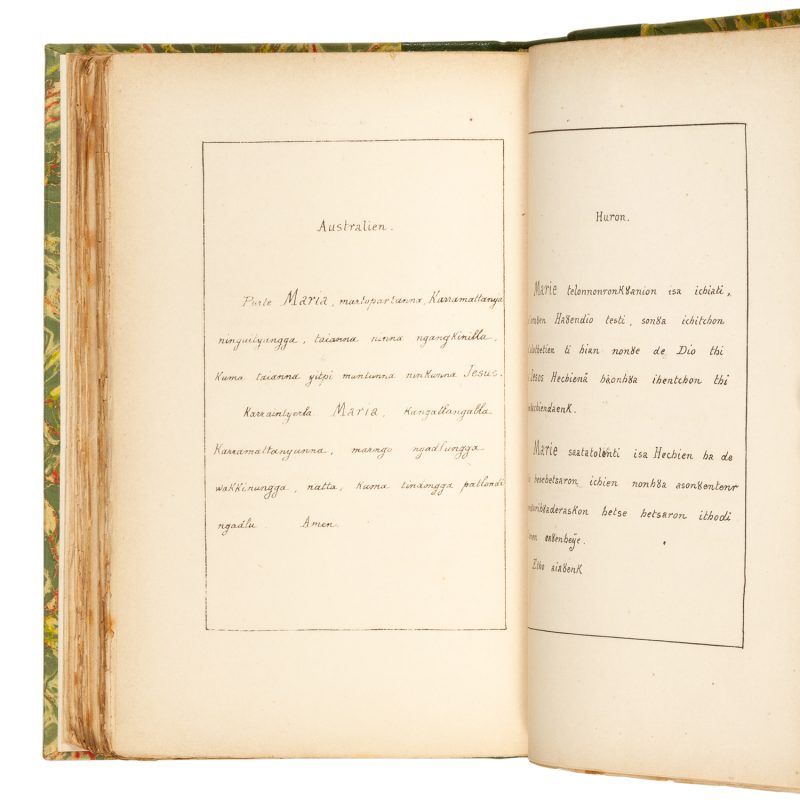
A large number of the languages represented in Pfister’s work are those of the indigenous peoples of the Americas, Asia, and Africa. These linguistic exemplars, we imagine, must have been gleaned by Pfister through consulting texts in the Bibliotheca Zikawei, but they may well also have been supplemented through correspondence with fellow Catholic missionary-linguists acting as language informants. From Huron, Iroquois, Quechua and Guarani, to Malay, Bisaya, Pampango, and Cantonese, to Malagasy, Tswana, Shilluk and Wolof, the array of exotic languages is testament to the inquisitiveness and linguistic talents of many of the Catholic missionaries in places that included some of the most remotely located from Europe on earth. There is even a rendering of the prayer in an Australian Aboriginal language which, although generically described as ‘Australien‘, is the Kaurna Warra (language) spoken by the Kaurna Miyurna (people), who are the Yaitya mathanya (traditional owners/custodians) of Wama Tarntanya (the Adelaide Plains):
‘Purte Maria, martopartanna, karramattanya ninguityangga, taianna ninna ngangkinilla, kuma taianna yitpi muntunna ninkunna Jesus. Karraintyerla Maria, kangallangalla karramattanyunna, marngo ngadlungga wakkinungga, natta, kuma tindongga patlondi ngadlu. Amen.‘ (p. [264])
This translation of the Ave Maria from Latin into Kaurna Warra is likely to have been made by German Jesuit missionary and naturalist Johann Nepomuk Hinteröcker (1820-1872), who arrived in South Australia in 1866 and settled at Sevenhill in the Clare Valley. It would appear that the translation is based on the grammar and vocabulary of Lutheran missionaries Teichelmann and Schürmann, which had been published as early as 1840, as the spellings in the translation, with occasional small divergences, are largely consistent with those used in their work.
OCLC locates only a handful of copies of Ave Maria, sive Maria ab Angelo variis linguis salutata; the Rare Book Hub database yields no sale record.
Sommervogel VI, 657/4