


# 51030
LUBACH, D. & LOGEMAN, W. M.
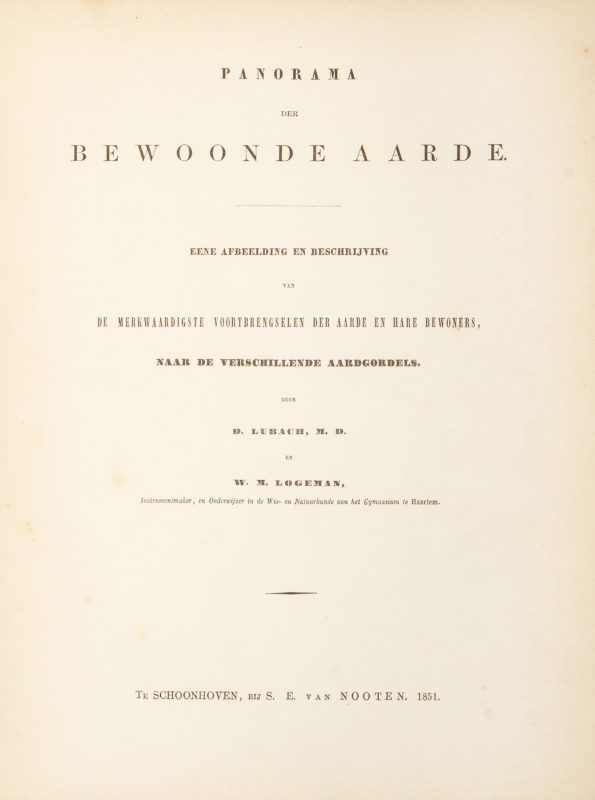
Panorama der bewoonde aarde. Eene afbeelding en beschrijving van de merkwaardigste voortbrengselen der aarde en hare bewoners, naar de verschillende aardgordels.
$750.00 AUD
/ door D. Lubach en W. M. Logeman. Schoonhove : S. E. van Nooten, 1851. First edition. Quarto (295 x 225 mm), publisher’s blind-blocked green cloth (boards rubbed and with scattered marks), spine lettered in gilt (sunned, ends frayed, outer hinge split near head); both inner hinges split; pp. i-xxviii, 1-180; illustrated with 10 folding chromolithographed plates, 1 folding coloured map, and several engraved text figures in the introductory section; text in Dutch; occasional toning, plates very bright but with light foxing to margins, and heavier foxing to versos.
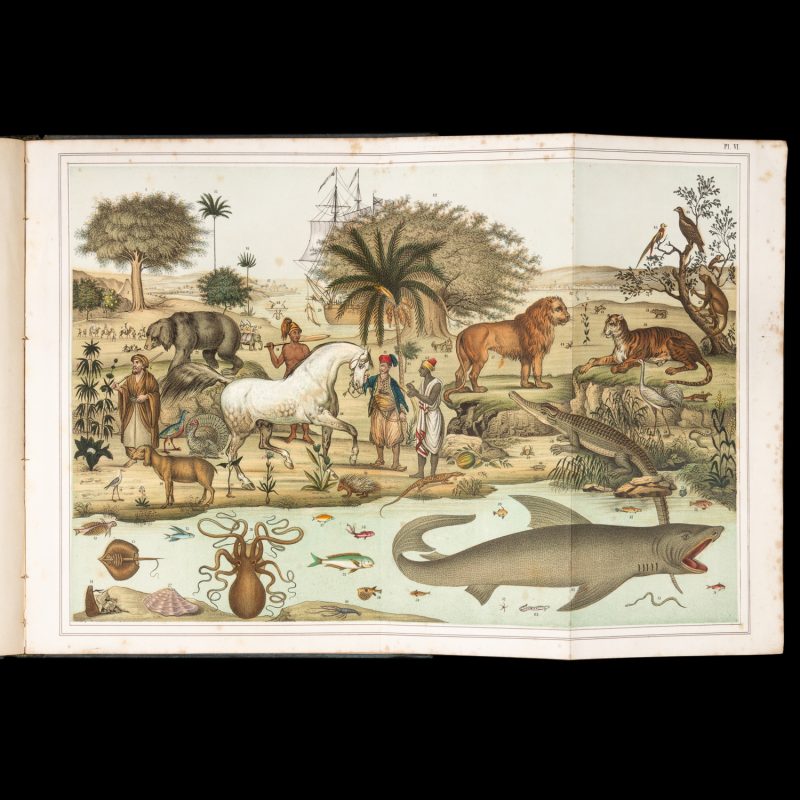
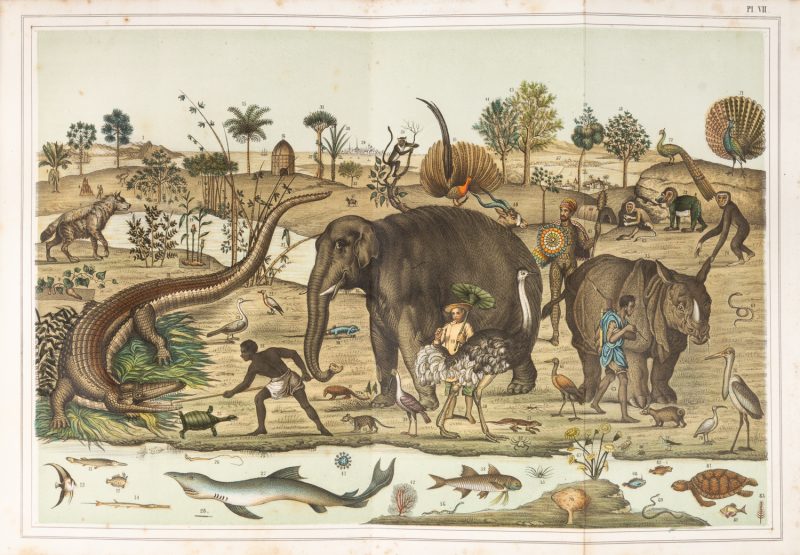
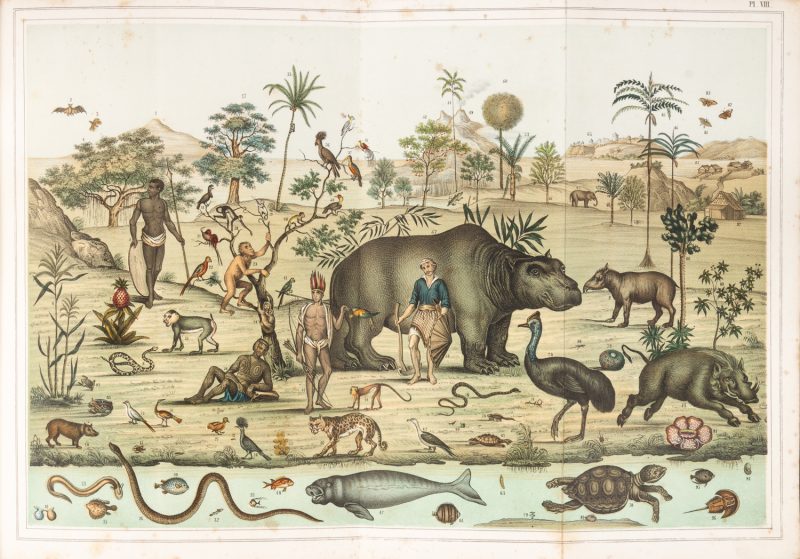
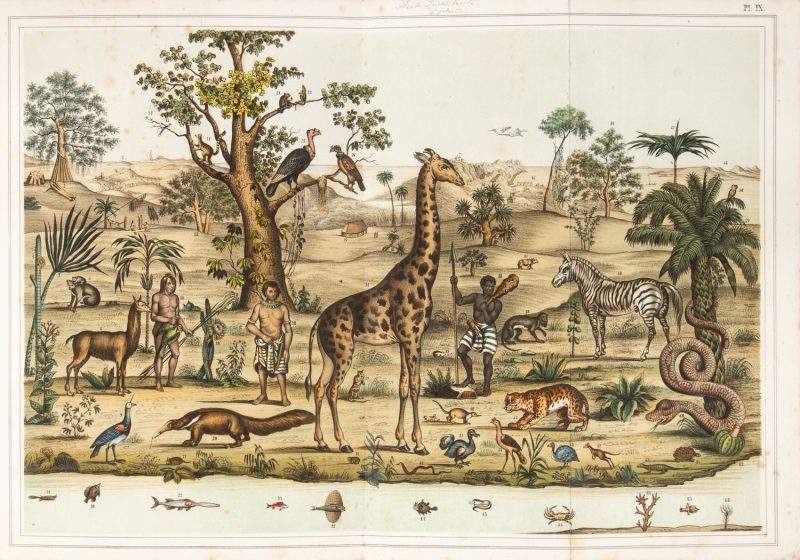
A beautifully illustrated pedagogical introduction to zoology and ethnology (and to a lesser extent, botany) with ten attractive folding plates by O. D. Emrik depicting the creatures and peoples inhabiting the earth’s various climatic zones, accompanied by detailed explanatory text.
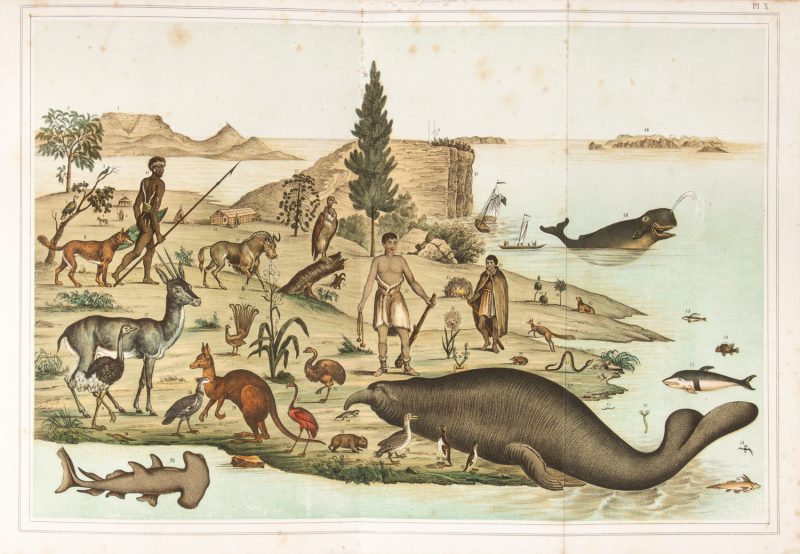
Plate X contains 54 representations of racial types and animals of the southern temperate zone, including a native of New Holland (after Baudin’s voyage artist, Nicolas-Martin Petit) accompanied by a dingo; a lyrebird, kangaroo, wallaby, emu, echidna, wombat, and Xanthorrhoea (grass tree); a New Zealand Māori; and a native of Patagonia with a hunting weapon bola (and, fancifully, a Marquesan club).
‘These fifty-four different men and beasts of the southern temperate zone include a sperm whale and an orca. The “laughing” sperm whale is a recurring image in nineteenth-century general natural history prints and dates from Bonnaterre (Paris, 1789)’ (Ingalls, Elizabeth. Whaling Prints in the Francis B. Lothrop Collection, Salem : Peabody Museum, 1987, no. 426).
Trove locates no copies in Australian libraries.

