


# 50060
ROGERS, Captain Woodes
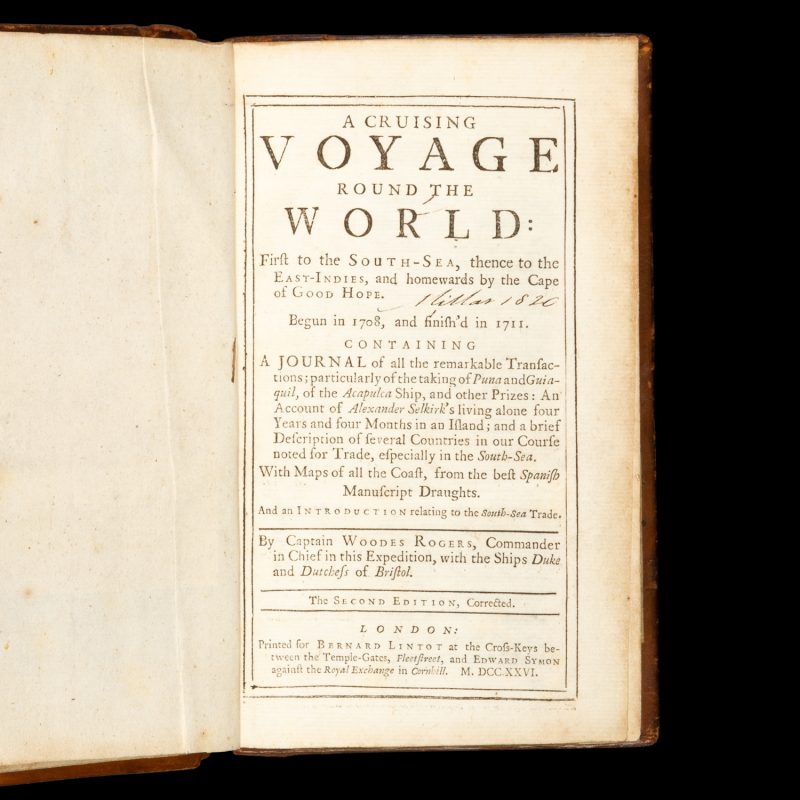
A cruising voyage round the world : first to the South-Sea, thence to the East-Indies, and homewards by the Cape of Good Hope. Begun in 1708, and finish’d in 1711.
$3,000.00 AUD
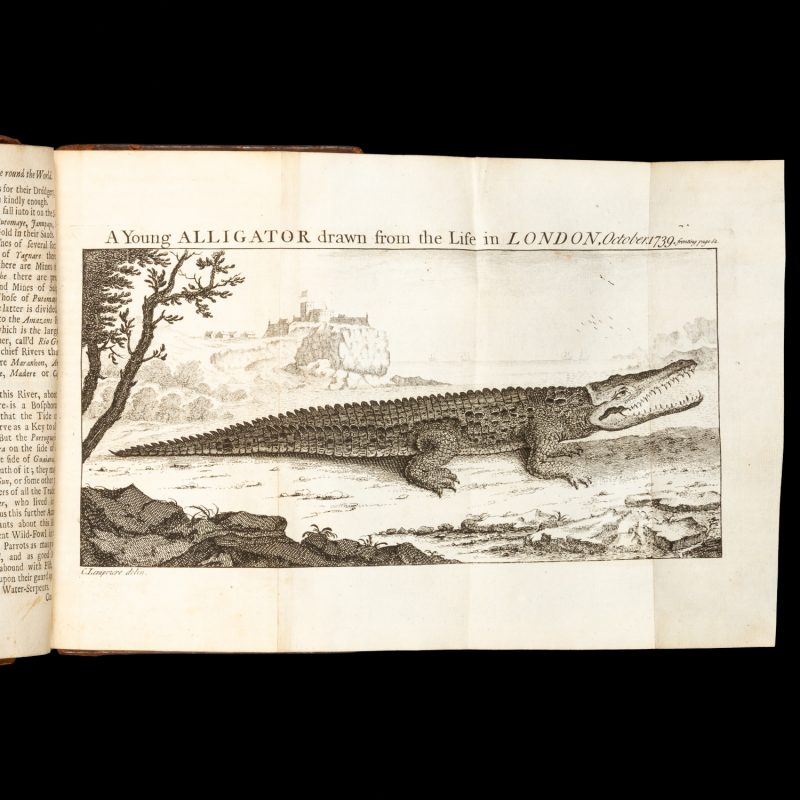
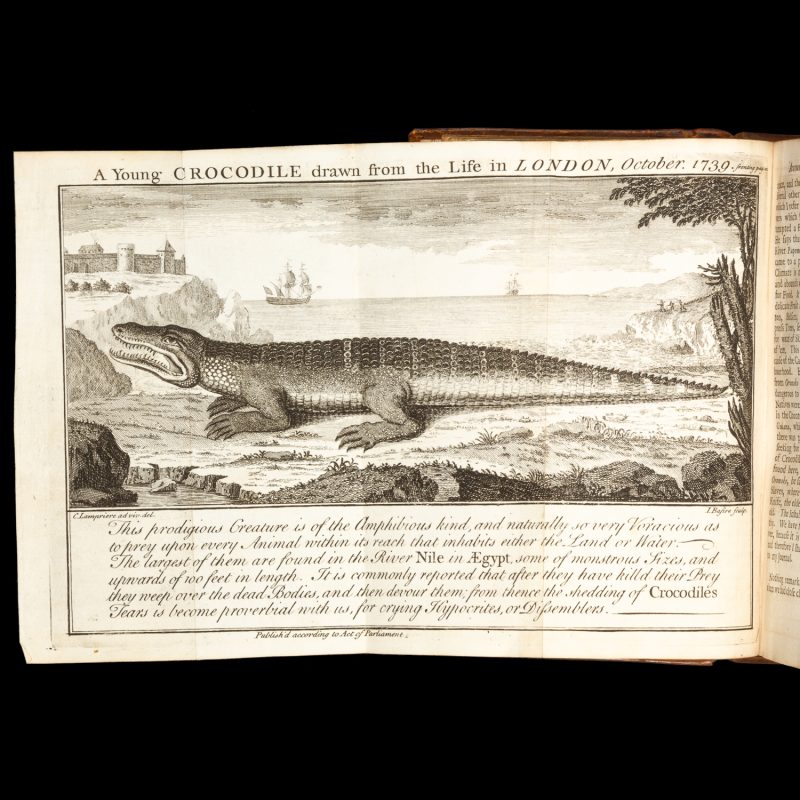
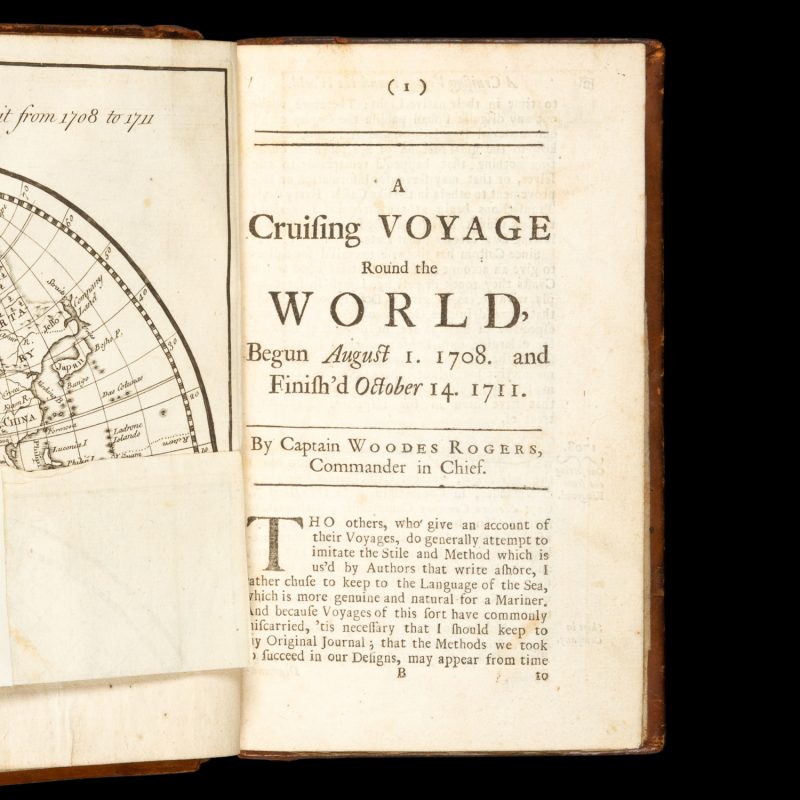
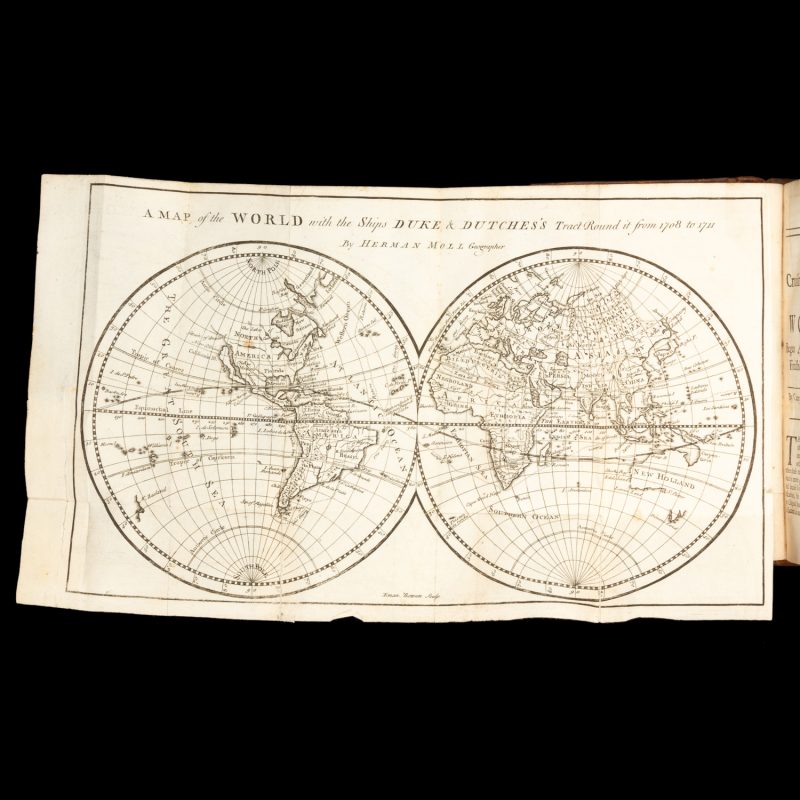
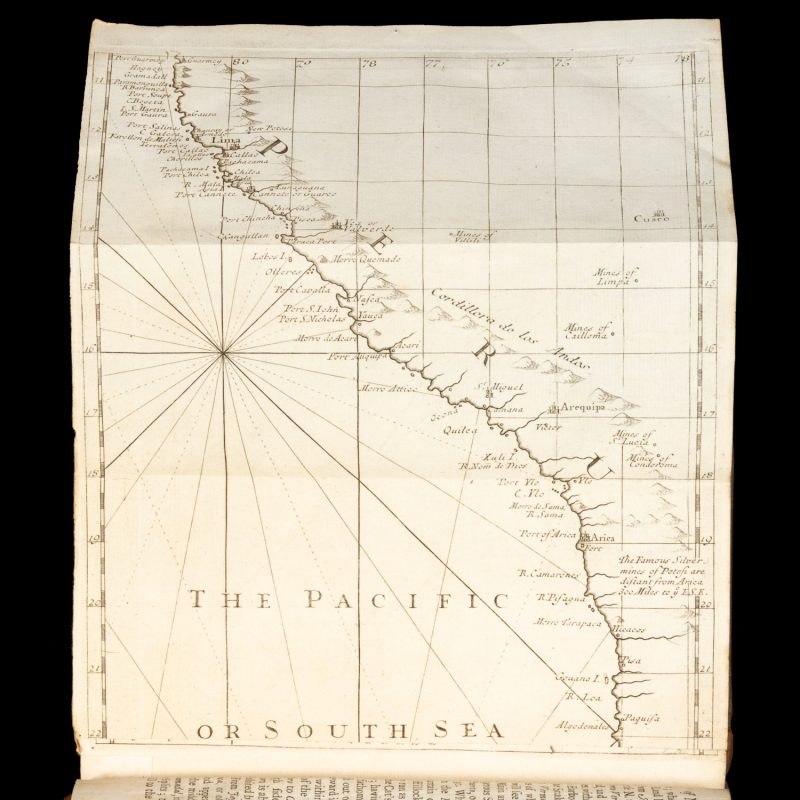
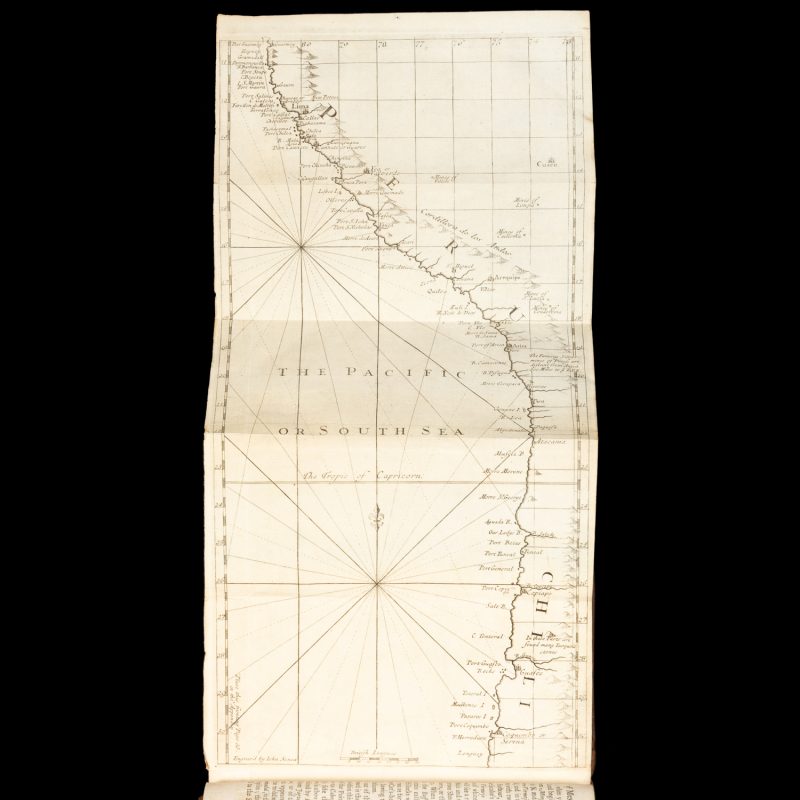
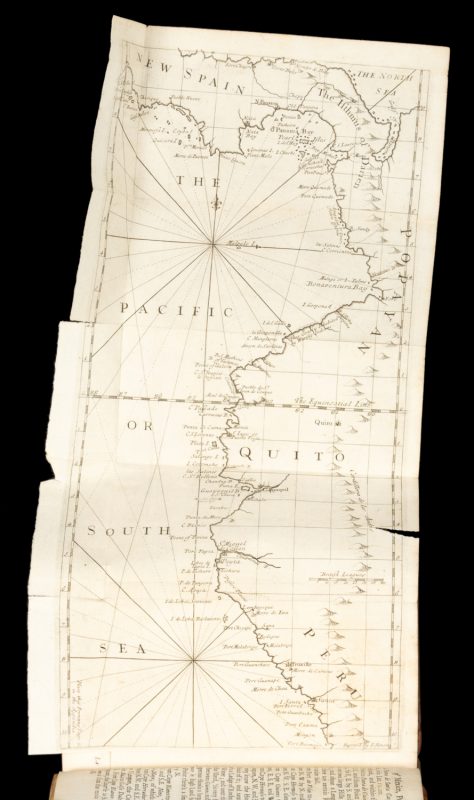
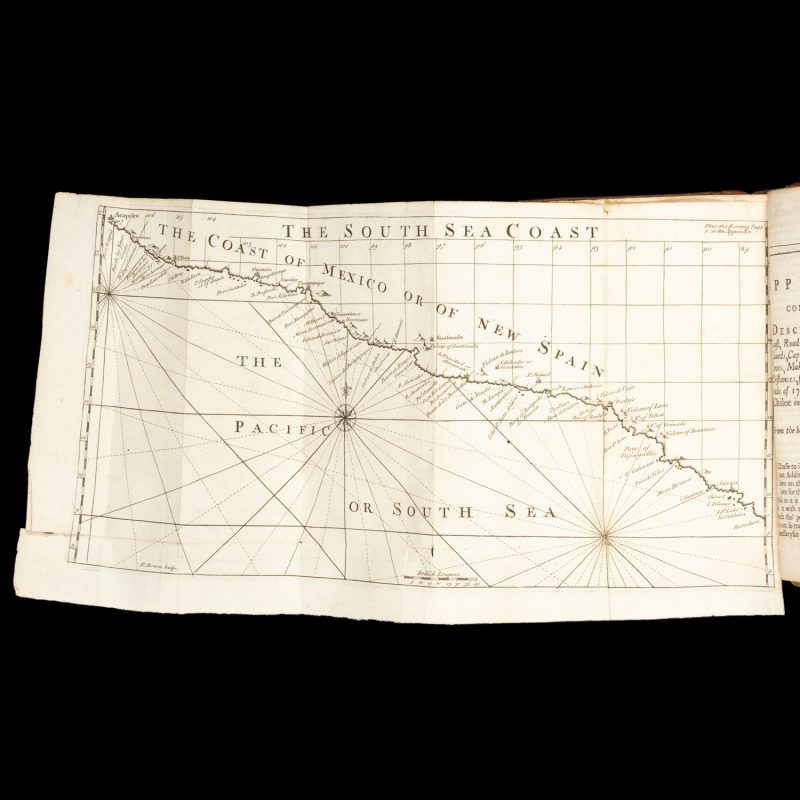
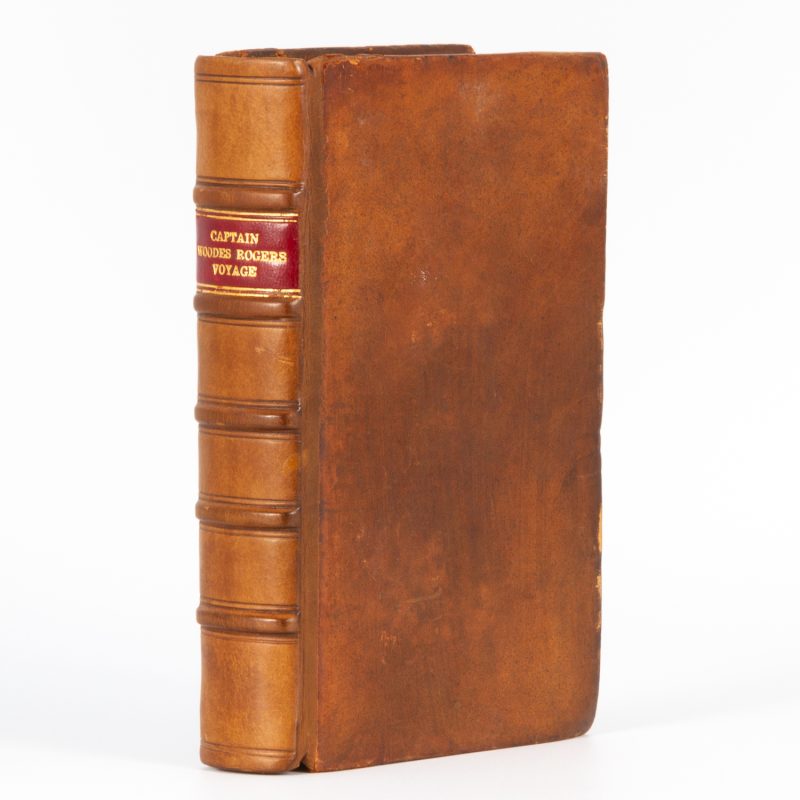
Containing a journal of all the remarkable transactions; particularly of the taking of Puna and Guiaquil, of the Acapulca ship, and other prizes : an account of Alexander Selkirk’s living alone four years and four months in an island; and a brief description of several countries in our course noted for trade, especially in the South-Sea. With maps of all the coast, from the best Spanish manuscript draughts. And an introduction relating to the South-Sea trade. By Captain Woodes Rogers, Commander in Chief in this expedition, with the ships Duke and Dutchess of Bristol. The second edition, corrected. London : Printed for Bernard Lintot at the Cross-Keys between the Temple-Gates, Fleetstreet, and Edward Symon against the Royal Exchange in Cornhill, 1726. Octavo (200 x 130 mm), early calf rebacked; front pastedown and endpaper with 20th-century bookplates of David Murray; pp. xix, [1 blank], 428, 1-57 (Appendix), [7 Index]; complete with the 5 folding maps (including the double-hemisphere map by Moll, the Emanuel Bowen map of the coast of Mexico, and three by John Senex) and 2 folding plates, all in excellent condition; a clean, crisp example.
Second edition (first published in 1712) of one of the classics of buccaneering literature.
‘After sailing down the coast of Brazil and rounding Cape Horn, [Rogers] made for the deserted island of Juan Fernandez to seek shelter from a severe storm. There Rogers rescued the celebrated Alexander Selkirk, a Scot who had been marooned several years before… who has been immortalized as the prototype for the title character in Daniel Defoe’s Robinson Crusoe. An account of Selkirk’s true adventures is given. The expedition then cruised the coast of Peru, taking various prizes, reached California, and crossed the Pacific to Asia. The high point of this circumnavigation was the capture of the Manila galleon, in 1709, at Puerto Seguro’ (Hill).
Sabin 72753; Hill (2004) 1479; Howes R421


