


# 51363
JOHNSON, Samuel (1709-1784)
A Dictionary of the English Language :
$1,500.00 AUD
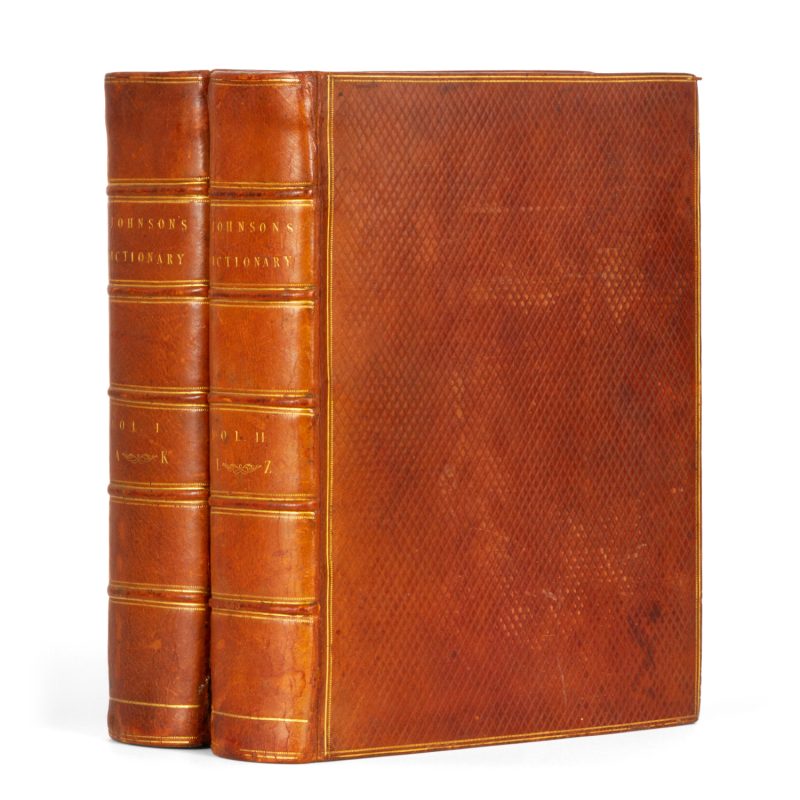
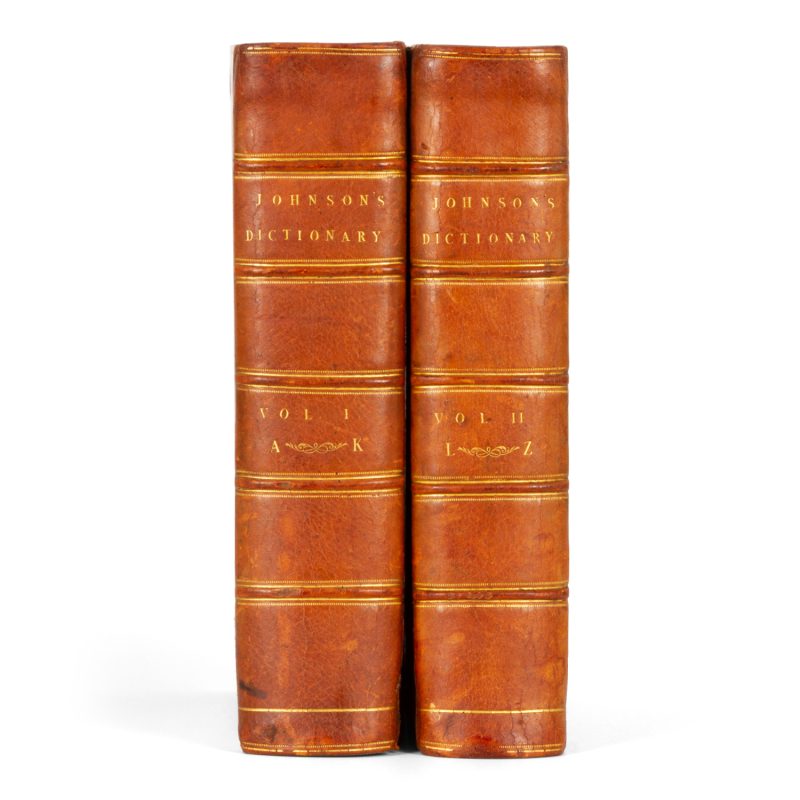
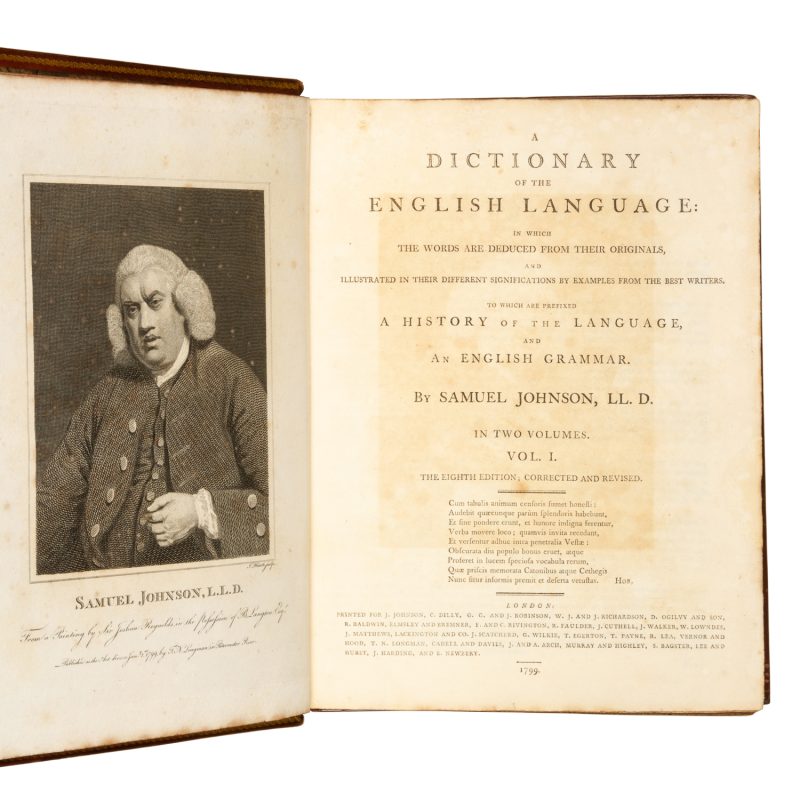
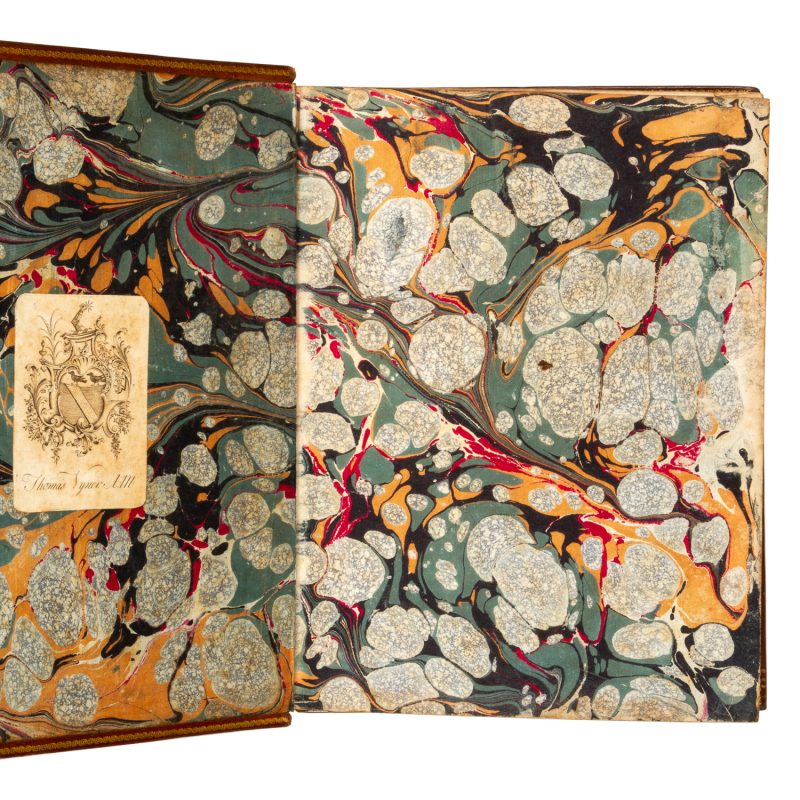
in which the words are deduced from their originals, and illustrated in their different significations by examples from the best writers. To which are prefixed, a history of the language, and an English grammar. By Samuel Johnson, A. M. In two volumes. London : Printed for J. Johnson … [et alia], 1799. The eight edition; corrected and revised. Two volumes, quarto (290 x 230 mm),contemporary diced russia, ruled in gilt, spines in six compartments with gilt-tooled decoration, title and volume numbers (cracked joints discretely repaired), speckled edges, marbled endpapers, front pastedowns each with armorial bookplate of Thomas Vyner A.M.; preliminary blanks, half-titles, portrait frontispiece of Johnson by Heath after Sir Joshua Reynolds’ original painting in the first volume, unpaginated, a couple of small marginal stains, pale foxing and browning, else a fine set in a solid period binding.
The eighth edition of first standard English dictionary, first published in 1755.
The immense significance of Johnson’s achievement in compiling the Dictionary was recognised even at the time of its publication by such illustrious commentators as Dr. Boswell and Adam Smith. Although it was surpassed as a reference work with the appearance in 1884 of the Oxford Dictionary, it is yet regarded as a foundational work in the English literary canon and has remained among its most celebrated.
‘… a monument of industry and talent [and] the unrivalled authority for the English language‘ (Courtney and Smith).
‘I have … attempted a dictionary of the English language, which, while it was employed in the cultivation of every species of literature, has itself been hitherto neglected, suffered to spread, under the direction of chance, into wild exuberance, resigned to the tyranny of time and fashion, and exposed to the ignorance, and caprices of innovations‘ (Preface).
‘In 1746 Johnson entered into an agreement with a group of London booksellers to write an English dictionary, and began work the same year with only six assistants to aid him. A year later he published a plan for the dictionary in which he outlined his reasons for undertaking the project and explained exactly how he intended to compile his work … Johnson projected that the scheme would take about three years, but he seriously underestimated the scale of the work involved, and in the end it took him three times this length of time to write over 40,000 definitions and select nearly 114,000 illustrative quotations from every field of learning and literature. Although little is known about how Johnson actually assembled his Dictionary i.e. what sources he used to compile his word list or how he went about selecting the quotations, it has been established that he, like most other lexicographers, relied at least in part on the work of his predecessors. A general history of the English dictionary usually begins with Cawdrey’s A Table Alphabeticall (1604), but it is possible to trace the origins of the dictionary back a lot further than this…’ (Glasgow University Library).


