


# 50981
LATHAM, John (1740 - 1897)
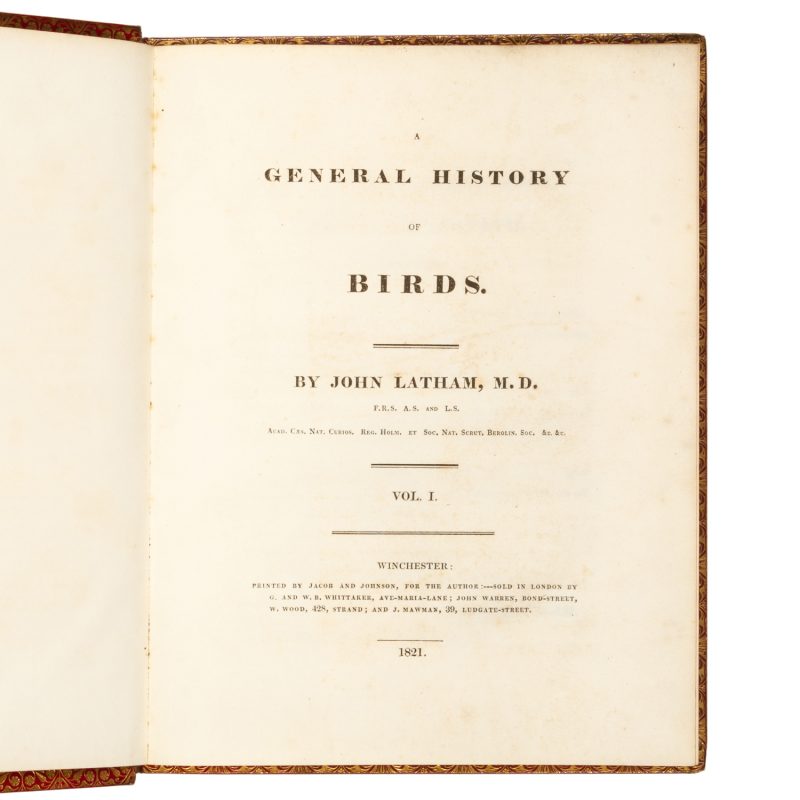
A General History of Birds. (Deluxe issue)
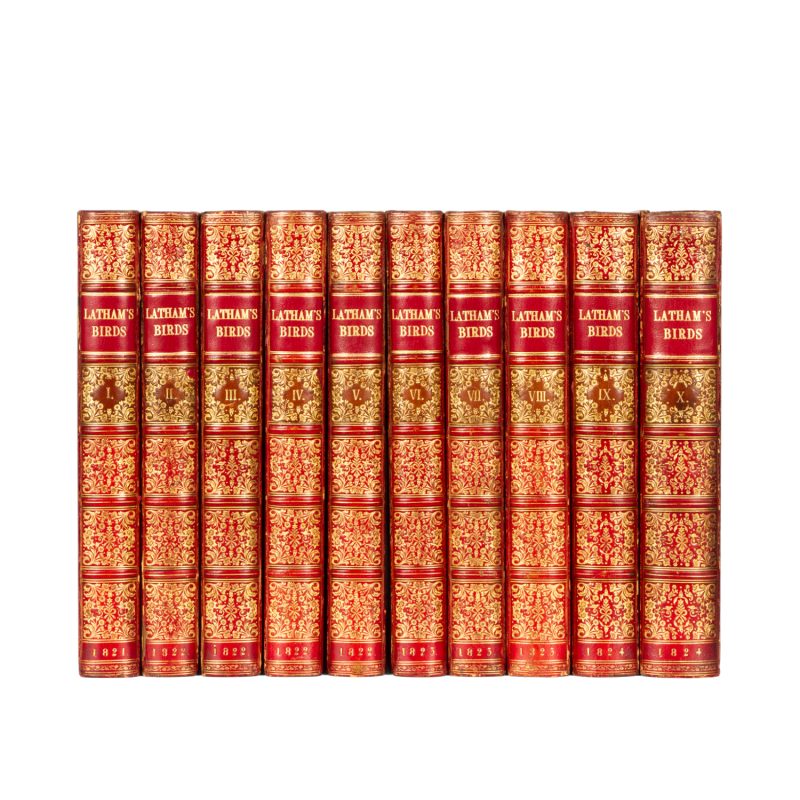
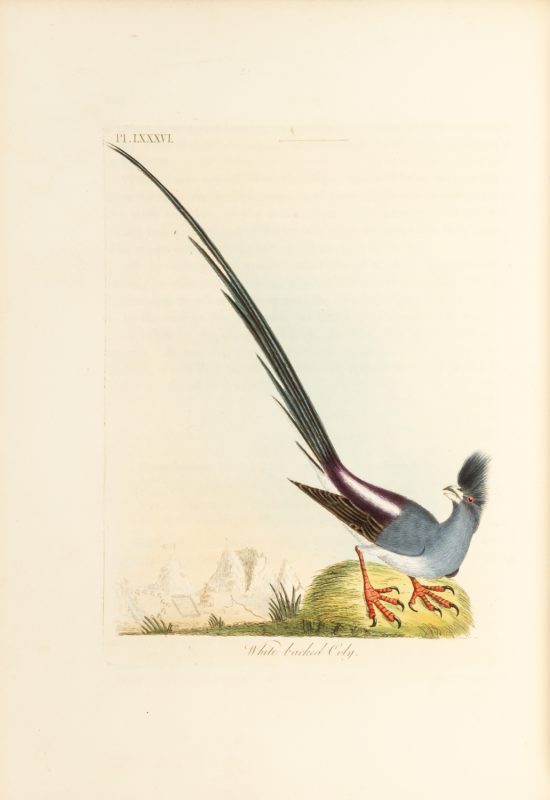
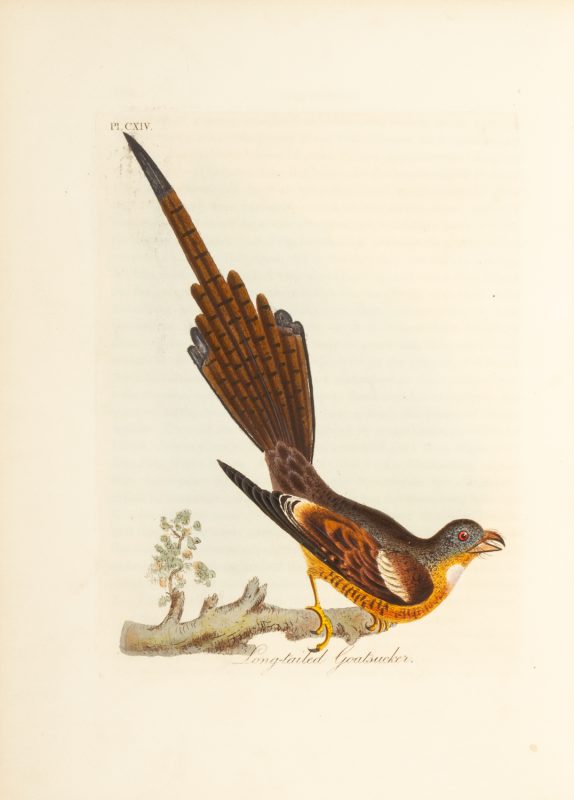
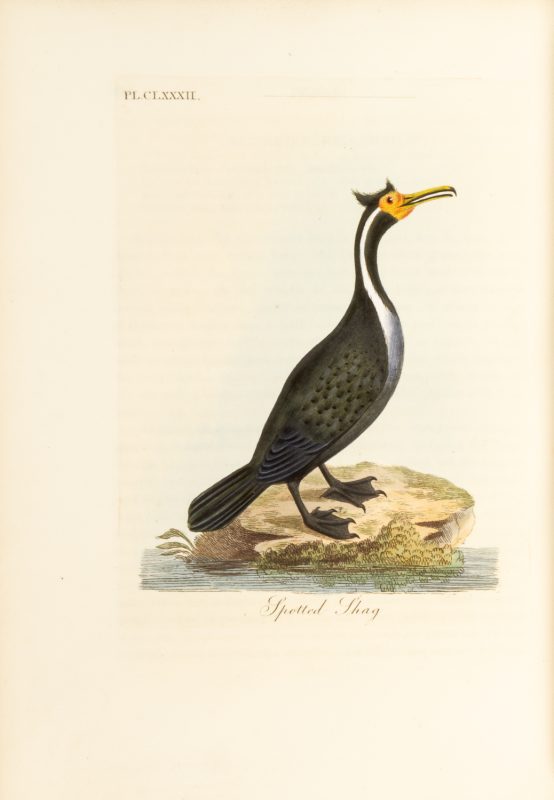
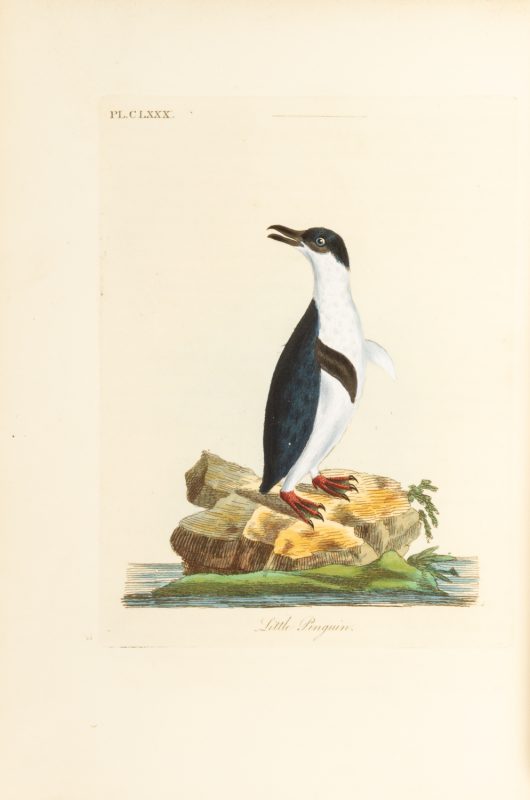
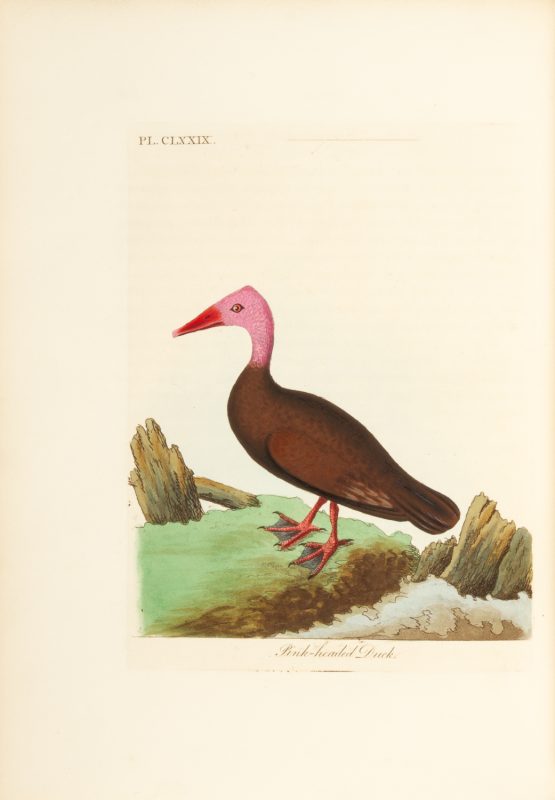
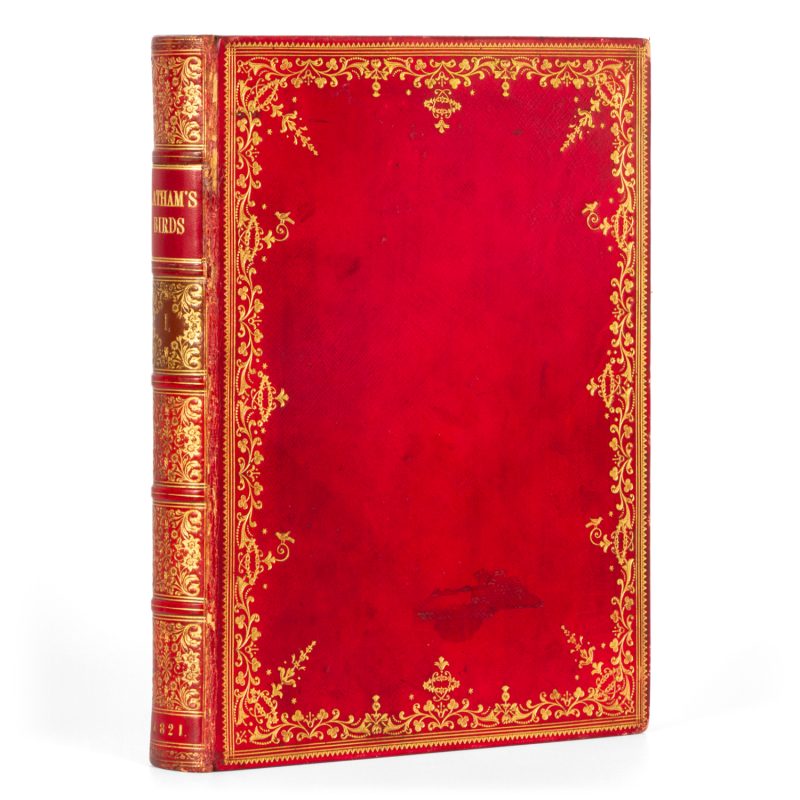
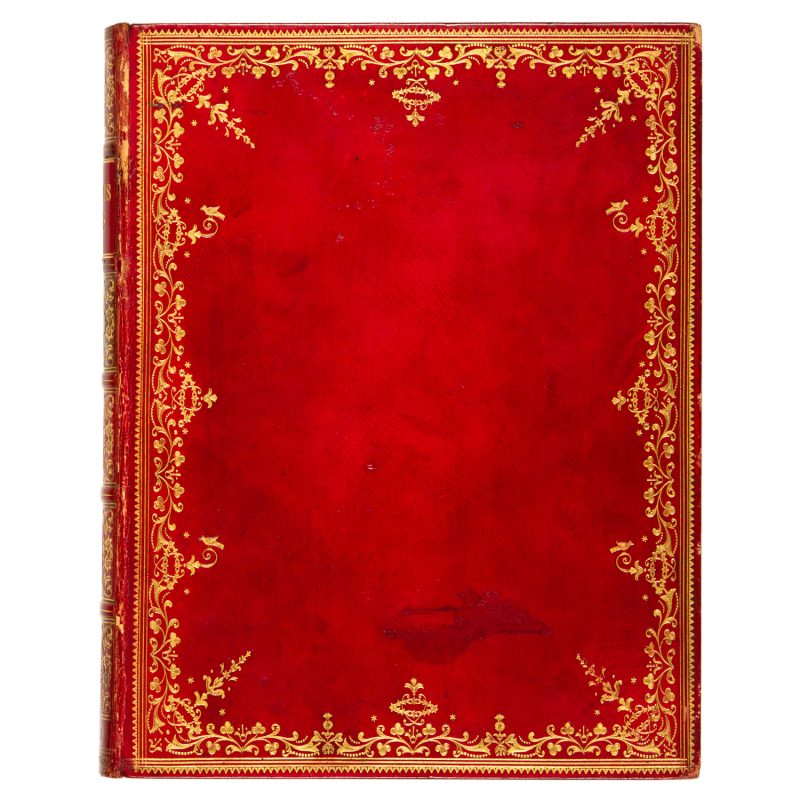
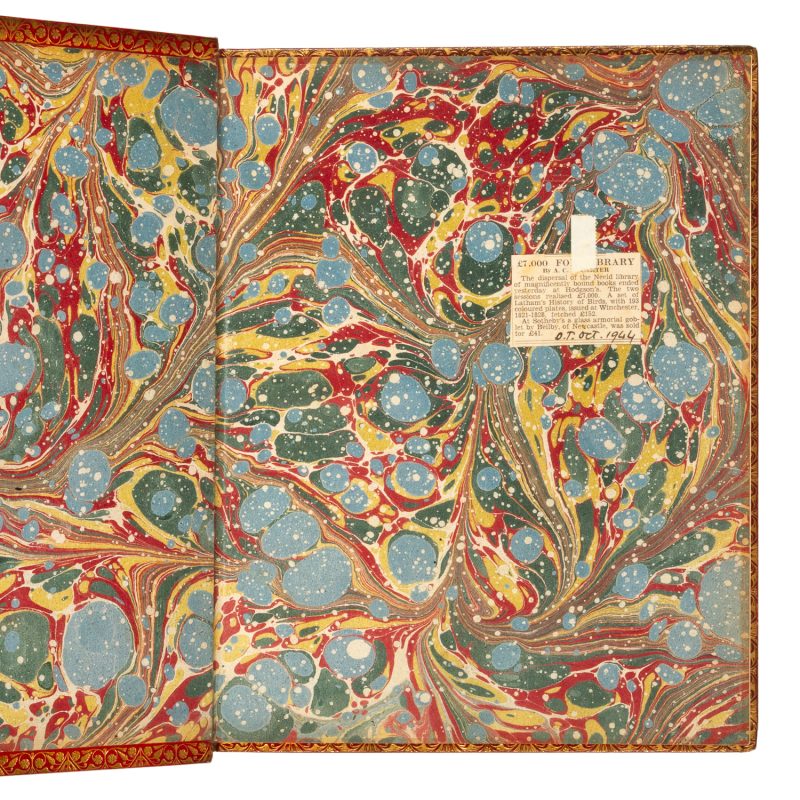
Winchester : printed by Jacob and Johnston for the author, and sold by G. and W. B. Whittaker, 1821-1828 (but the rare deluxe Bohn issue, London, circa 1840). Eleven volumes bound in ten (the eleventh being the index), quarto, in the publisher’s deluxe binding of full crushed red morocco (a green version was also available), with floriated edged border, spines in compartments with raised bands, elaborately tooled in gilt, contrasting morocco title labels; edges a little rubbed, all edges gilt; the extensive text illustrated with 193 etched plates finely coloured by hand in gouache (as distinct to the inferior watercolour of the standard issue); occasional pale foxing, a superb set.
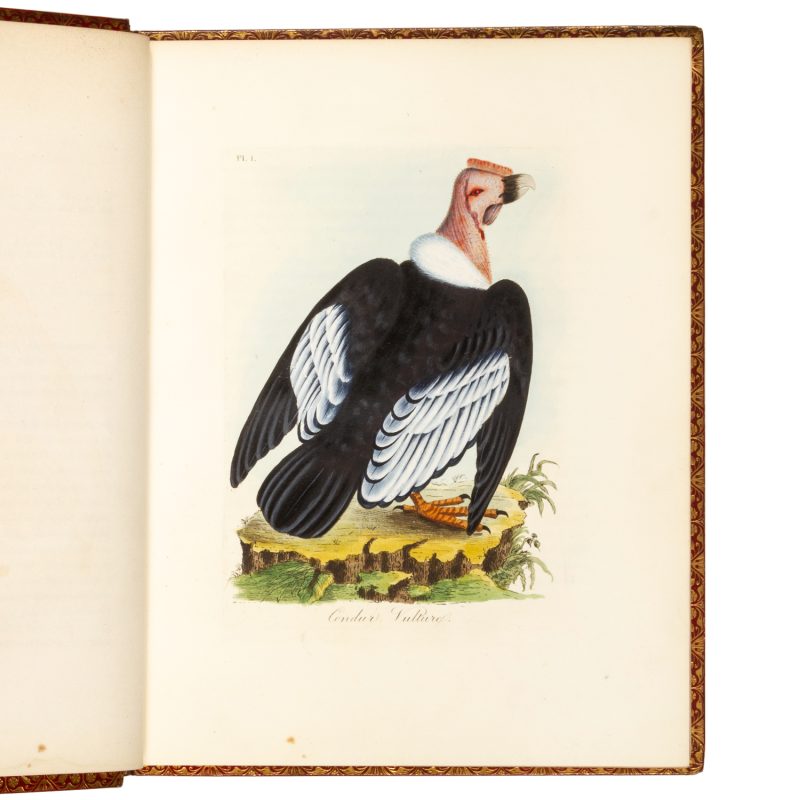
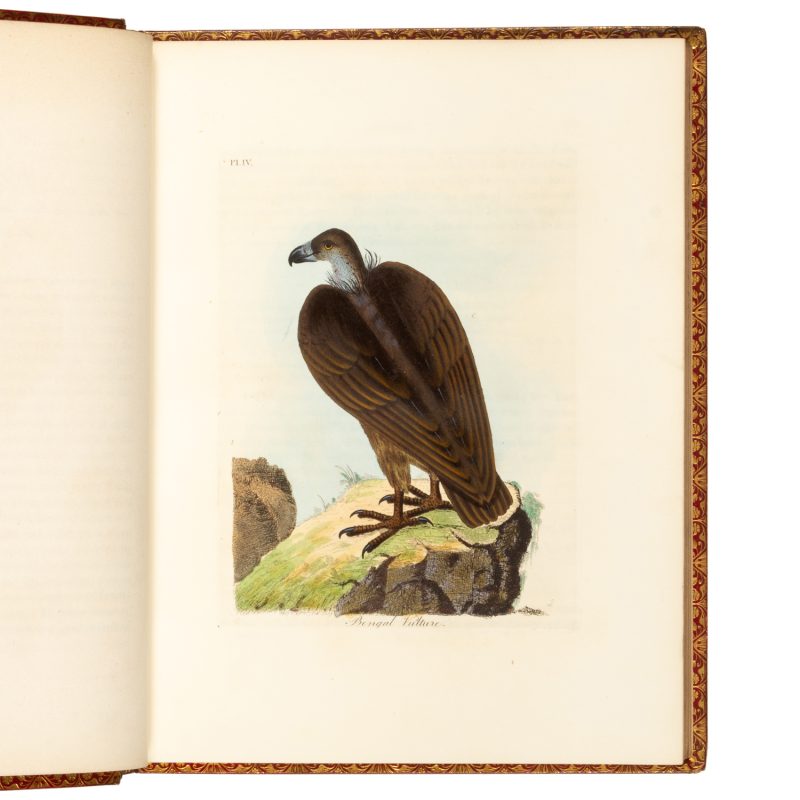
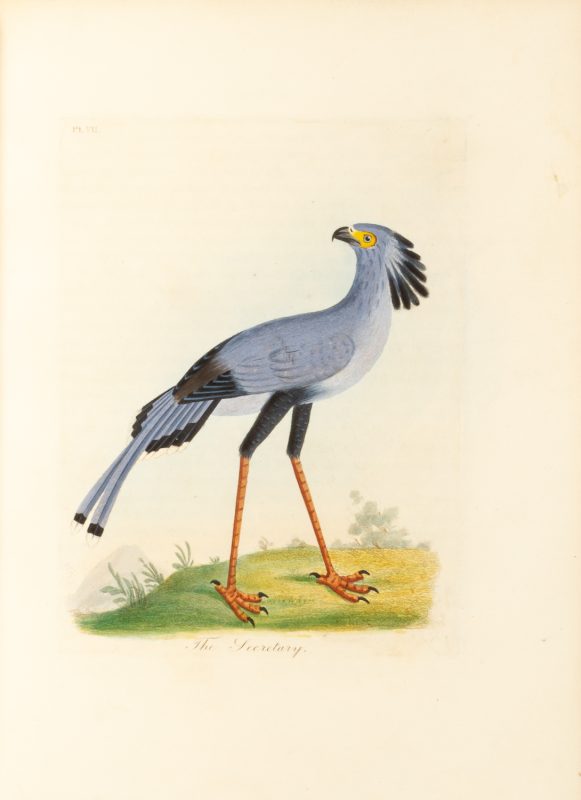
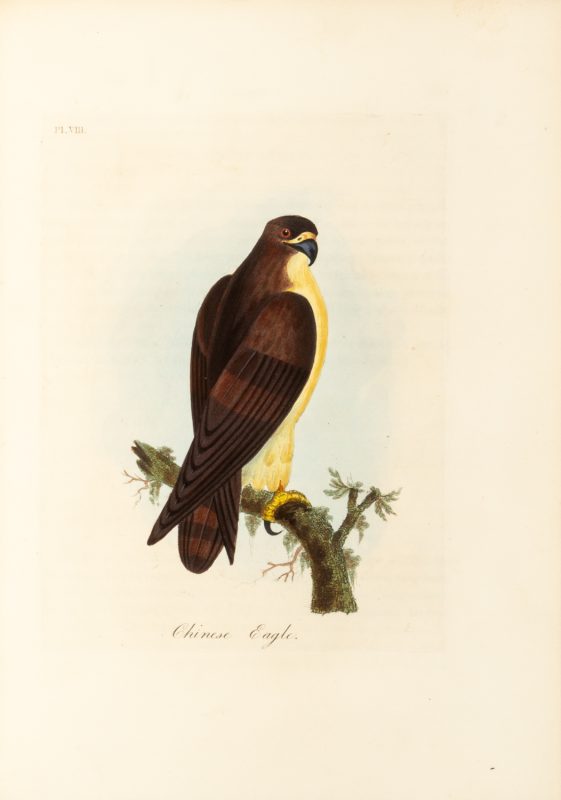
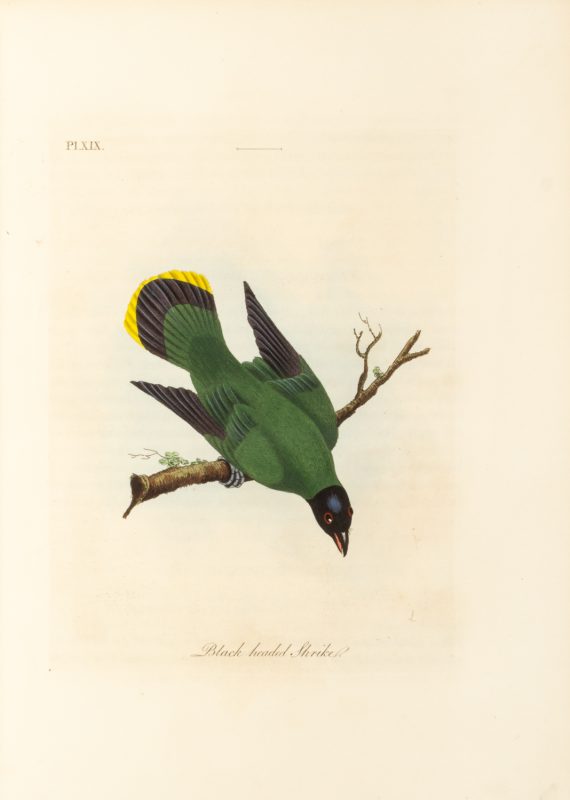
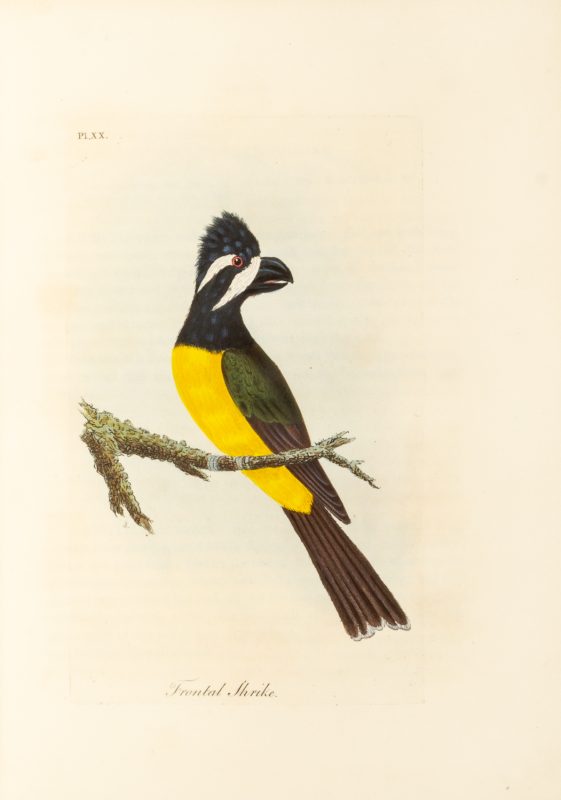
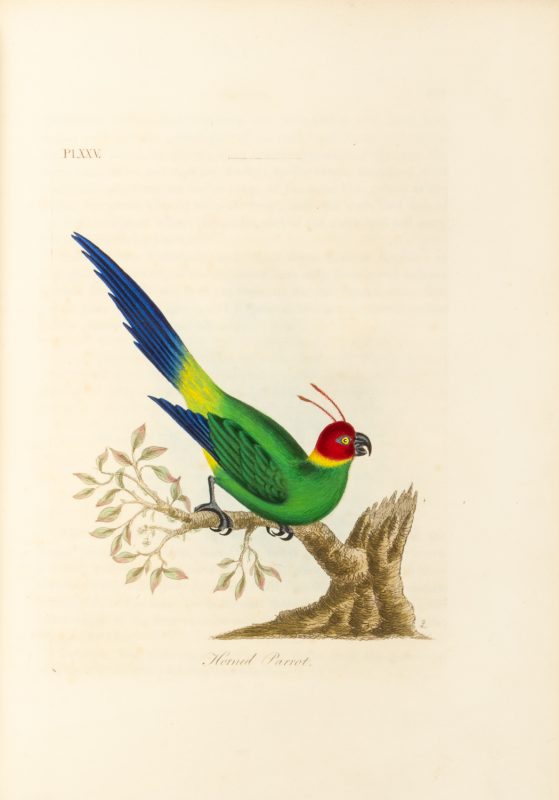
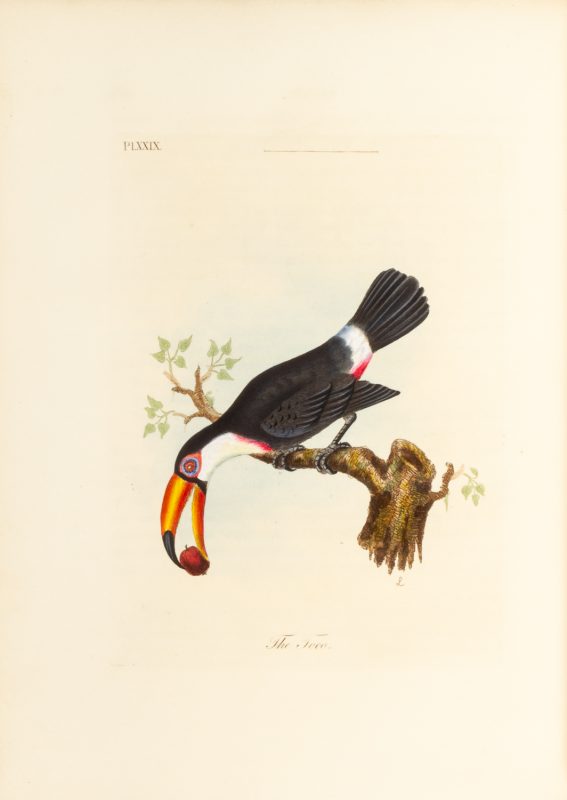
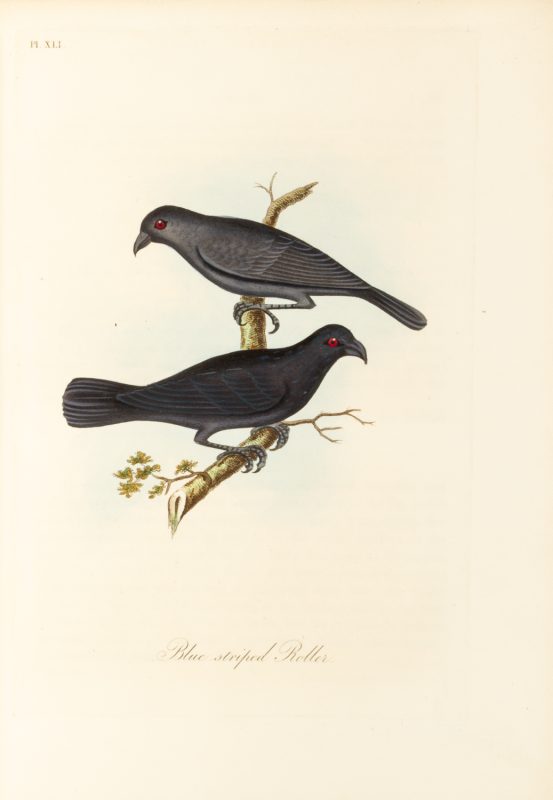
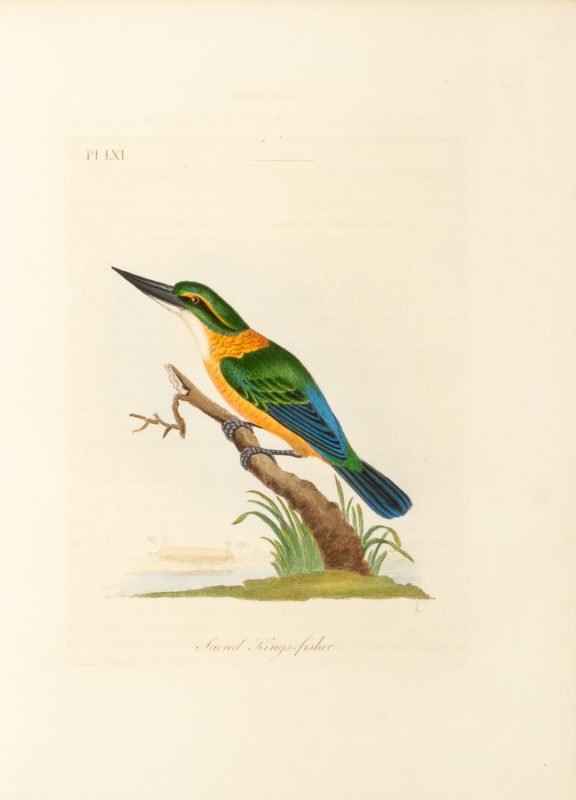
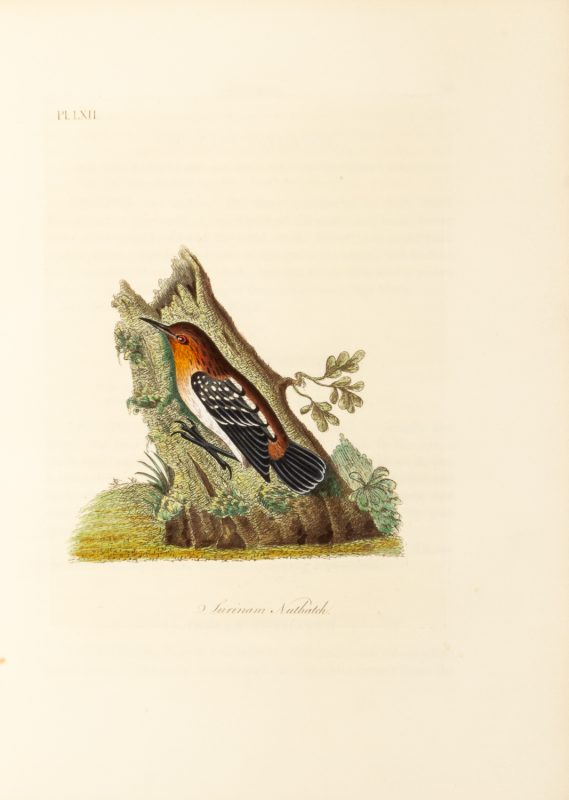
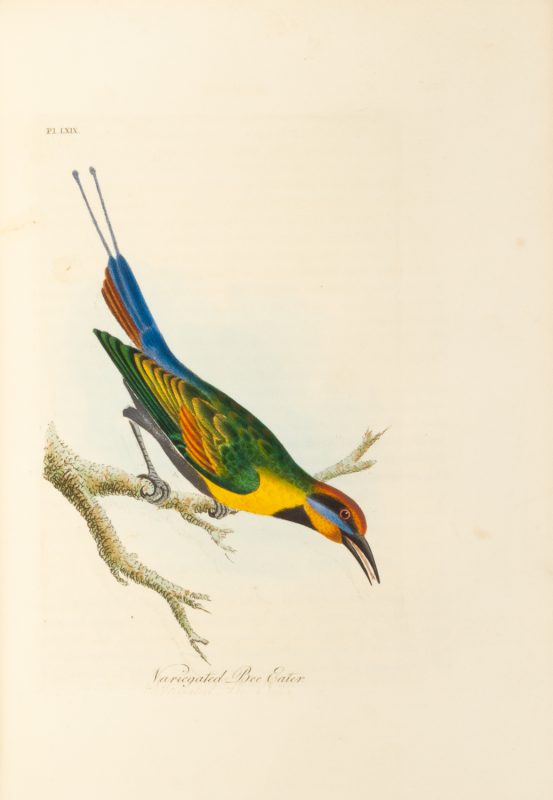
The rare deluxe edition, estimated to be fewer than 25 copies, with plates finished in gouache “like highly finished drawings”.
Latham’s A General History of Birds is one of the great illustrated bird books, and it contains a large number of species of Australian and Pacific interest. Latham was a highly experienced ornithologist and close associate of Sir Joseph Banks, Sir James Edward Smith, Thomas Pennant and Sir Ashton Lever, all members of the Linnaean Society, with whom he exchanged specimens of and reports on the latest ornithological discoveries. Regarded as the ‘Grandfather of Australian ornithology’ (Whittell), he was the first to describe, and to name scientifically, a large number of Australian birds, including the emu, sulphur-crested cockatoo, wedge-tailed eagle, superb lyrebird, and Australian magpie.
Latham’s first ornithological work was the three-volume A General Synopsis of Birds (1781-1785), with an Index Ornithologicus published in 1790 and a further supplement in 1801. This work begins to record newly discovered species sent to England from Australia and the Pacific, with some confusion as to nomenclature and taxonomy as Latham was working from specimens known only from these first preserved examples. In the 1820s, when he was in his eighties, Latham expanded his original work into this, A General History of Birds, taking advantage of the passing of time and consensus reached on descriptions and names to provide an outstanding overview of ornithology, including an expansive collection of species recently discovered in British settlements. Latham’s General History is sometimes described as the second edition of the General Synopsis.
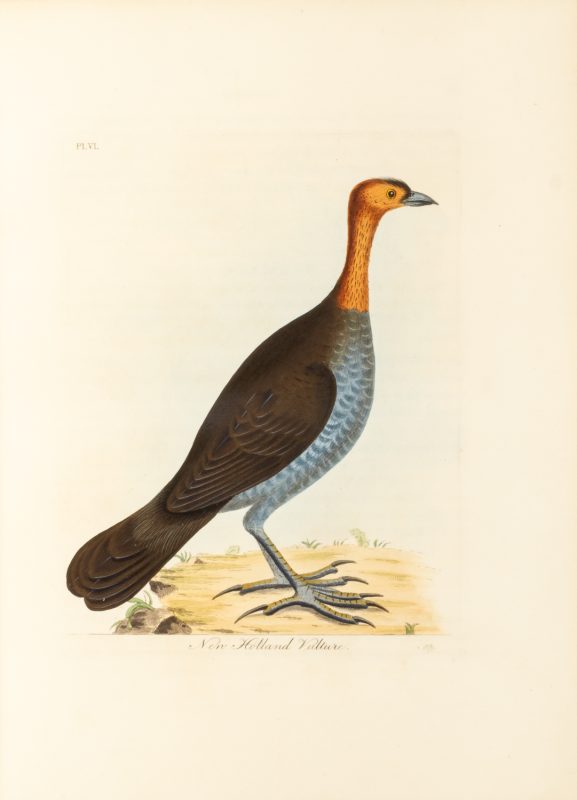
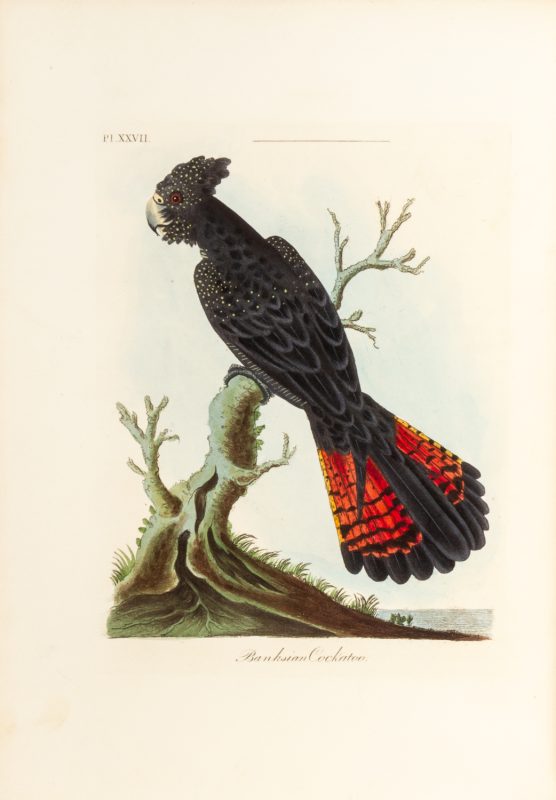
Latham’s General History contains almost 450 descriptions of birds from New Holland, of which 22 are illustrated, and includes, where possible, field notes on how the birds were collected and in whose collection they were held. The indigenous names for many of the Australian birds are given – an unusual feature for ornithological works of the period. Some of the Australian species illustrated include the Banksian Cockatoo, the Red-crowned Parrot, the “New Holland Channel-Bill”, two Honey-Eaters from around Sydney, and a particularly fine image of the Cape Barren Goose. There are also illustrations of 16 birds from New Zealand, five from Hawaii, and six from the wider Pacific. The illustrations in the General History were all drawn, etched, and coloured by Latham himself. As Latham was now well into his eighties, the quality of these colourings in the standard issue is of variable quality. Latham died in 1837 at the venerable age of 96.
Henry Bohn, the son of the publisher John Bohn, formed his own company in the late 1830s publishing and distributing books, including the reissue of earlier works reprinted from the original sheets. In 1841 he published his massive A catalogue of books, listing 23,208 items for sale in over 1200 pages. As noted in the Soffer Ornithology Collection in Amherst College Library, ‘The ornithological section occupies pp. 250-260. Bohn not infrequently reissued books with plates newly colored, sometimes to a higher standard than the original. One example is Latham’s “A general history of birds” (1821-1828), the original edition of which is very indifferently colored. The Bohn edition was issued for twice the price of the original in a very small print run (perhaps only 25 copies) with magnificent coloring highlighted by gold.’ Bohn’s catalogue of 1847 explains that ‘This celebrated work was published at 25 guineas in boards, with the plates coloured in a very inferior manner. The present copies are all coloured like highly finished drawings, with studious accuracy, under the direction of several eminent ornithologists’. In their catalogue of 1977, Charles Swann of Wheldon & Wesley Ltd. wrote of the Bohn deluxe edition of General History: ‘It would appear that only 25 copies of this edition were prepared’.
The Bohn issue of Latham contains all the scientific discoveries which lend the work its inherent importance, but its significance is elevated by the very sophisticated and superior colouring in opaque gouache done by expert artists, which consistently gives the birds an iridescence and a luminous quality not to be found in Latham’s rather inadequate watercolour renderings. It is likely the same artists would also have coloured the Bohn edition of Lewin’s A natural history of the birds of New South Wales (1838), which similarly sees those birds coloured by gouache for the first time.

