


# 48847
BULLER, Walter Lawry, 1838-1906; KEULEMANS, John Gerrard, 1842-1912
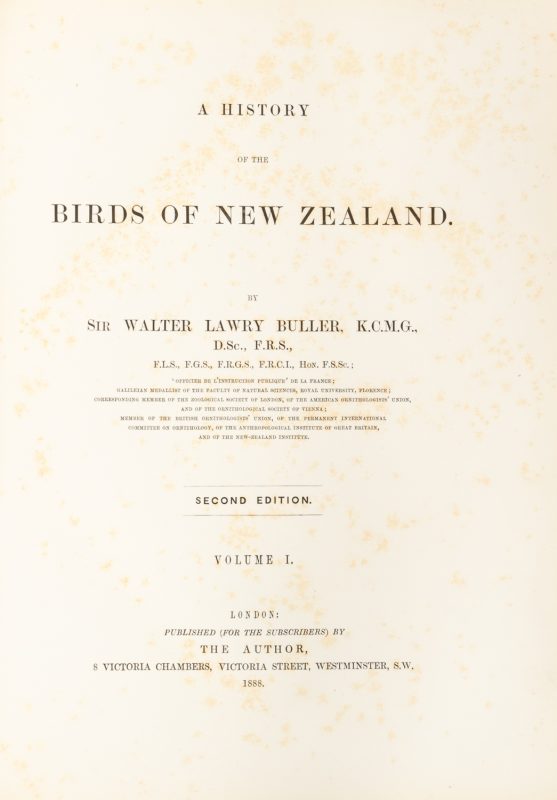
A history of the birds of New Zealand (second edition)
$5,500.00 AUD
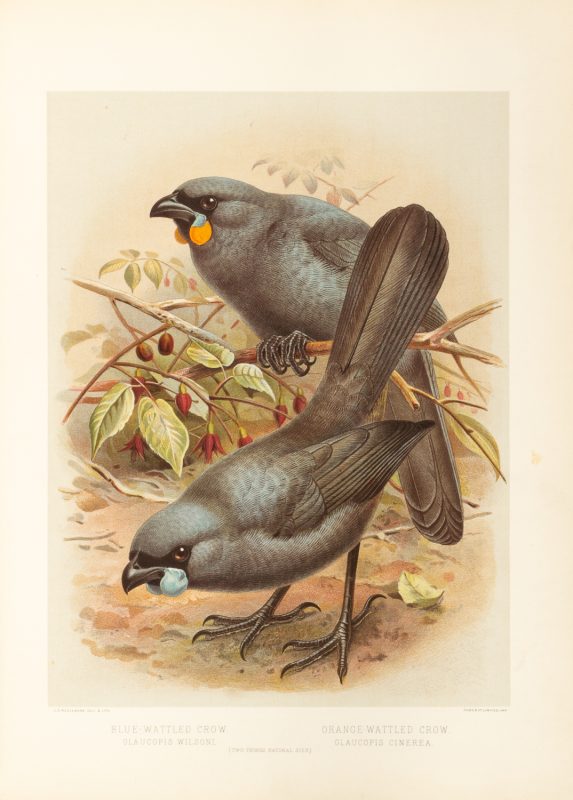
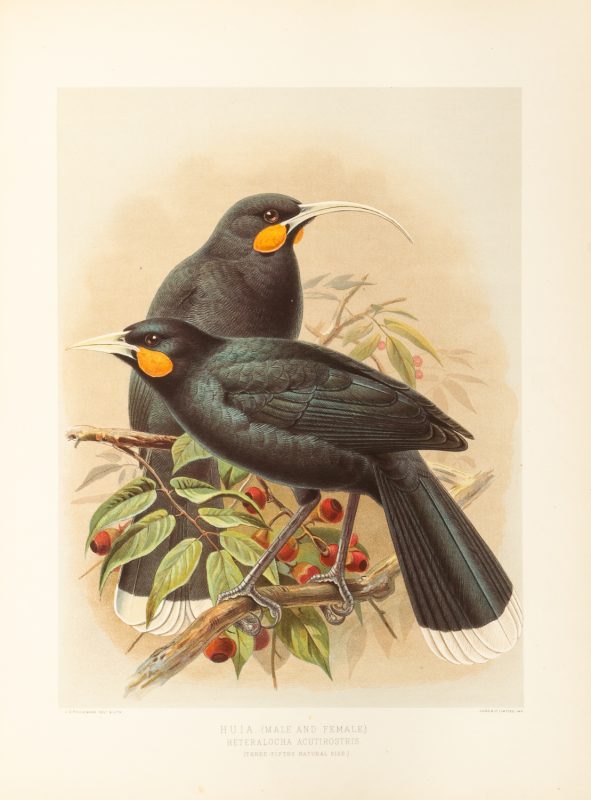
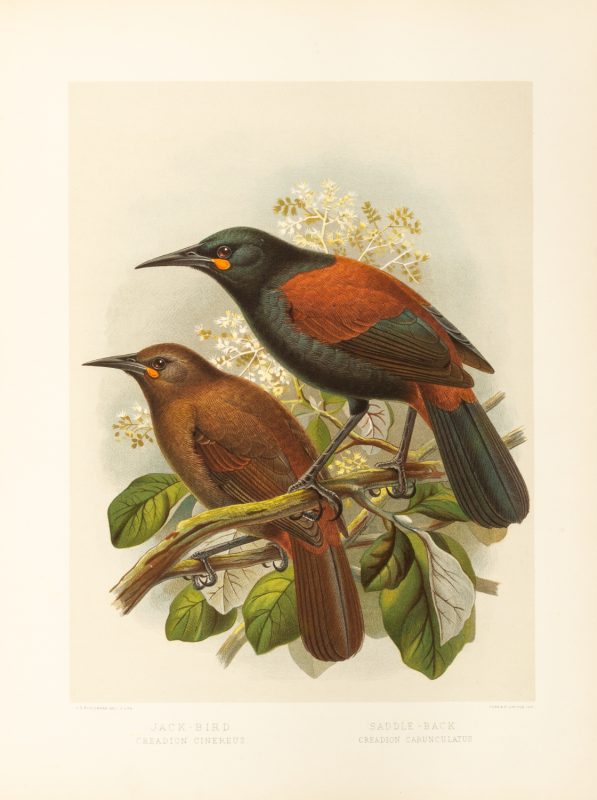
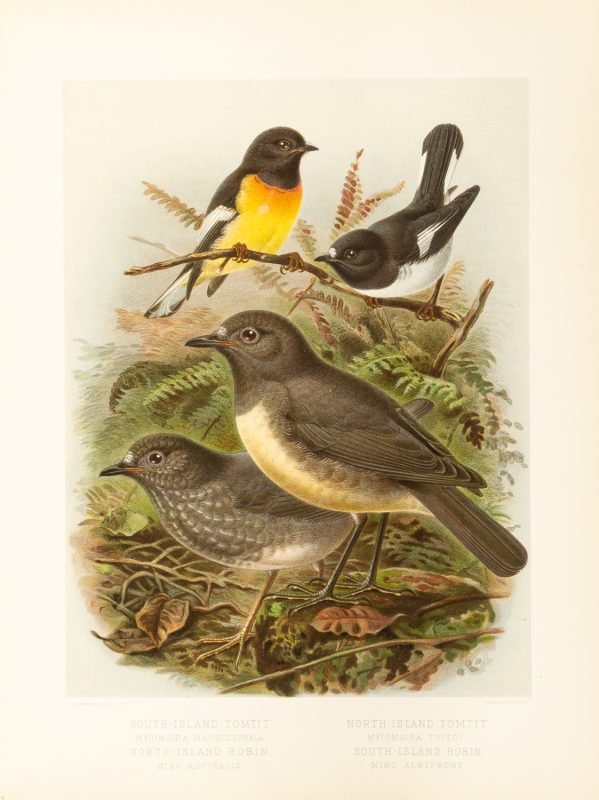
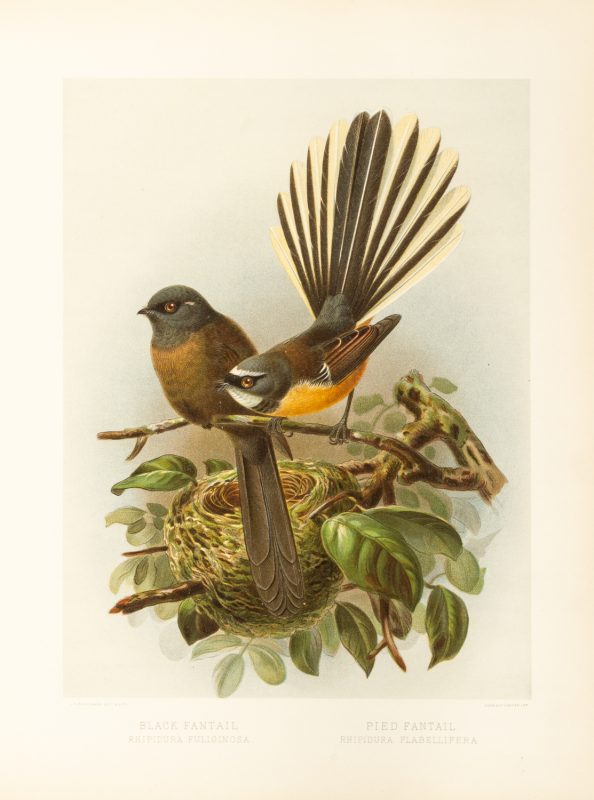
The scarce large format second edition of an acclaimed ornithological work, illustrated by J.G. Keulemans.
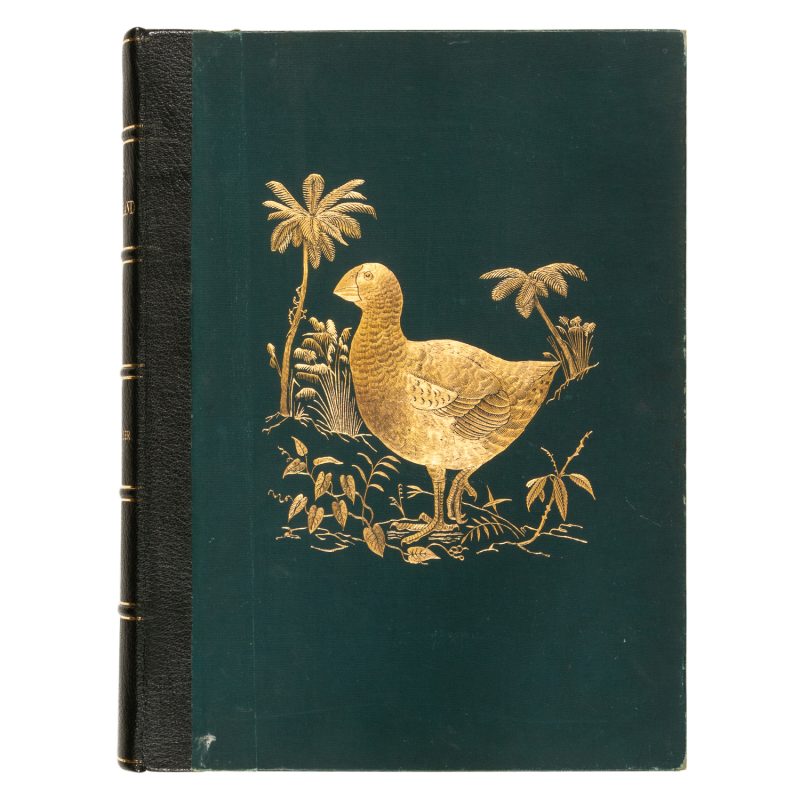
London : the author, 1888. Second edition. Thirteen parts, bound in two volumes, quarto, publisher’s gilt-illustrated green cloth, rebacked with new leather spines, lettered in gilt, top edges gilt, vol. I pp. lxxxiv; 250; [vi]; vol. II pp. xv; 359, containing in total 48 chromolithograph plates by J. G. Keulemans, light foxing to preliminaries, but a very good copy. A two volume Supplement was issued in 1905, which is not present here.
Sir Walter Lawry Buller was born at the Wesleyan mission, Newark, at Pakanae in the Hokianga in 1838, the son of Methodist missionary Rev. James Buller. In 1854 the family moved to Wellington where he was befriended by naturalist William Swainson. Buller trained as a lawyer but is best known for his contribution to ornithology in New Zealand. The first edition of A history of the birds of New Zealand, published in 1873, won Buller much critical acclaim, including from Charles Darwin, and for it he was awarded the CMG in 1875. ‘It has been remarked by a celebrated naturalist that “New Zealand is the most interesting ornithological province in the world … It has been the author’s desire to collect and place on record a complete life-history of these birds before their final extirpation’ (prospectus to the first edition). The second edition of 1888 is even more ambitious in scope; “The book itself is on a larger scale, being Imperial instead of Royal quarto, and the plates, instead of being handcoloured lithographs, have been produced by the more costly but more exact and satisfactory process of printing in colours’. These chromolithographs are some of the finest of the late nineteenth century. At the conclusion of the list of subscribers of the first edition is a statement that 1000 copies are printed, although it is known that over 250 were lost in a shipwreck.
Bagnall, 757 and 758; Nissen IVB, 163; Nissen SVB, 83; Casey Wood, p. 269; Zimmer, p. 115.
