


# 50099
ANSON, George, Baron (1696-1762); WALTER, Richard
A voyage round the world in the years MDCCXL, I, II, III, IV. (Large paper copy)
$6,250.00 AUD
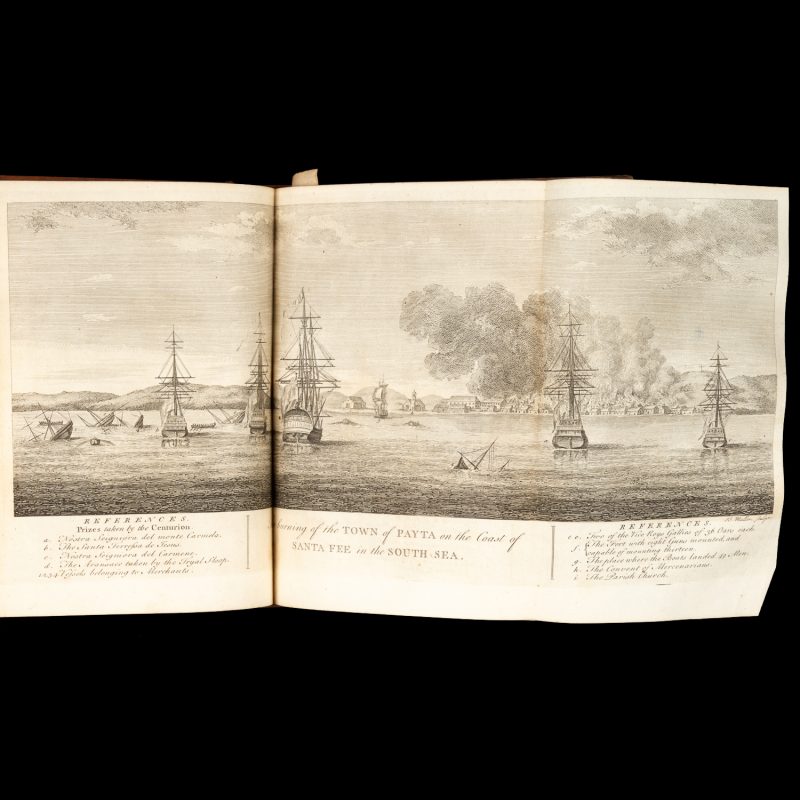
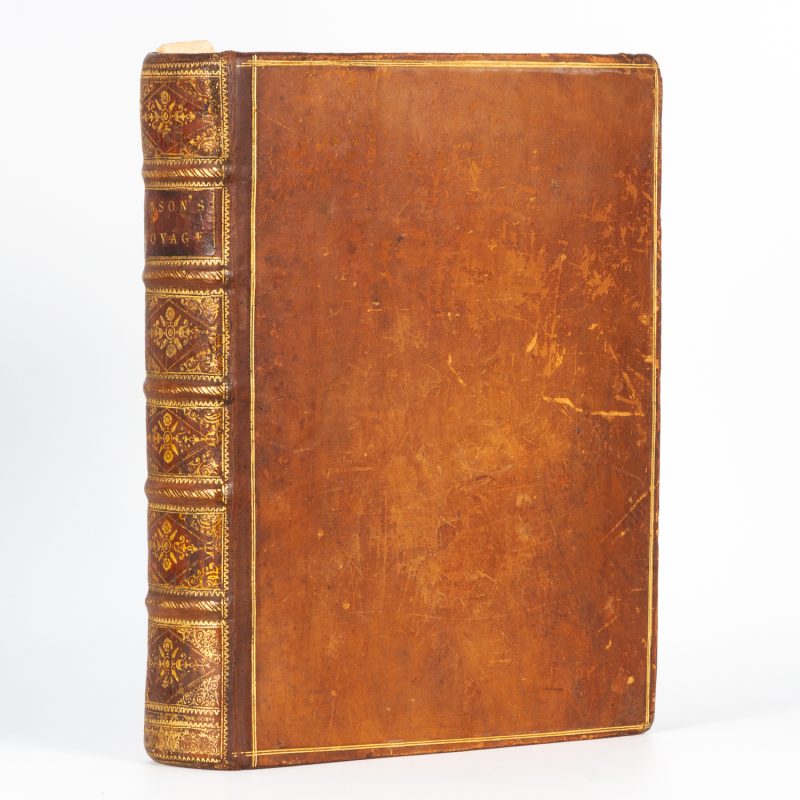
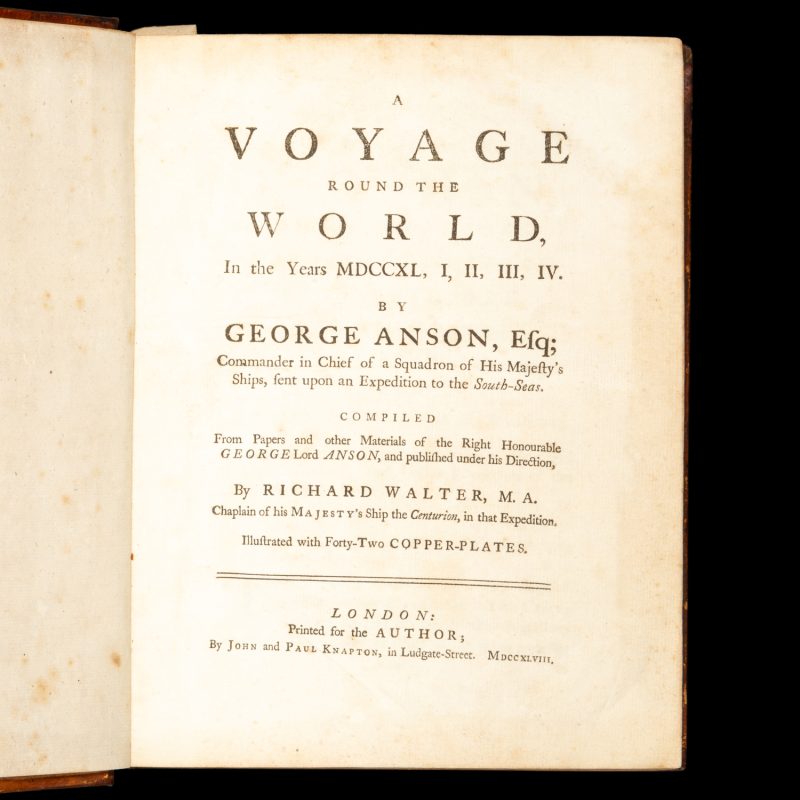
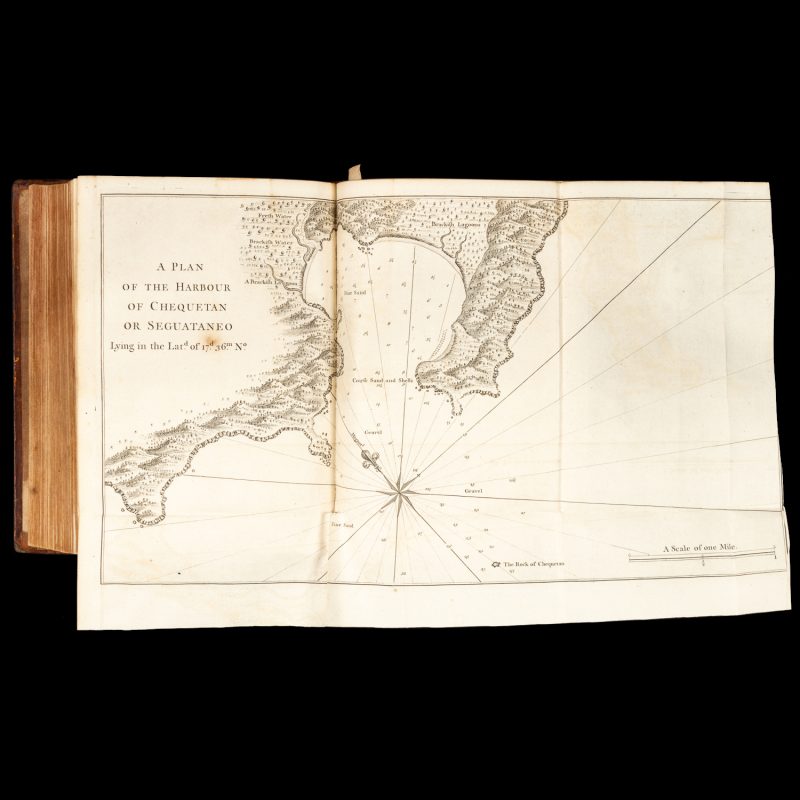
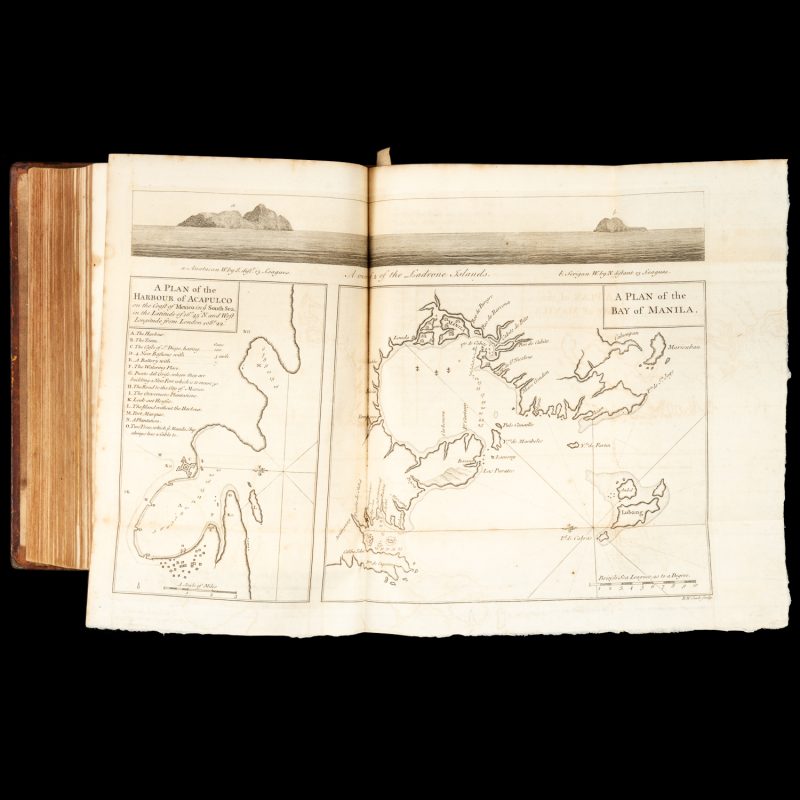
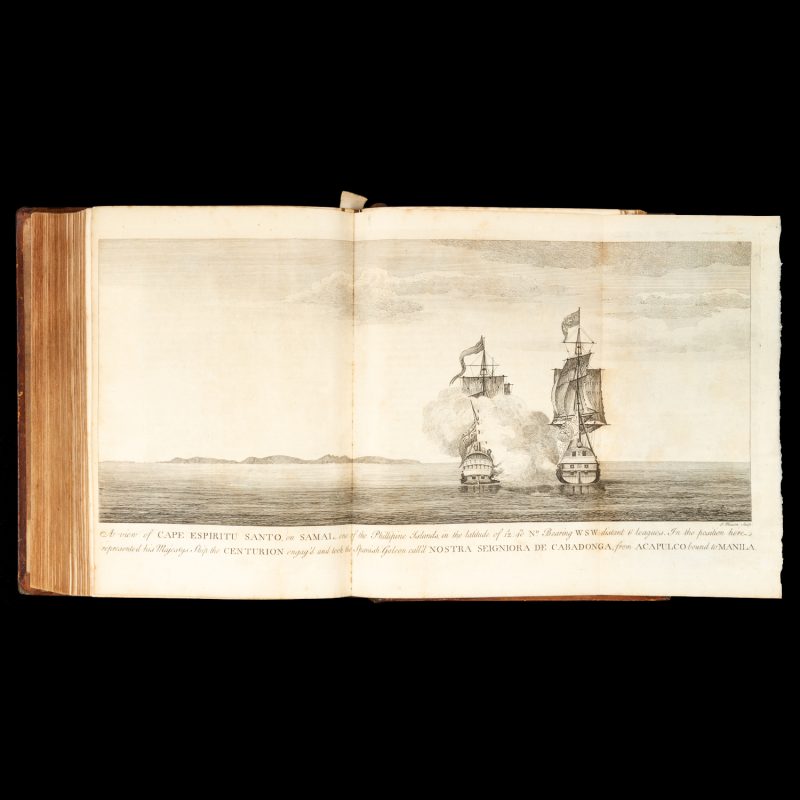
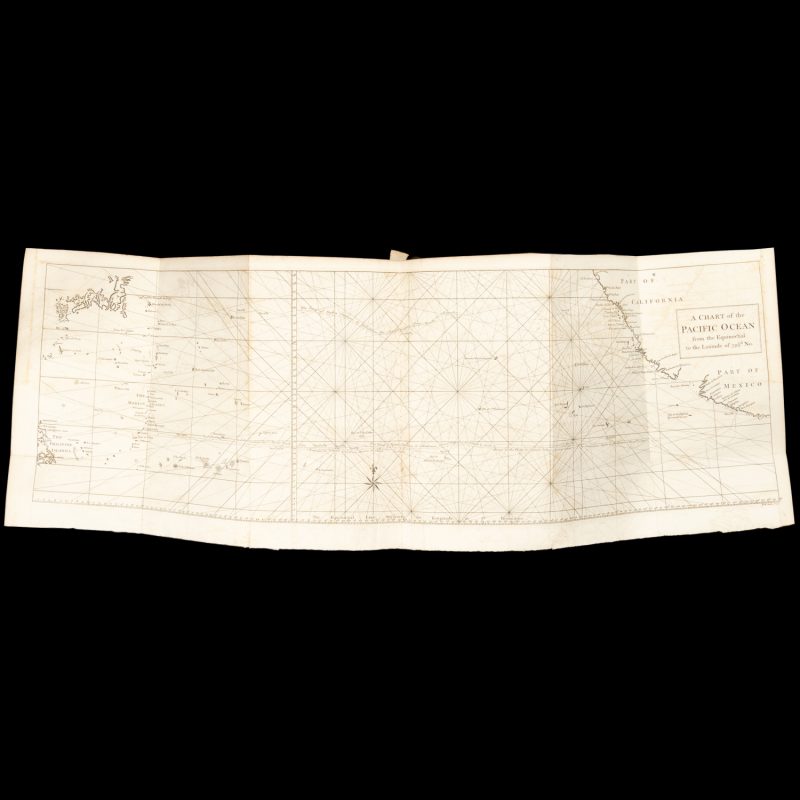
By George Anson Esq; Commander in Chief of a squadron of His Majesty’s ships, sent upon an expedition to the South-Seas. Compiled from the papers and other materials of the Right Honourable George Lord Anson, and published under his direction, by Richard Walter, M. A. Chaplain of his Majesty’s ship the Centurion, in that expedition. Illustrated with forty-two copper-plates. London : printed for the author by John and Paul Knapton, in Ludgate-Street, MDCCXLVIII [1748]. Quarto (265 x 210 mm), contemporary calf ruled in double gilt (boards rubbed and scuffed), recased and rebacked, spine in compartments with gilt decoration and lettering; edges stained red; front pastedown with late 19th-century bookplate; pp. [34] (last blank), 417, bound without the terminal “directions to the binder” leaf; page 319 misnumbered as 219 and thus, according to Cox, a “genuine first”; 42 folding or double-page copperplate maps, charts and plates (plate at p. 340 supplied, chart at p. 94 with a tear at gutter fold); very occasional light foxing, otherwise a clean copy with larger margins than usual, one of 350 such copies issued to 350 of the names marked with an asterisk in the list of subscribers.
First edition, large paper copy of one of the most significant maritime voyages of the eighteenth century.
Anson’s circumnavigation was significant in that it provided much valuable navigational information crucial to the success of Cook’s voyages in the South Seas. After a series of disasters, Anson’s initial squadron of six warships and two supply ships was reduced to just three by the time he entered the Pacific from Cape Horn. After sacking the Spanish port of Paita in Peru, he sailed across the Pacific to Macau with all remaining crew on his own ship, the Centurion. He then successfully followed the orders given to him by the Admiralty to seek out Spanish galleons laden with gold en route from Mexico to the Philippines, when he captured Nuestra Senora de Covadonga, carrying 1.3 million pieces of eight. Anson sold the gold in Macau and returned to England, arriving there in mid 1744. One of the important legacies of Anson and Walter’s narrative was the description of the breadfruit tree, the benefits of which Anson’s crew enjoyed whilst sojourning in the Ladrone Islands (Marianas). Along with Dampier’s earlier account of this fruit, Anson’s information was the main stimulus behind the Admiralty’s brief for Bligh’s expedition in the Bounty in 1787, the purpose of which was to transport breadfruit to the West Indies for propagation.
‘This is the official account of Anson’s voyage. England, at war with Spain in 1739, equipped eight ships under the command of George Anson to harass the Spaniards on the western coast of South America, for the purpose of cutting off Spanish supplies of wealth from the Pacific area. Lord Anson, who was a friend and patron of Benjamin Robins, after returning from the voyage around the world in the Centurion, appears to have entrusted to Robins, for revision, the account of the voyage which had been compiled from the journals by his chaplain, Richard Walter. It is probable that Robins revised and edited the work, wrote an introduction, and added dissertations.This compilation has long occupied a distinguished position as a masterpiece of descriptive travel. Anson’s voyage appears to have been the most popular book of maritime adventure of the eighteenth century’ (Hill).
Hill, 1817; Sabin, 1625; Cox I, p. 49; Kroepelien 1086; Alden/Landis 748/225

