


# 48930
MEDHURST, W. H. (Walter Henry) (1796-1857)
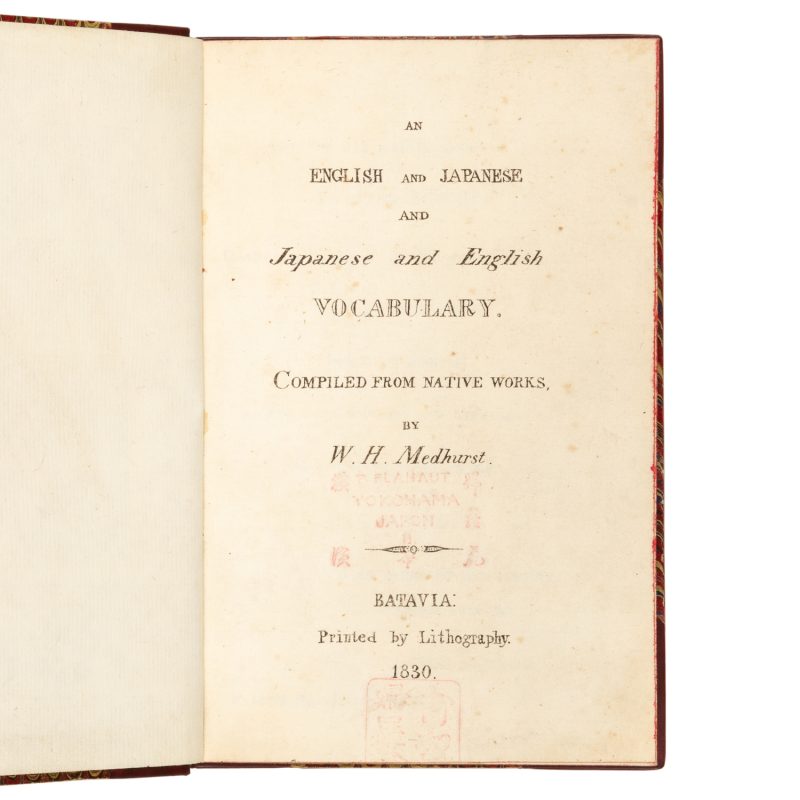
An English and Japanese and Japanese and English vocabulary. Compiled from native works, by W. H. Medhurst.
$16,500.00 AUD
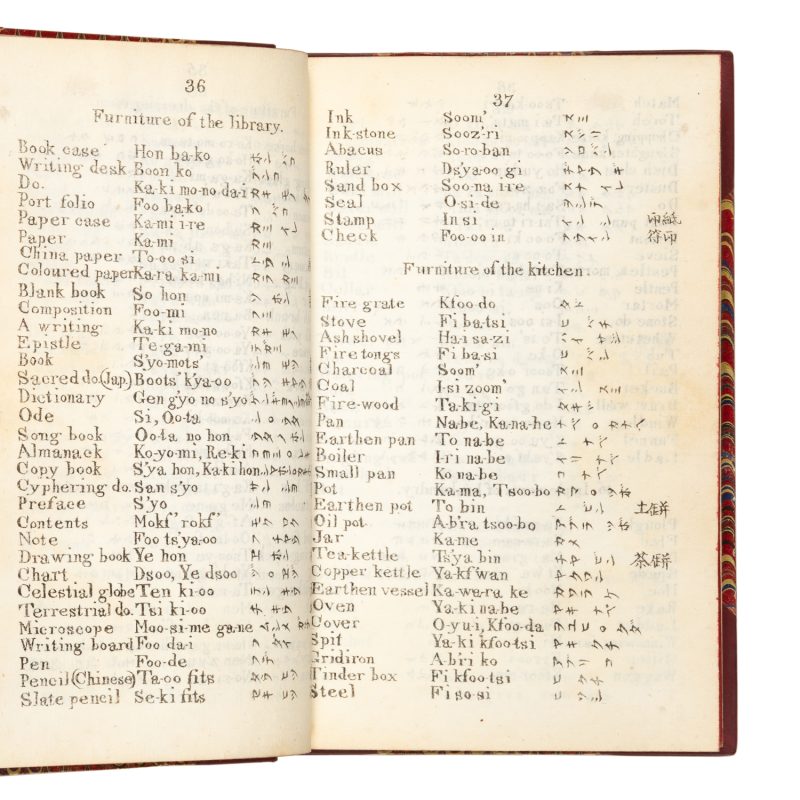
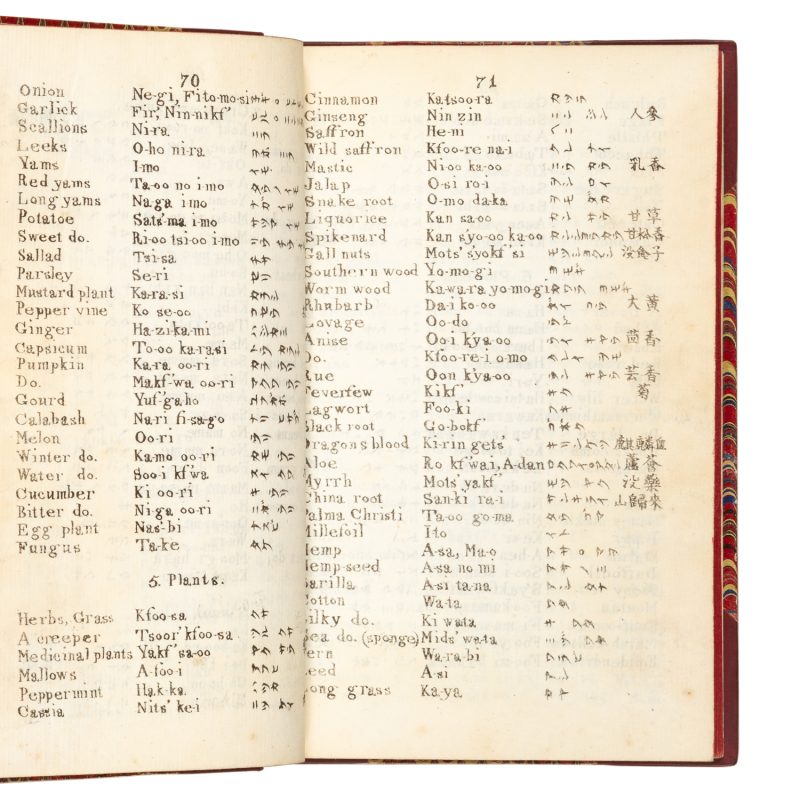
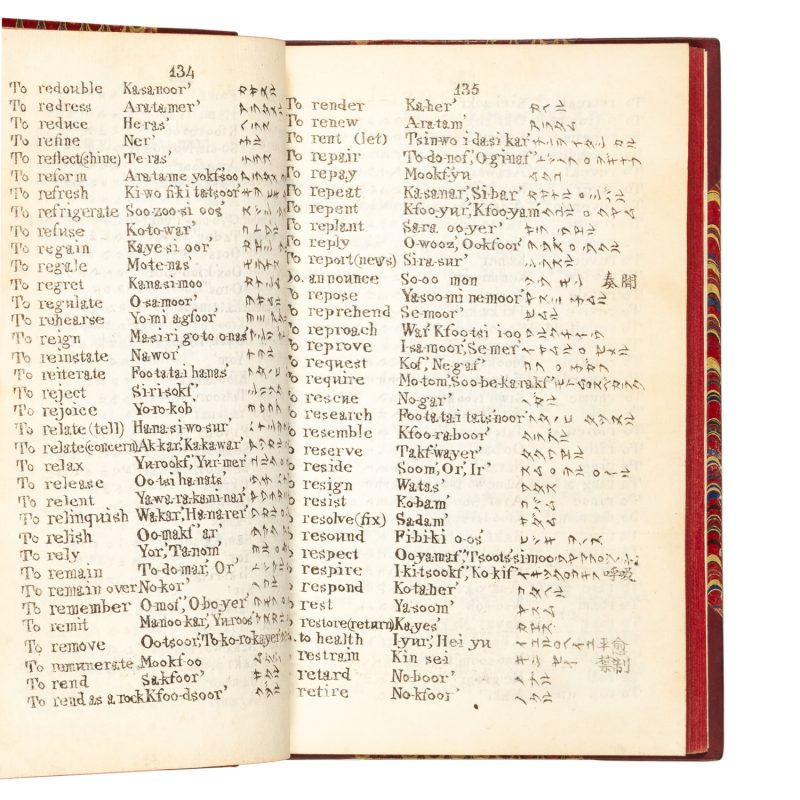
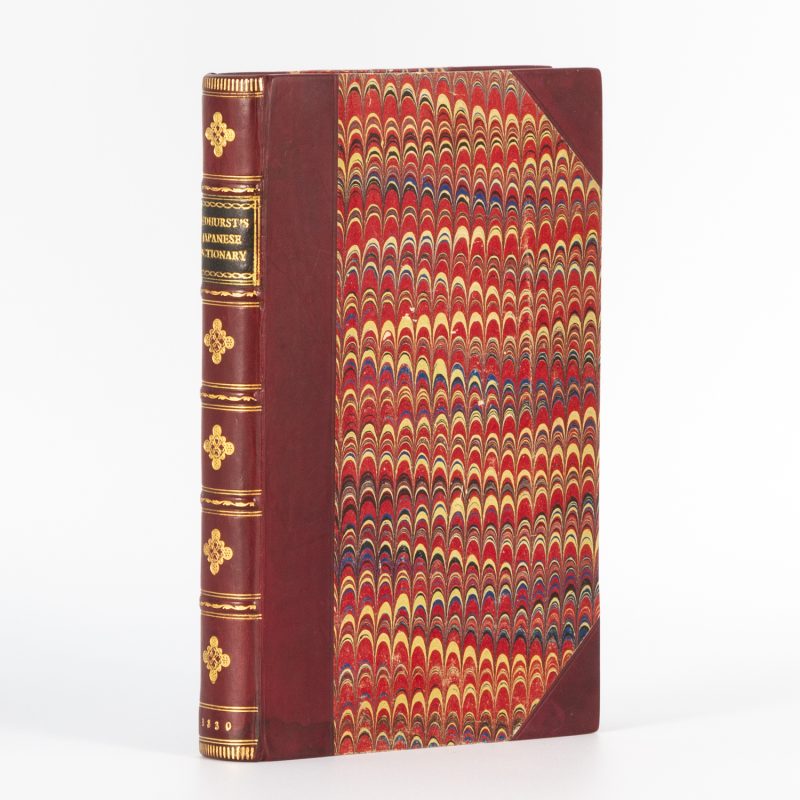
Batavia : Printed by lithography, 1830. First edition. Octavo (210 x 140 mm), handsome modern binding of half calf over marbled papered boards, spine decorated and lettered in gilt; edges stained red; pp. viii, 343; lithographed handwritten text, the Japanese presented in both Roman and Japanese characters; title-page with red ownership stamps of ‘T. Flanaut, Yokohama, Japan’; a fine copy.
The extremely rare first edition of the first English-Japanese and Japanese-English vocabulary.
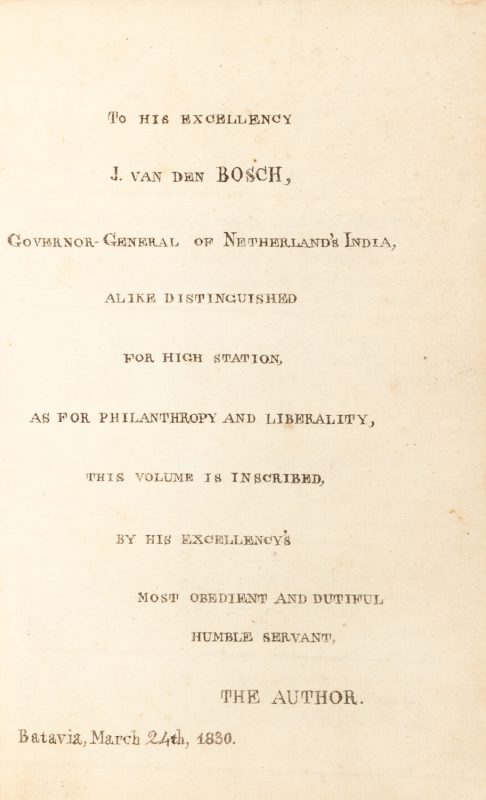
English Congregationalist missionary Walter Henry Medhurst (1796-1857) arrived in Malacca in 1816, where he studied and mastered Malay, Chinese and the Hokkien dialect. He commenced his missionary work in Penang in 1820, and from 1822 continued it in Batavia (present-day Jakarta) in the East Indies. Remarkably, although Medhurst never travelled to Japan and knew no Japanese, he was able to compile the first English-Japanese and Japanese-English dictionary during his time in Batavia, which was published there in 1830. The dedication leaf, which is dated 24 March 1830, is to His Excellency J. Van de Bosch, Governor General of the Netherlands Indies. Medhurst knew Chinese, and the text was handwritten by a native Chinese speaker who knew no English.
The first true English-Japanese dictionary – based on English-Dutch and Dutch-Japanese bilingual dictionaries and compiled by Commodore Perry’s interpreter Hori Tatsunosuke – would not be published until 1862.
In 1842, when peace was concluded with China, Medhurst was sent from Batavia to Shanghai, where he founded the London Missionary Society Press. A prolific lexicocographer, translator and editor, he is best known for being the leading translator of the so-called Delegates Version of the Bible in Chinese (Shanghai, 1847).

