


# 49442
MORRISON, Robert
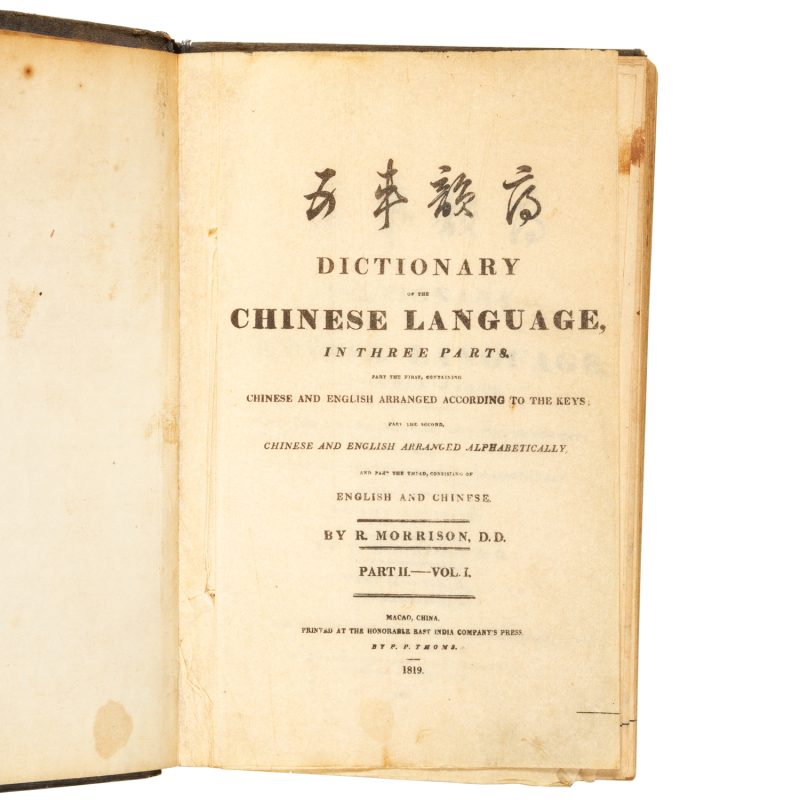
Dictionary of the Chinese Language, in three parts. Part II, Vol. I.
$1,750.00 AUD
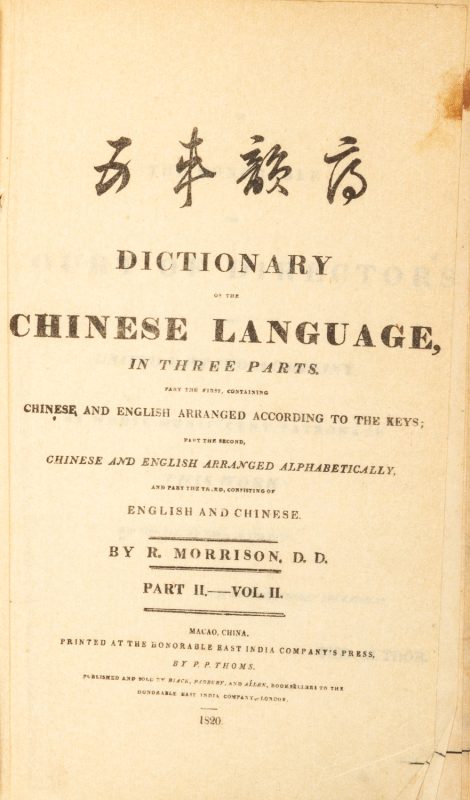
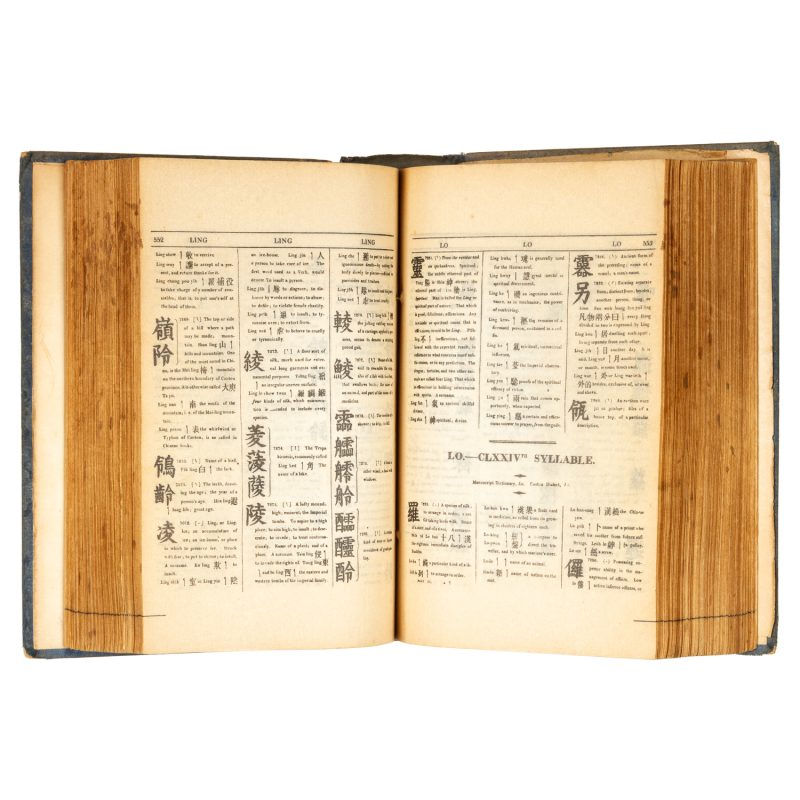
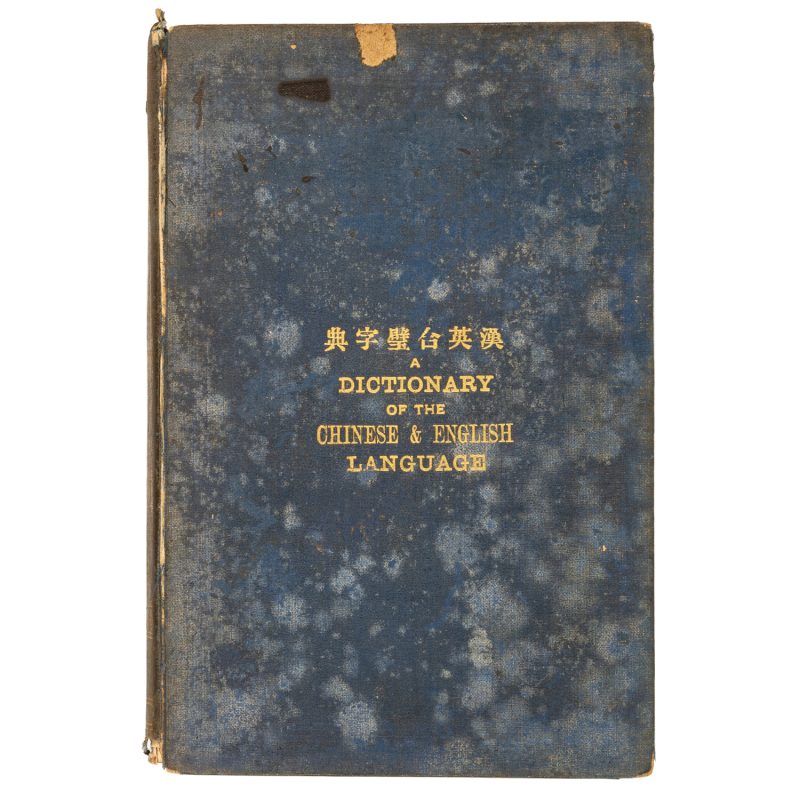
[Shanghai : Chung Hwa Book Co., Ltd., 1913]. Thick octavo (235 x 155 mm), publisher’s gilt-lettered blue cloth (somewhat mildew-stained, cloth splitting along outer front hinge and frayed at spine ends); title-leaf of Part II. Vol. 1 (1819), title-leaf of Part II. Vol. II (1820), pp. xx, 1090, 72 (Index of the Characters); printed on rice paper on double-leaves folded in the traditional Chinese manner; hinges cracked, some foxing to fore-edge of text block, a few pages with staining but otherwise contents very clean throughout.
Robert Morrison’s monumental Chinese dictionary comprises three Parts in six Volumes:
Part the First: Chinese and English, arranged according to the radicals (the key characters used for sorting Chinese words);
Part the Second: Chinese and English, arranged alphabetically (using a system of transliteration, a precursor to Wade-Giles);
Part the Third: English and Chinese, providing definitions and examples from Chinese classics.
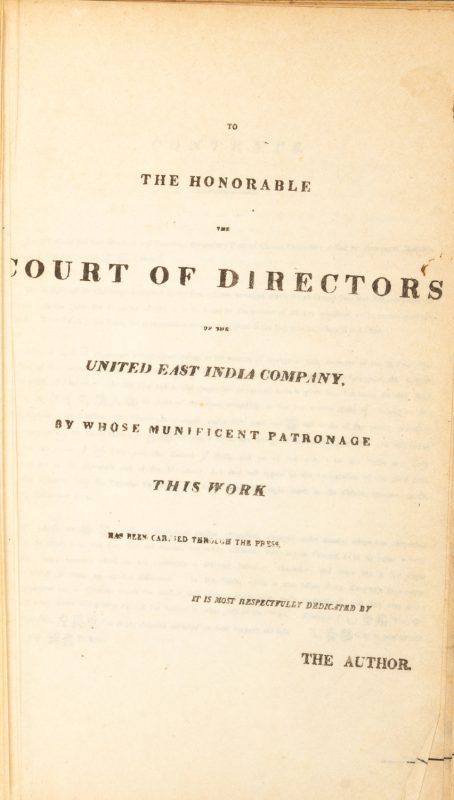
The first edition was printed on the East India Company’s Press at Macau by P. P. Thoms, and was published between 1815 and 1823. Various subsequent editions followed in the nineteenth century. However, it was not until almost a century later, in 1913, that the Chung Hwa Book Co. in Shanghai, which had only recently been established the previous year, published the first “pocket-size” reprint of Part II, Volumes I and II.
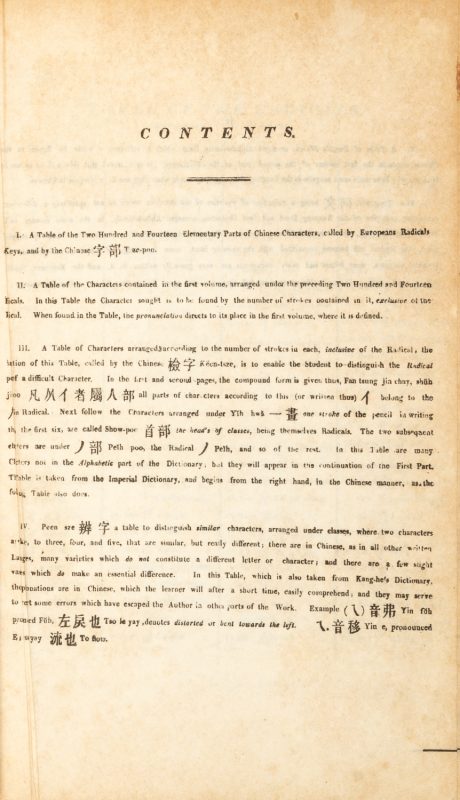
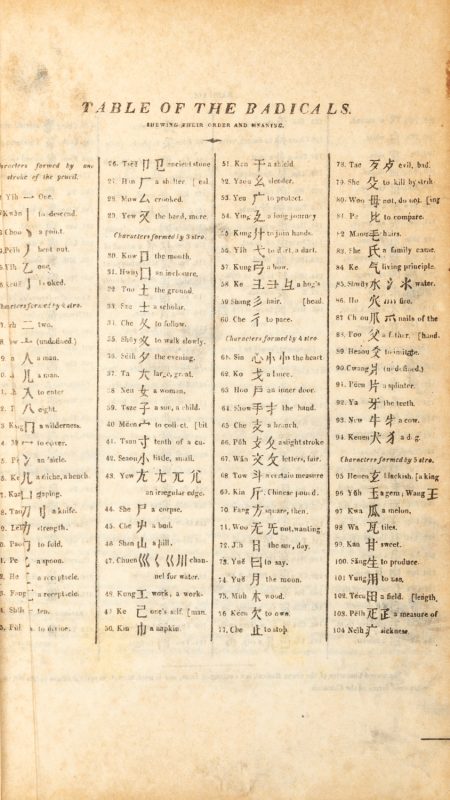
Both of these reprinted Volumes retained the pagination of the original printings (which had been published in 1819 and 1820, respectively), but the dramatically reduced physical format of the Chung Hwa reprint was designed to be portable and student-friendly. Part II, titled Wuche Yunfu (五车韵府) in Chinese and A Dictionary of the Chinese Language-Part II in English, has two volumes: Volume I is a syllabic dictionary in which Chinese words are arranged in alphabetical order according to their number of syllables; Volume II is composed of two major sections. The first section stops at page 178 and contains an index of the characters occurring in this volume and a table of characters from the Kangxi Dictionary (康熙字典). The second section is an independent section starting from page 1 and finishing at page 305. It is a synopsis of various forms of Chinese characters.
Despite the presence of the title-leaf of Part II. Vol. II at the front of the book, offered here is the full Chung Hwa reprint of Part II. Vol. I only.
