


# 49746
HEARN, Lafcadio and CHAMBERLAIN, Basil Hall (translators); KASON, Suzuki (illustrator)
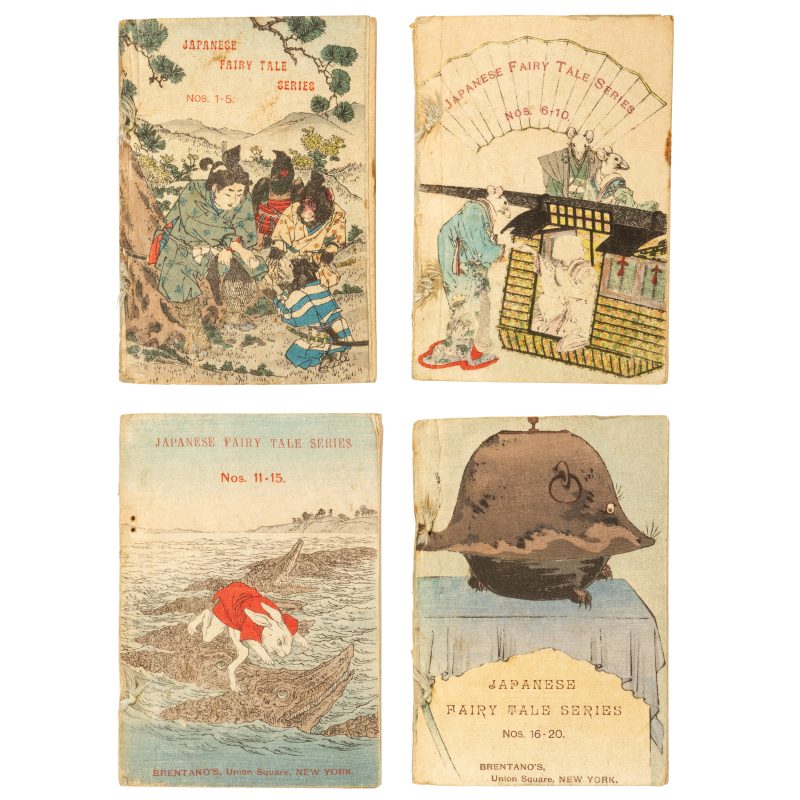
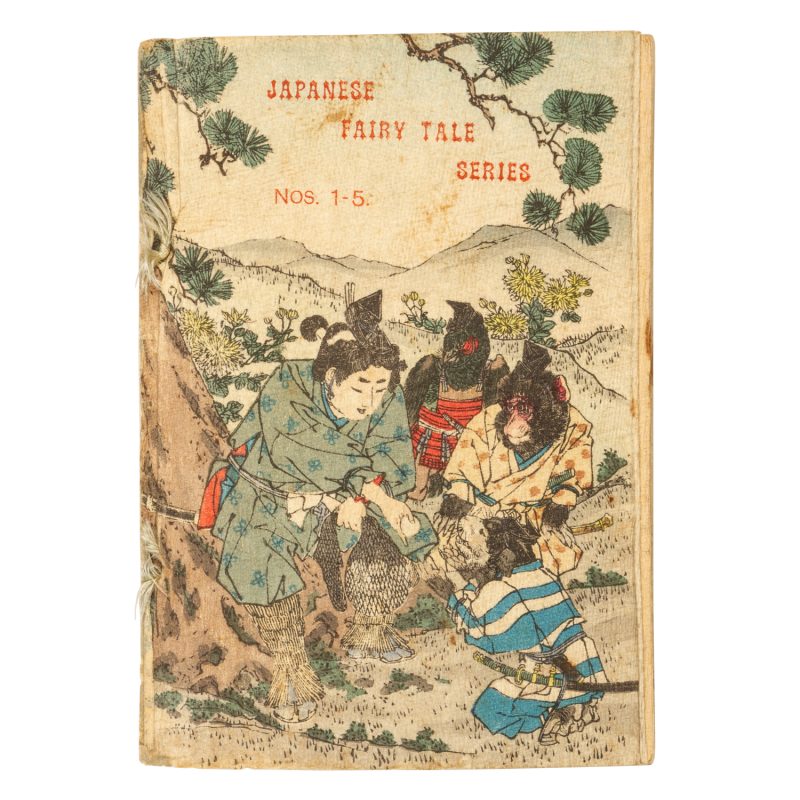
Japanese Fairy Tale series. Nos. 1-20.
$7,500.00 AUD
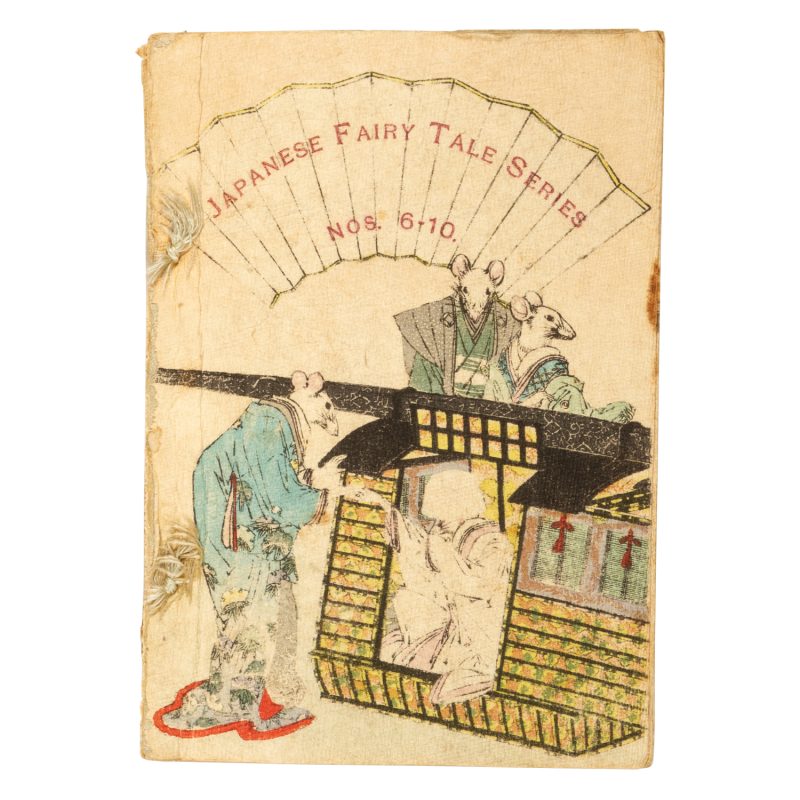
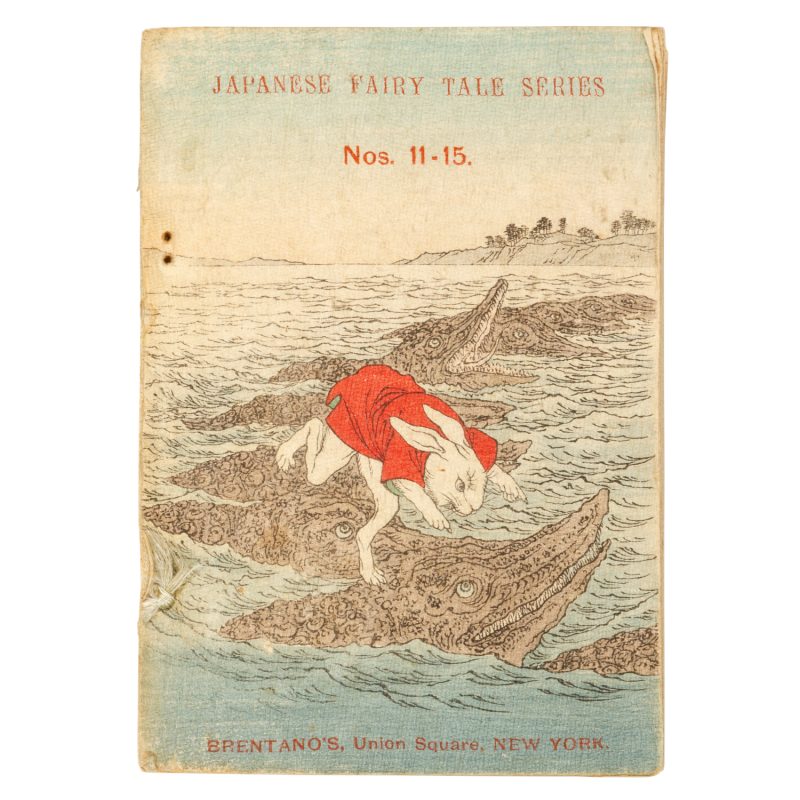
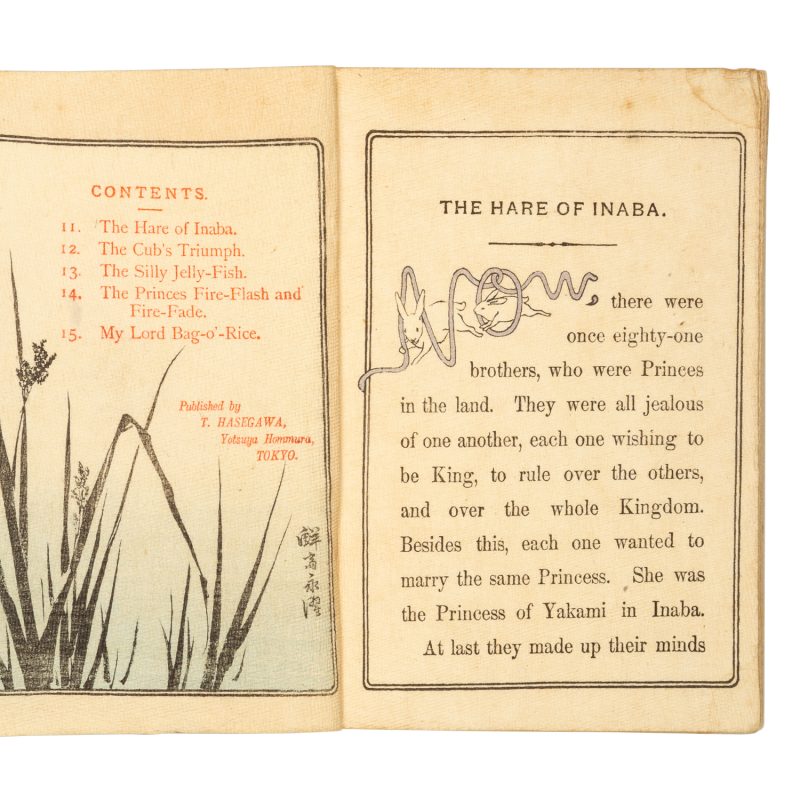
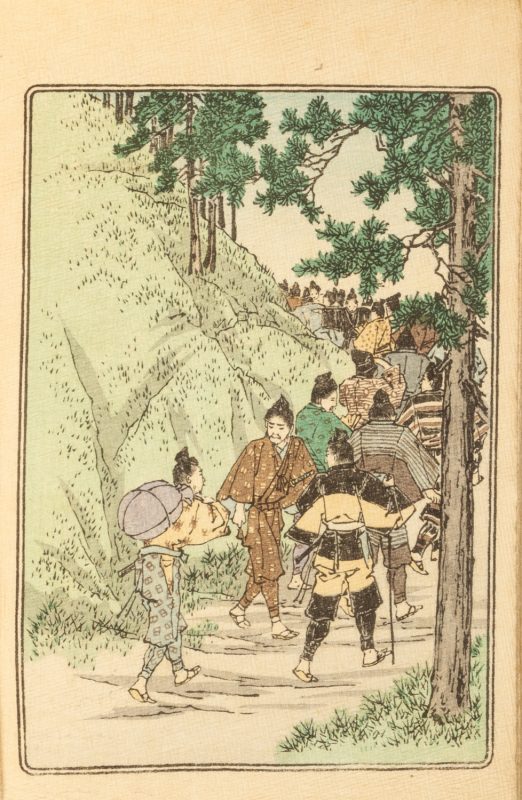
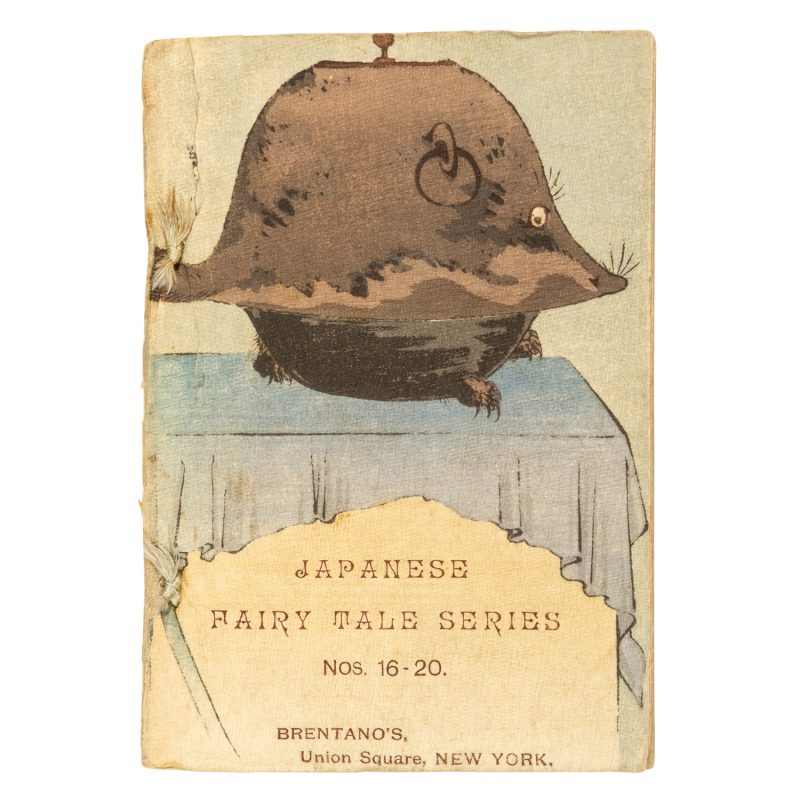
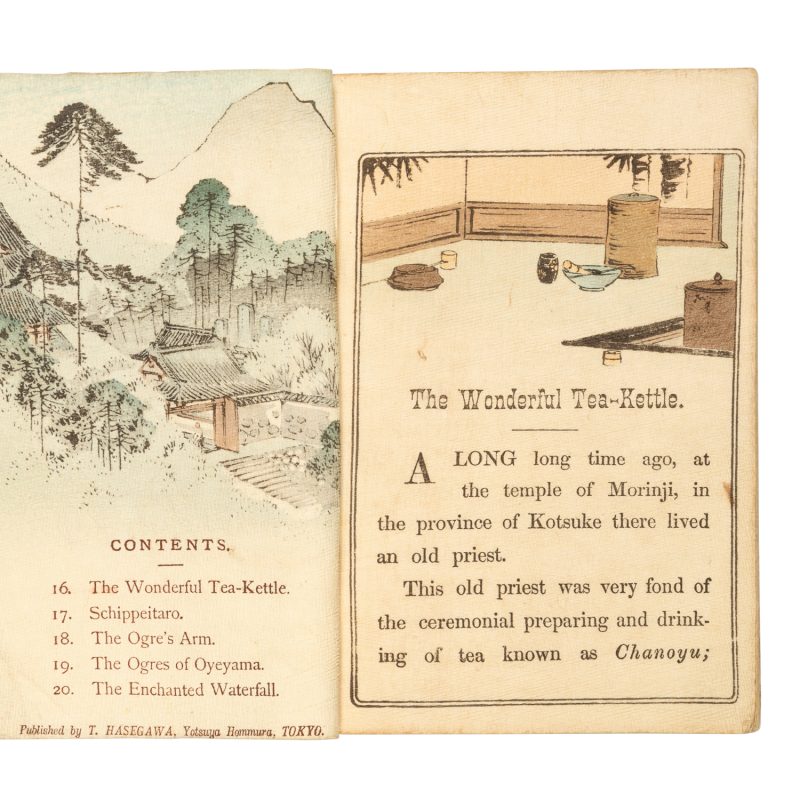
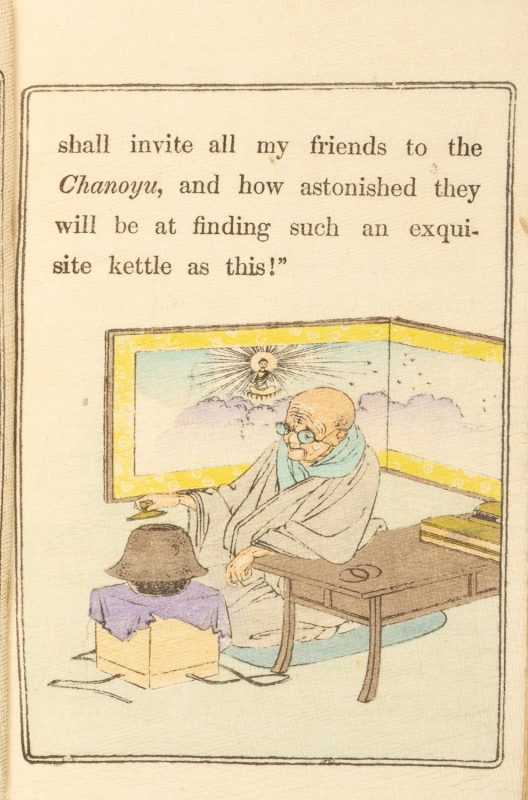
Tokyo : T. Hasegawa (printed at the Tsukiji Type Foundry), Meiji 25 [1892]. (Date and place from colophon to No. 20). Twenty crepe-paper books (chirimen-bon), bound with silk stab ties as issued in four volumes, duodecimo, comprising nos. 1-5, 6-10, 11-15, and 16-20; printed in colour by hand from Japanese wood blocks on crepe paper (chirimen-gami); the fronts of the last two volumes bear the name of Brentano’s bookstore, Union Square, New York; loss of paper along spines (as usual), the third volume with partial loss of the silk ties, occasional small marks but the contents are otherwise remarkably clean and fresh, and the colour of the illustrations vivid; an exceptional set housed in two custom-made half morocco protective boxes, the spines with elegant gilt decoration befitting of the style of the magnificent illustrations in these works.
Takejirō Hasegawa (1853-1938) began publishing his Japanese Fairy Tales series as ehon (picture books) for Westerners in 1885, producing them as chirimen-bon from 1889 until 1922. The books were bound in the traditional Japanese book binding style (fukuro-toji). All in all, 31 stories were translated and published. Dating particular editions is notoriously difficult as the publisher often reissued volumes with old dates or addresses despite operating from new premises.
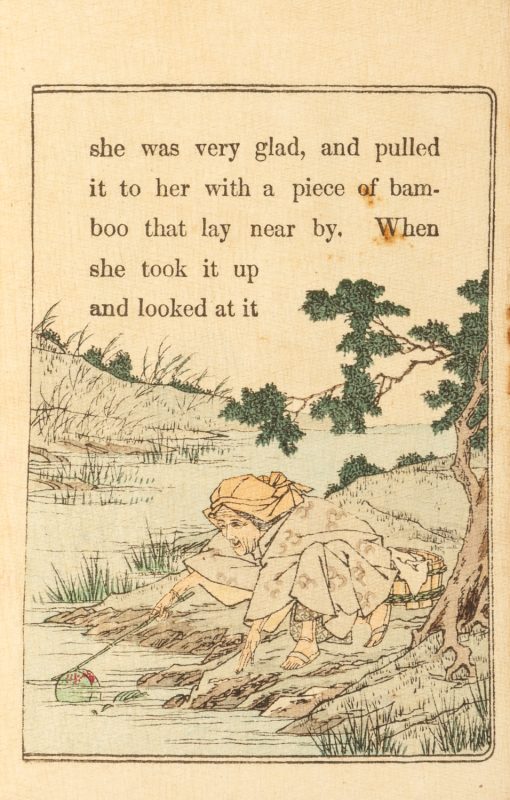
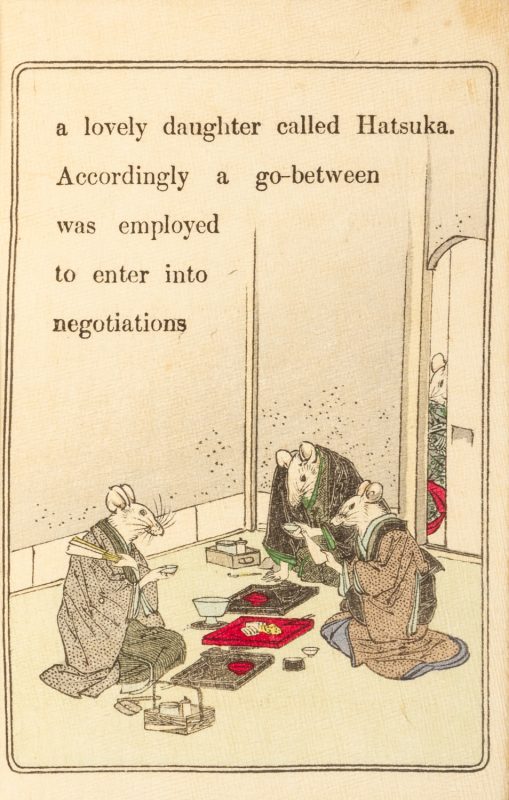
Hasegawa employed a number of talented English writers resident in Japan, including Lafcadio Hearn and Basil Hall Chamberlain, to translate the Japanese tales into English. Kobayashi Eitaku and Suzuki Kason were two of the artists largely responsible for the exquisite colour woodcut illustrations for this series.
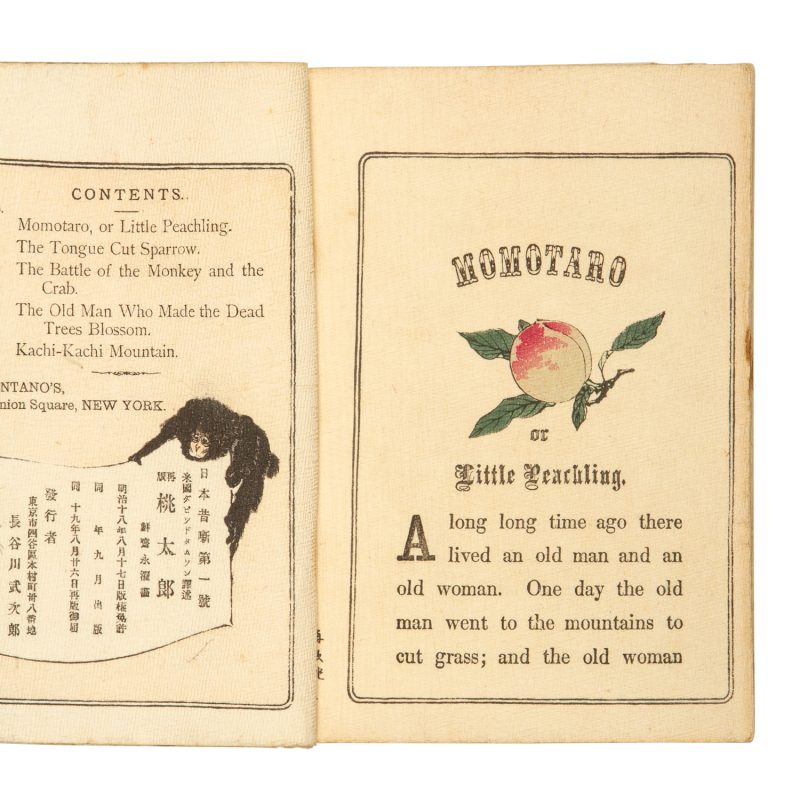
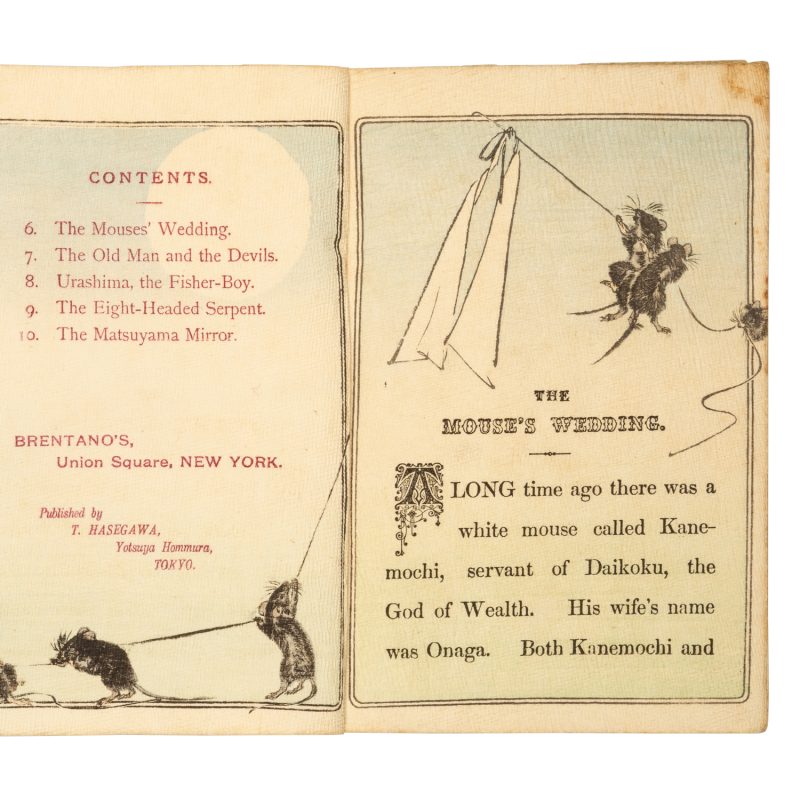
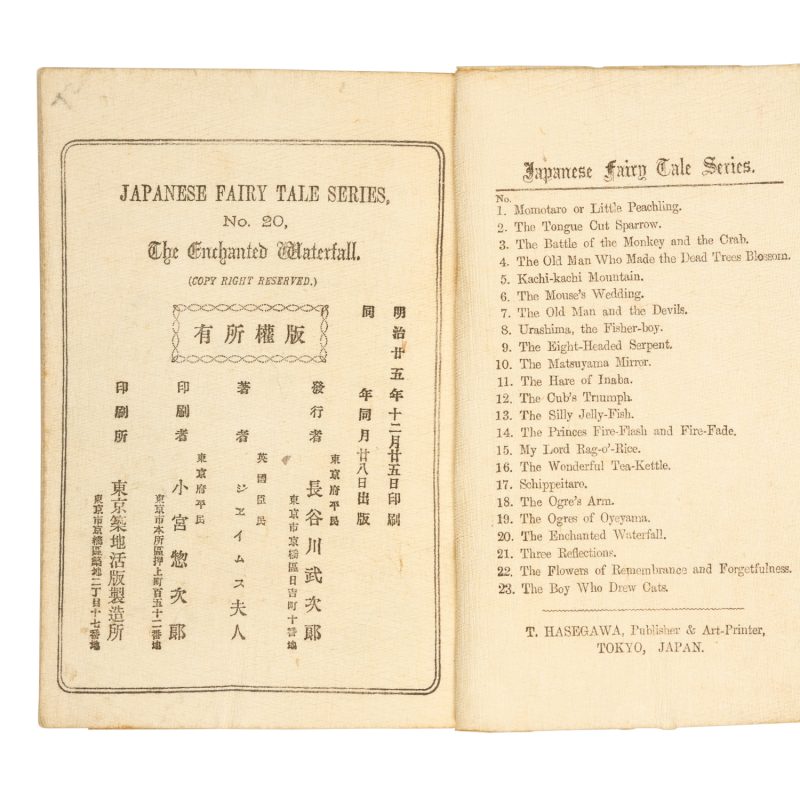
The twenty tales in this collection are: 1. Momotaro or Little Peachling; 2. The Tongue Cut Sparrow; 3. The Battle of the Monkey and the Crab; 4. The Old Man Who Made the Dead Trees Blossom; 5. Kachi-kachi Mountain; 6. The Mouse’s Wedding; 7. The Old Man and the Devils; 8. Urashima, the Fisher-boy; 9. The Eight-headed Serpent; 10. The Matsuyama Mirror; 11. The Hare of Inaba; 12. The Cub’s Triumph; 13. The Silly Jelly-Fish; 14. The Princes Fire-Flash and Fire-Fade; 15. My Lord Bag-o’-Rice; 16. The Wonderful Tea-Kettle; 17. Schippeitaro; 18. The Ogre’s Arm; 19. The Ogres of Oyeyama; 20. The Enchanted Waterfall.
Hasegawa’s advertisement at the rear of the fourth volume actually lists 23 books in this series, i.e. a further three tales (nos. 21, 22 and 23) had been – or were about to be – published which are not present here: Three Reflections, The Flowers of Remembrance and Forgetfulness, and The Boy Who Drew Cats. However, we believe the present set of twenty is a stand-alone issue of the first twenty stories, and is complete in itself, here as issued together in four volumes.
Reference: Sharf, Frederic A. Takejiro Hasegawa : Meiji Japan’s pre-eminent publisher of woodblock illustrated crepe-paper books. Peabody Essex Museum Collections, vol. 130, No. 4, October 1994.

