


# 49326
MARSDEN, William (1754 - 1836)
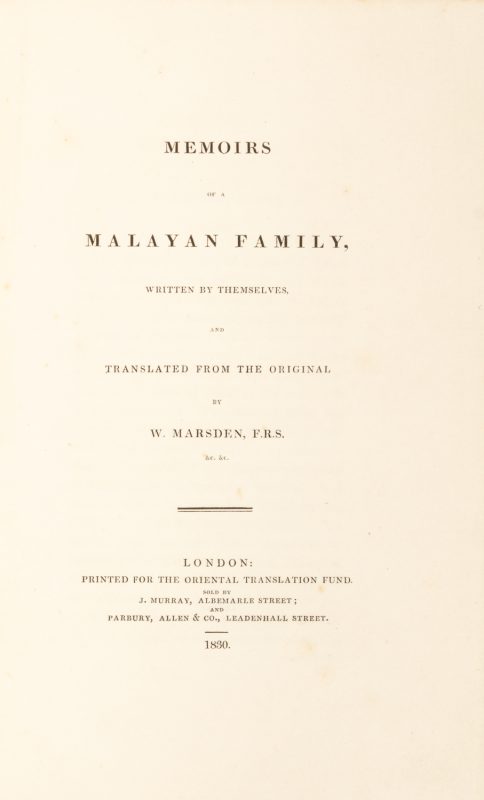
Memoirs of a Malayan Family, written by themselves, and translated from the original by W. Marsden, F. R. S. &c. &c.
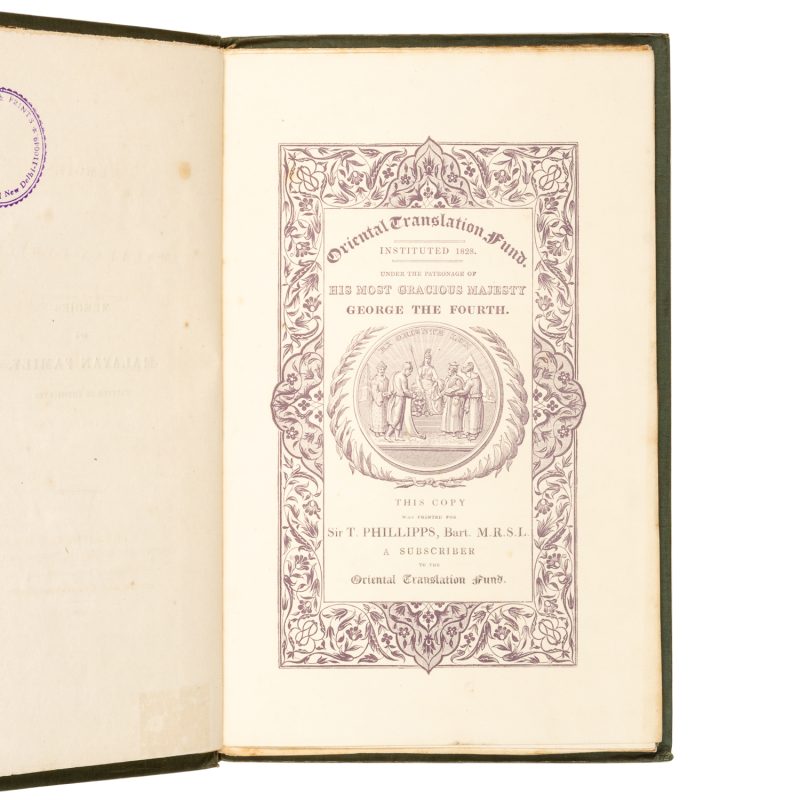
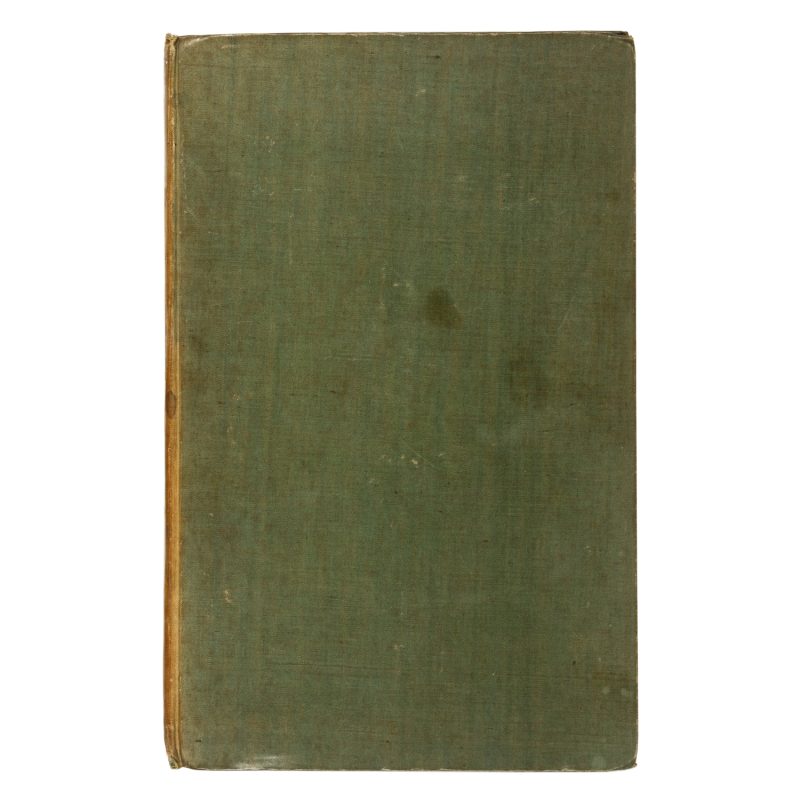
London : printed for the Oriental Translation Fund, sold by J. Murray and Parbury, Allen & Co., 1830. First edition. Large octavo, original green cloth, a little edge wear, spine slightly sunned, with original printed label to spine, shelf mark from the Sir Thomas Phillips collection to front pastedown, wet stamp from a New Delhi bookseller to verso of half-title and rear free endpaper, decorative subscriber’s leaf in purple ink with printed inscription ‘This copy was printed for Sir T. Phillips, Bart. M.R.S.L., a Subscriber to the Oriental Translation Fund’, title leaf, pp. iv; 88, partly unopened, a few minor spots of foxing, a fine copy.
Sir Thomas Phillips’ copy of William Marsden’s translation of Hikayat Nakhoda Muda, the autobiography of a Malayan Minangkabau trading family active in Java and Sumatra in the 1750s and 60s. The title takes its name from the name of the father, Nakhoda Muda, with the original text written by his son Nachoda La’udin for Butter Hunnings, the English factor (pétor) at Lais, South Sumatra in about 1788. The manuscript was acquired by Marsden in 1791 during his time spent in Sumatra, specifically Bencoolen (Bengkulu), just south of Lais. He delayed translation and publication for fear of offending either of the Companies. He writes in the introduction that the Memoirs’ ‘principal merit is s that of exhibiting a genuine picture, by a native hand, of Malayan manners and dispositions, more forcibly, and, it may be said, more dramatically represented, than they could be drawn by the pencil of any stranger’. Marsden would publish his A History of Sumatra in 1811, and A dictionary of the Malayan language in 1812. The original manuscript is now held in the School of Oriental and African Studies Library in London.
The Hikayat Nakhoda Muda contains important content relating to the value of education, trust and loyalty in eighteenth century Malaysian society, as well as the complexities of navigating trade and power between the family and the Sultan, and increasingly influential competing foreign trading companies. As noted by Professor Dato’ Dr. Ahmad Murad Merican, ‘The value of the Hikayat Nakhoda Muda is not only in the literary strategy by author La’uddin. It was also on the manifestation of a modern, rational and cosmopolitan mind of a Malay family in the 1700s – a jewel in modern Malay writing’.

