


# 41419
HOERLIN, Harold (photographer)
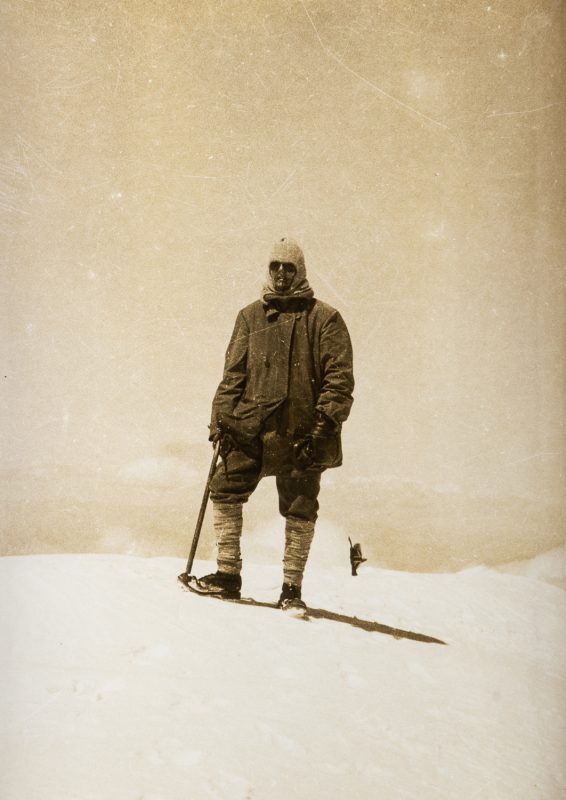
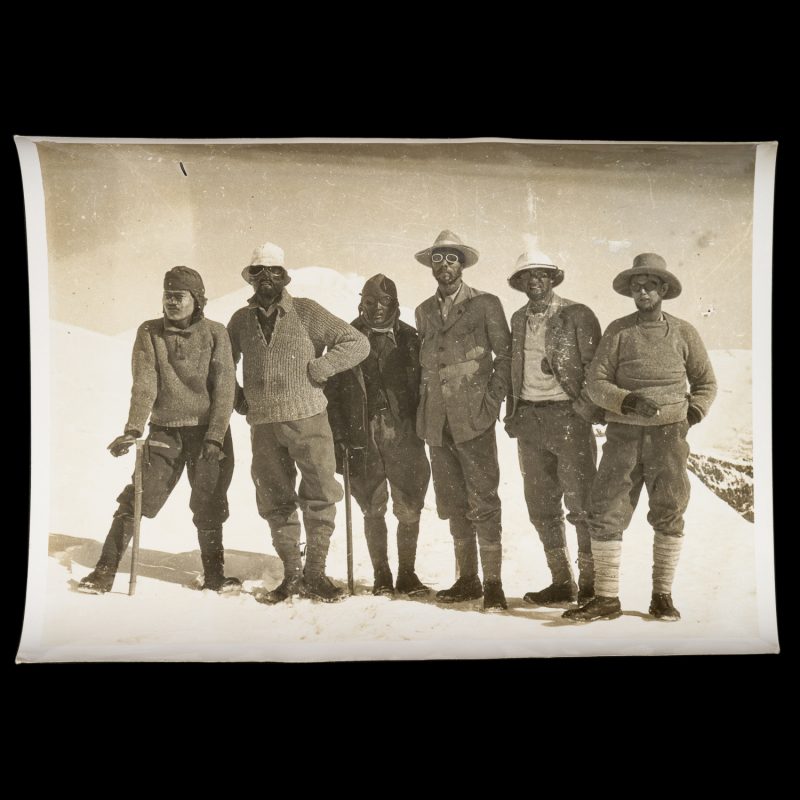
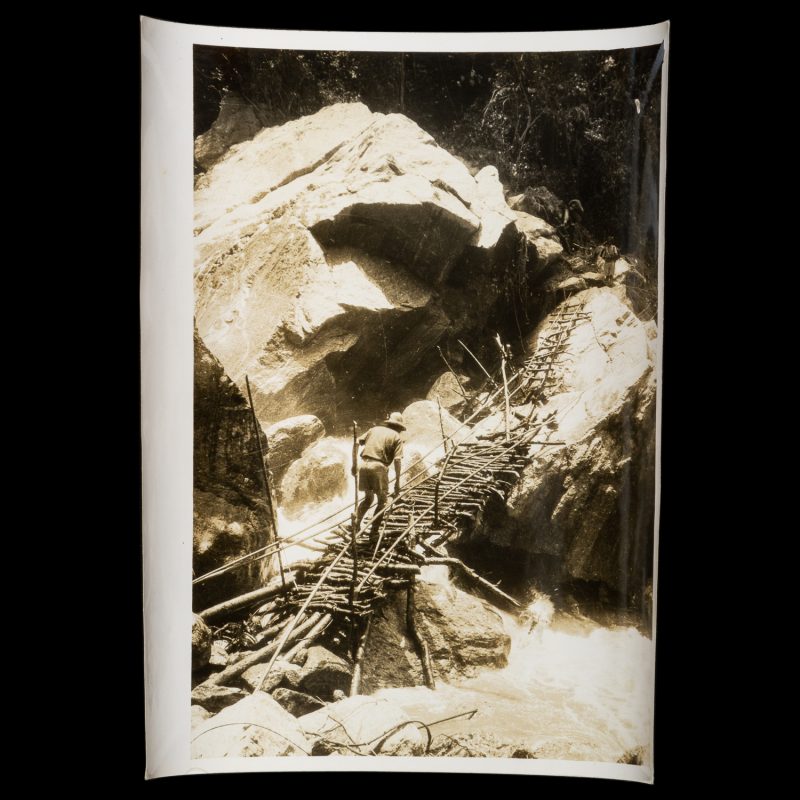
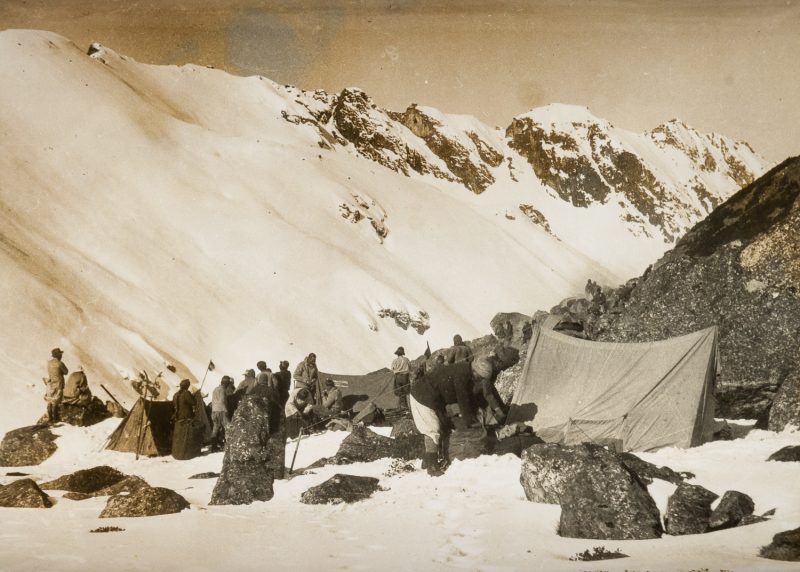
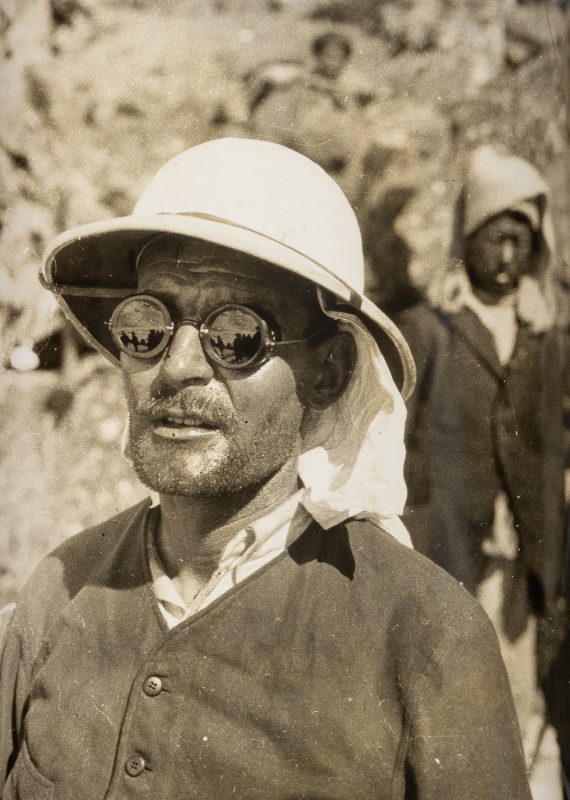
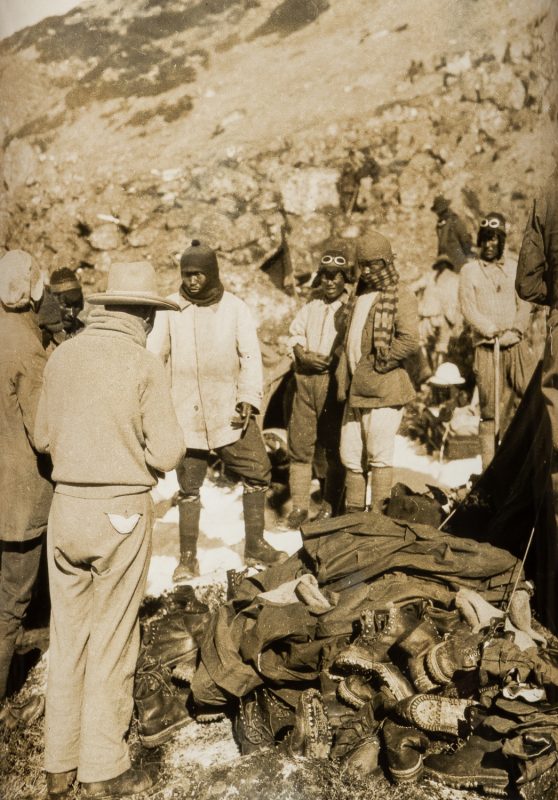
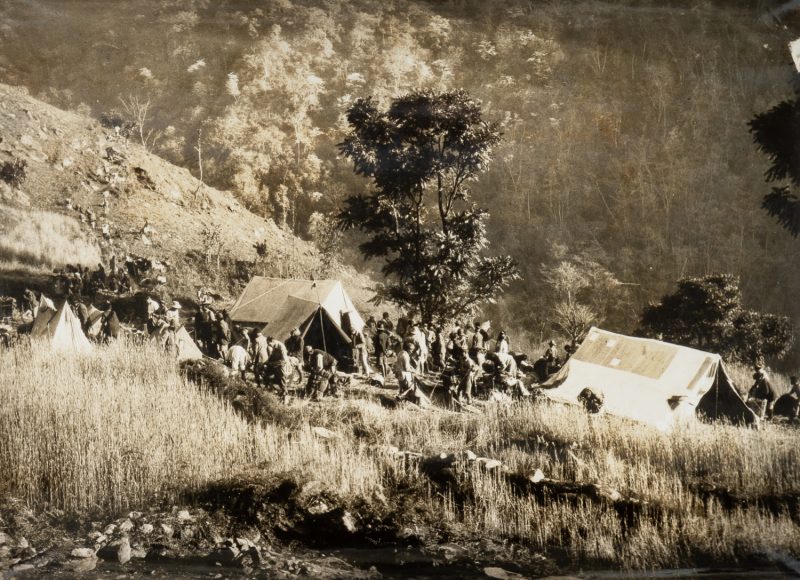
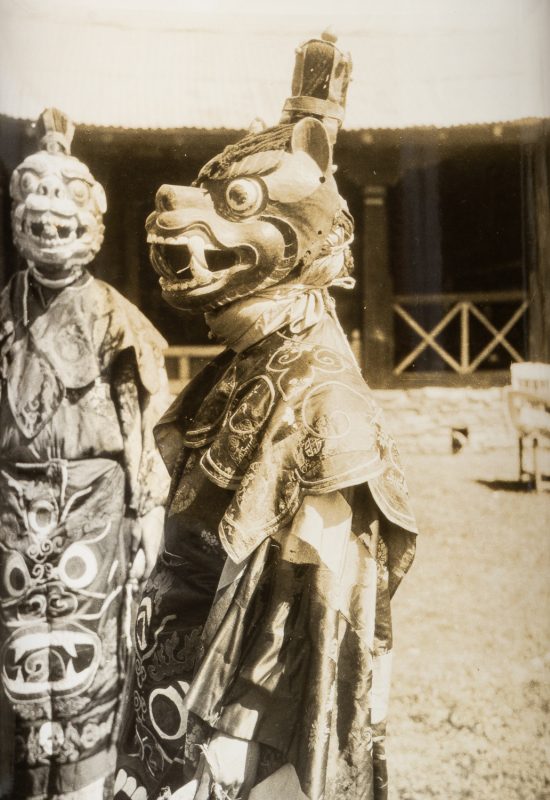
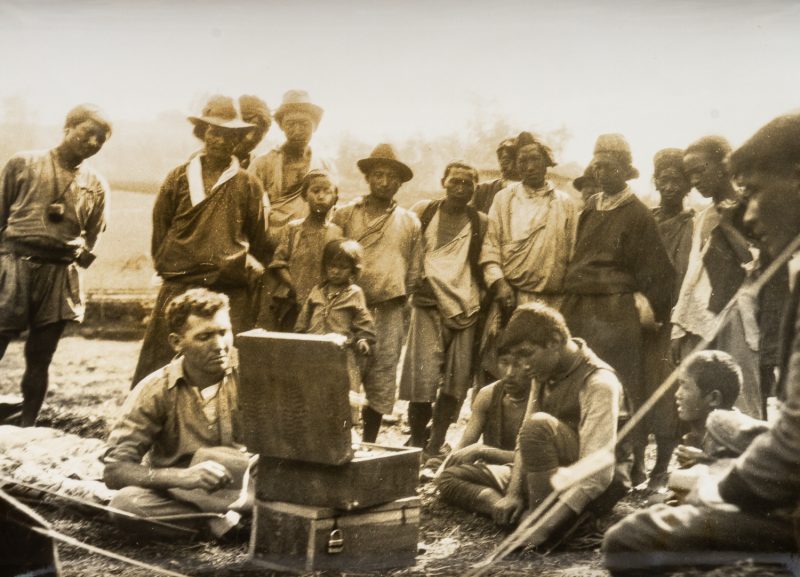
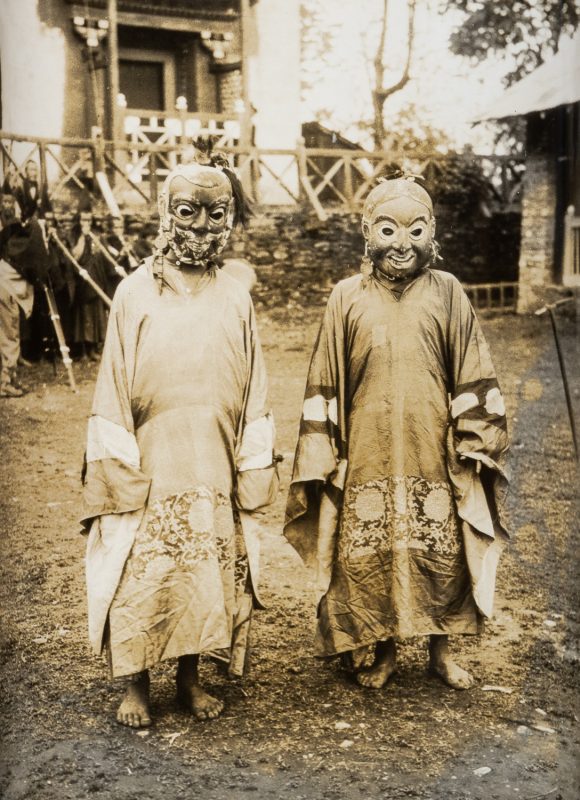
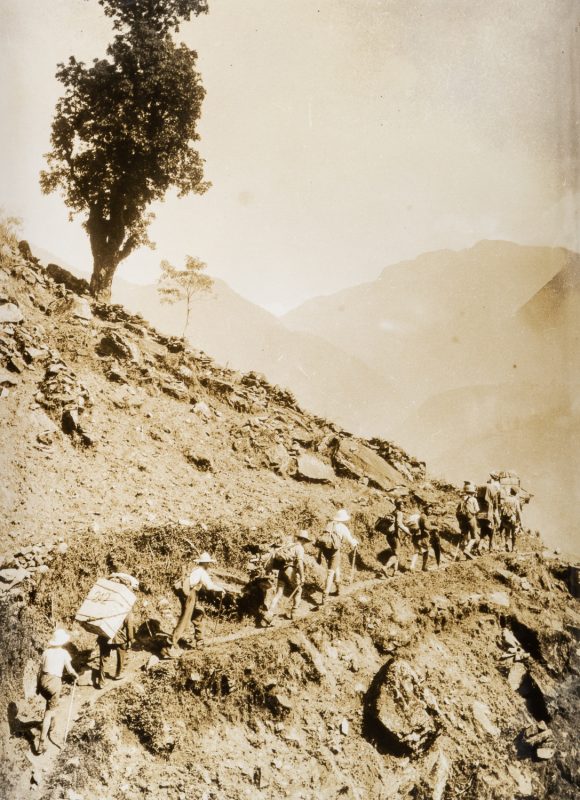
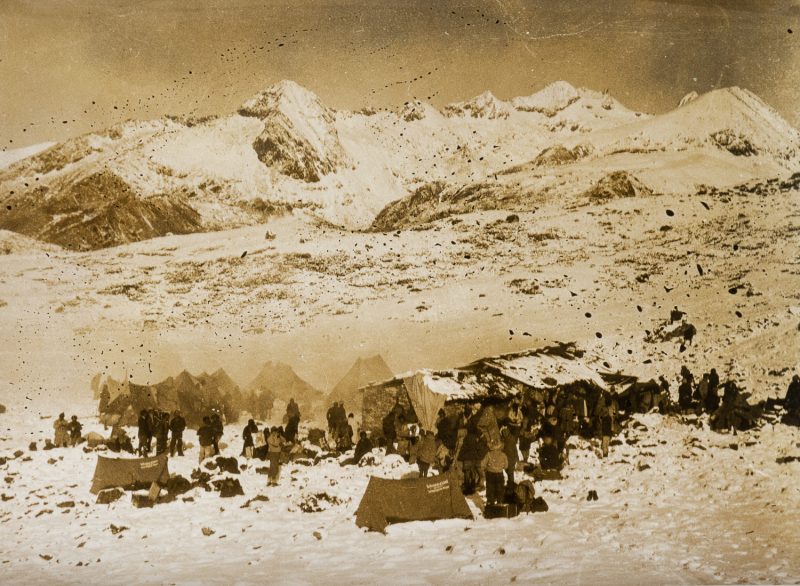
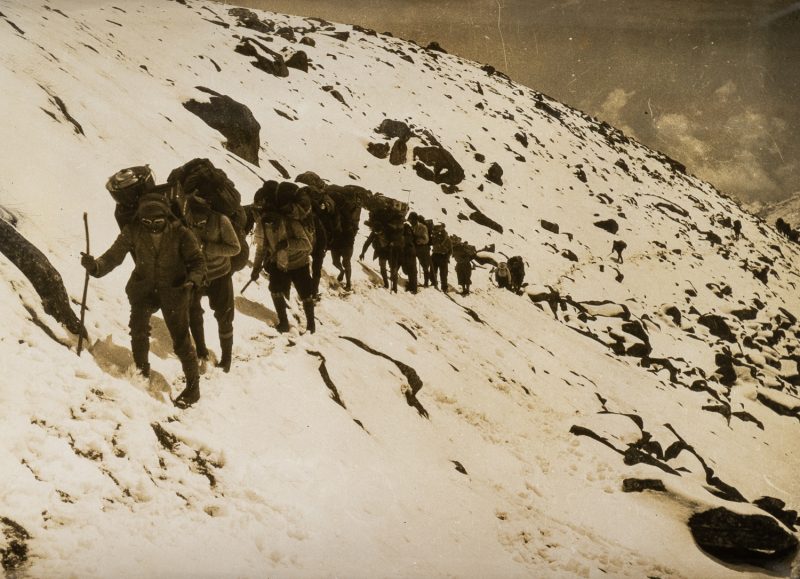
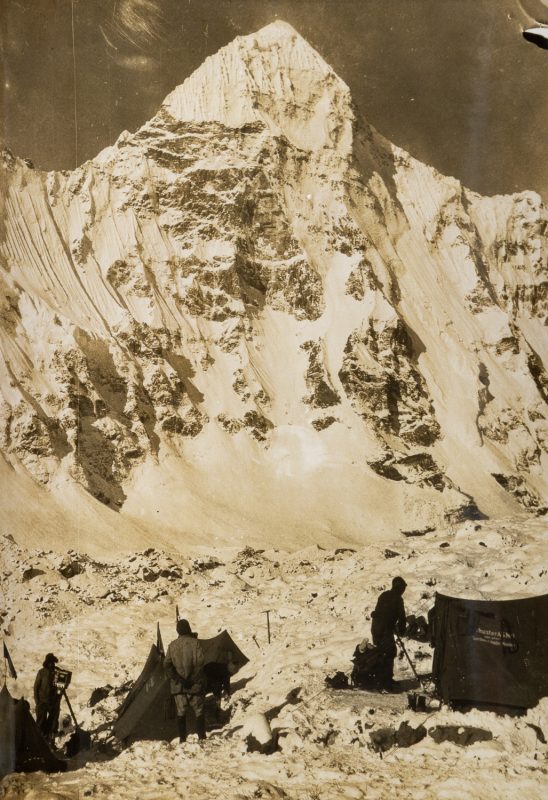
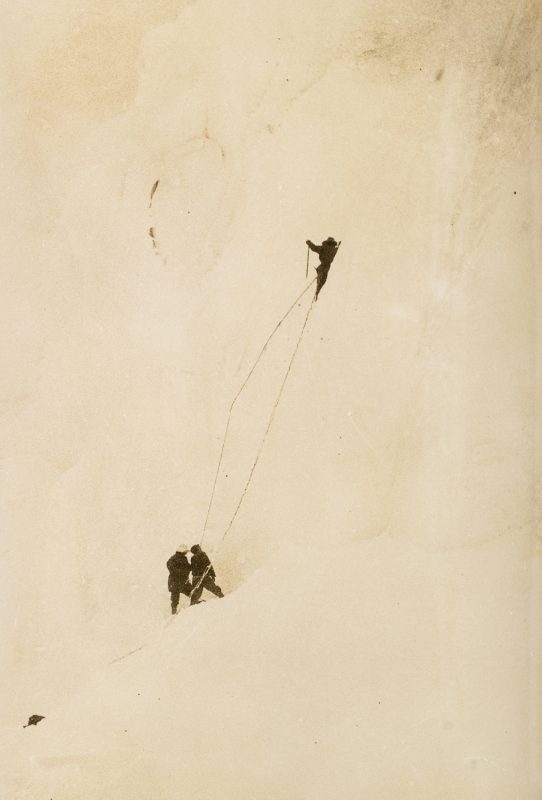
[MOUNTAINEERING] The International Himalayan Expedition (aka “The Times” Kanchenjunga Expedition), 1930 : a substantial archive of official photographs.
$1,750.00 AUD
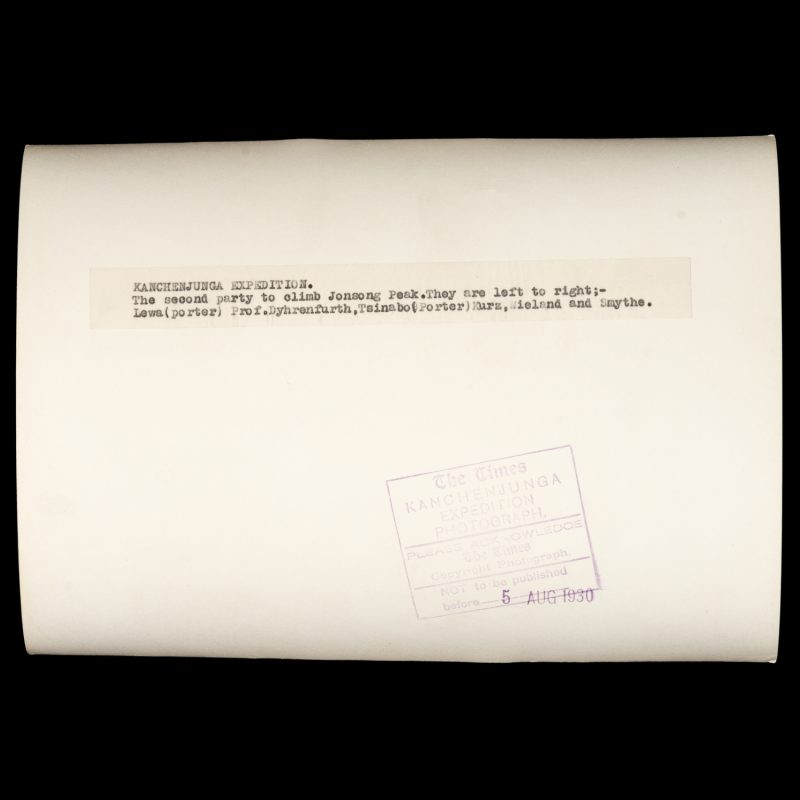
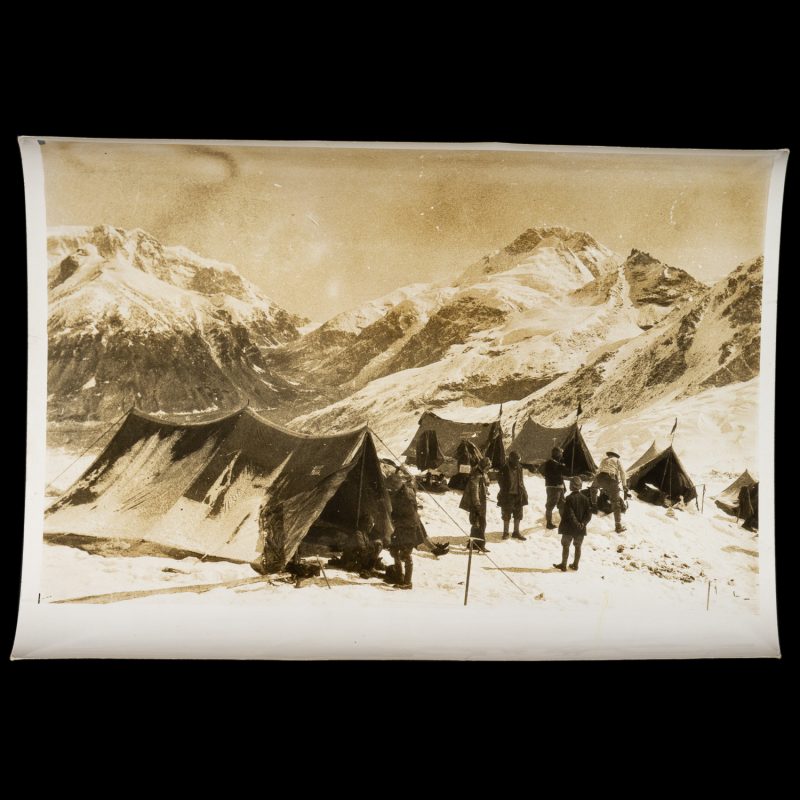
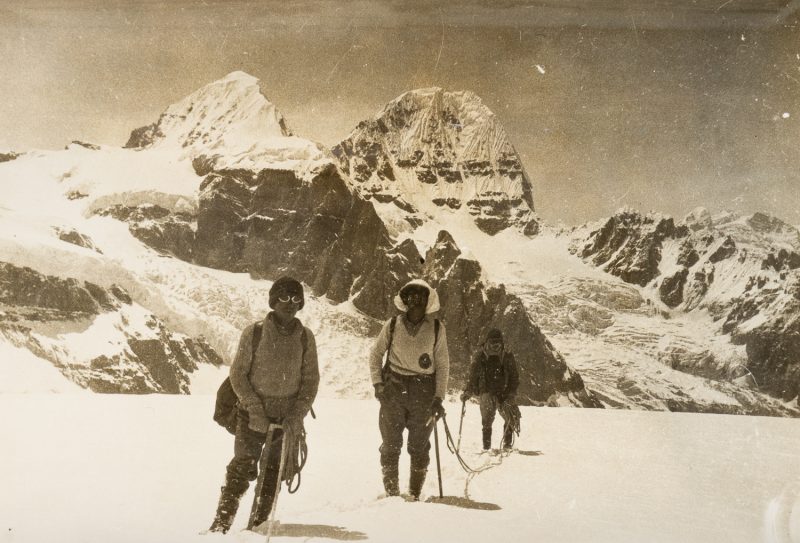
An archive of 44 original gelatin silver print photographs taken by the expedition photographer Harold Hoerlin; in uniform 260 x 200 mm or 200 x 260 mm format; versos with typed explanatory labels, “The Times Kanchenjunga Expedition” copyright stamps, and release date stamps: 24 May 1930 (10), 28 May 1930 (12), 21 June 1930 (5), 30 June 1930 (8), 5 August 1930 (9); all in fine condition (unmounted).
Besides the numerous sherpa porters and guides, the International Himalayan Expedition (I.H.E.) comprised five Germans, three Englishmen, two Swiss and one Austrian. The European members were: Professor G.O. Dyhrenfurth, leader; Mrs. Dyhrenfurth, secretary, “quartermaster” and commandant of the various base camps; Dr. H. Richter, doctor and reporter to the German press; U. Wieland, meteorologist and oxygen-engineer; Harold Hoerlin, mountaineer and photographer; F. S. Smythe, reporter to the English press; George Wood Johnson and J. S. Hannah, of the Himalayan Club, who served as mountaineers and transport-officers; Marcel Kurz, mountaineer and topographer; Charles Duvanel, film-camera operator; and Erwin Schneider, a young Austrian mountaineer and geological assistant.
During the expedition to the Himalayas, four peaks of over 7000m, or 23,000 feet, were climbed to their summits. These were Jonsong (24,473 feet), Nepal (23,470 feet), Dodang Nyima (23,623 feet), and Ramthang (23,311 feet). The I.H.E. also ascended five lower peaks: one of 20,014 feet and one of 20,424 feet, above Pangperma; the “Mouse” (20,539 feet) between Kangbachen and Ramthang peaks; a peak (altitude c. 21,350 feet) between Kellas’ Saddle and Jonsong peak; and the Kang peak (18,735 feet). Scientific observations were carried out by the team members, who gathered important data on geology, morphology, glaciology, topography, meteorology, climatology and physiology.
Frank Smythe wrote: ‘We went to Kangchenjunga in response not to the dictates of science, but in obedience to that indefinable urge men call adventure.’ One of the expedition’s primary objectives was to scale the world’s third-highest mountain, Kangchenjunga (or Kanchenjunga), which was still unconquered at the time, despite a number of attempts having been made on the peak, including two in the previous year. Smythe published an account of the expedition’s attempt, The Kangchenjunga Adventure (1930), which documents how it ended in tragic failure after an avalanche killed one of the sherpas.

