


# 50453
"J. O. H." (photographer and compiler)
[NEW CALEDONIA] Archive of original photographs taken by a German geologist, documenting mining, interactions with indigenous people, and the landscape in New Caledonia’s North Province, 1930-31.
$1,850.00 AUD
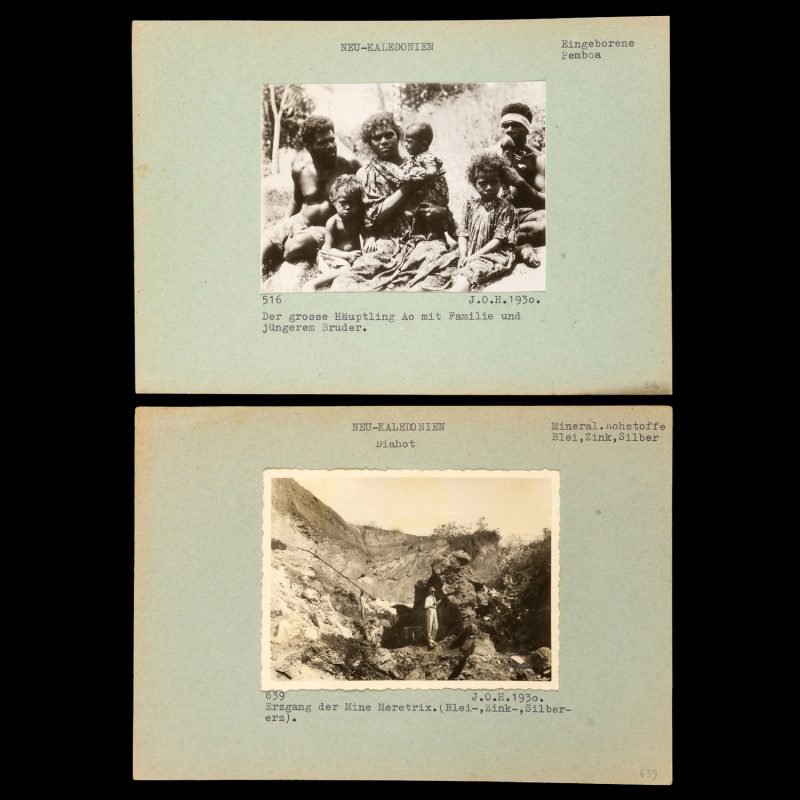
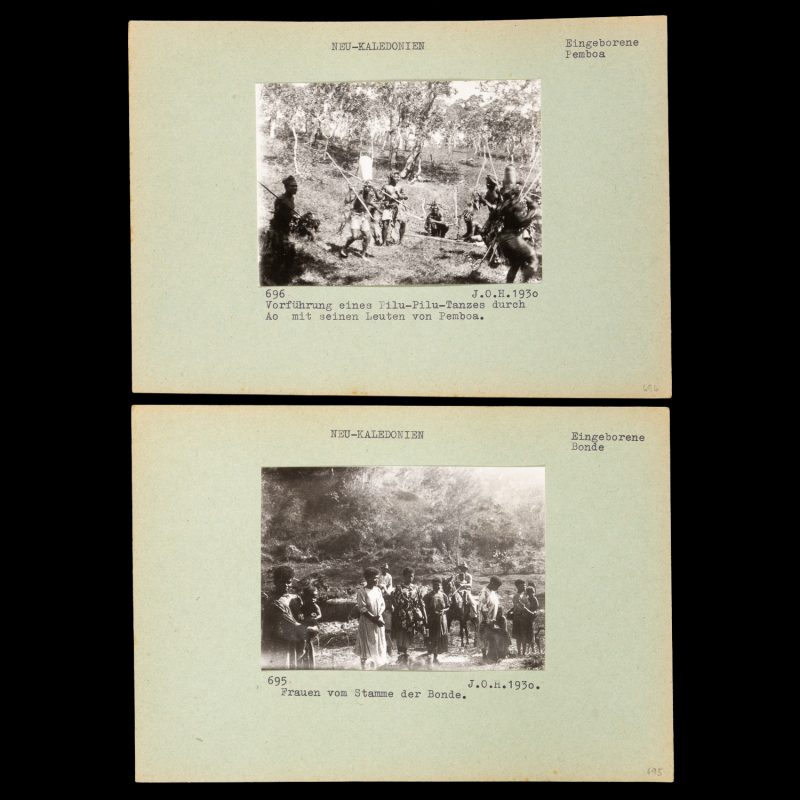
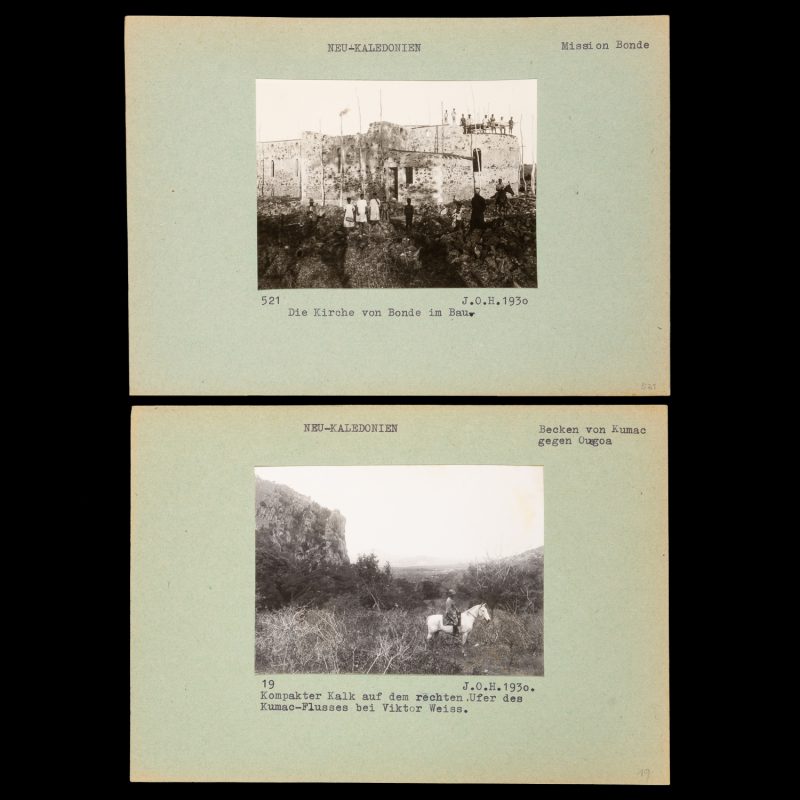
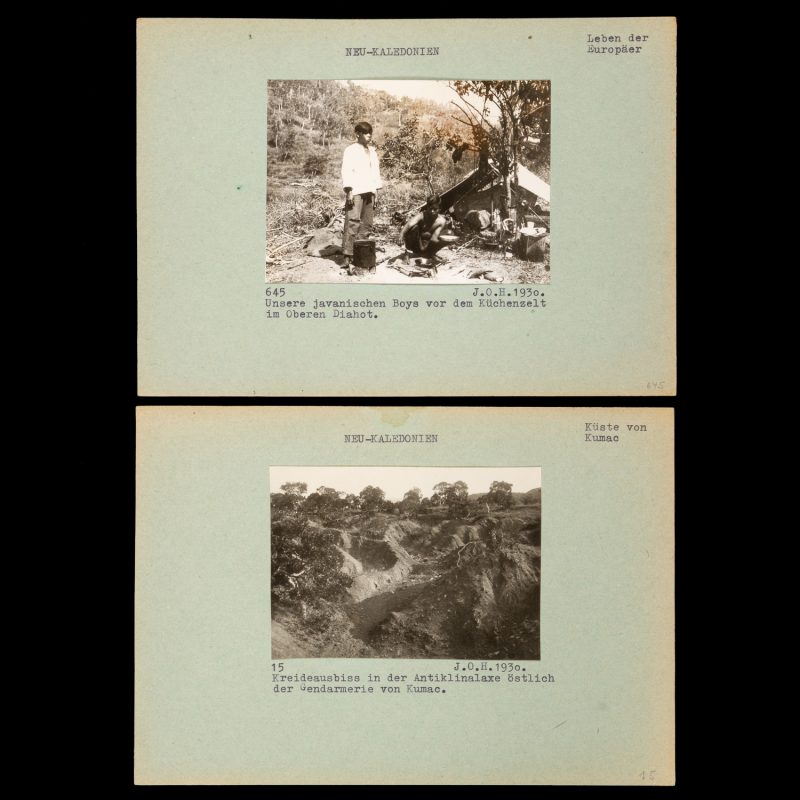
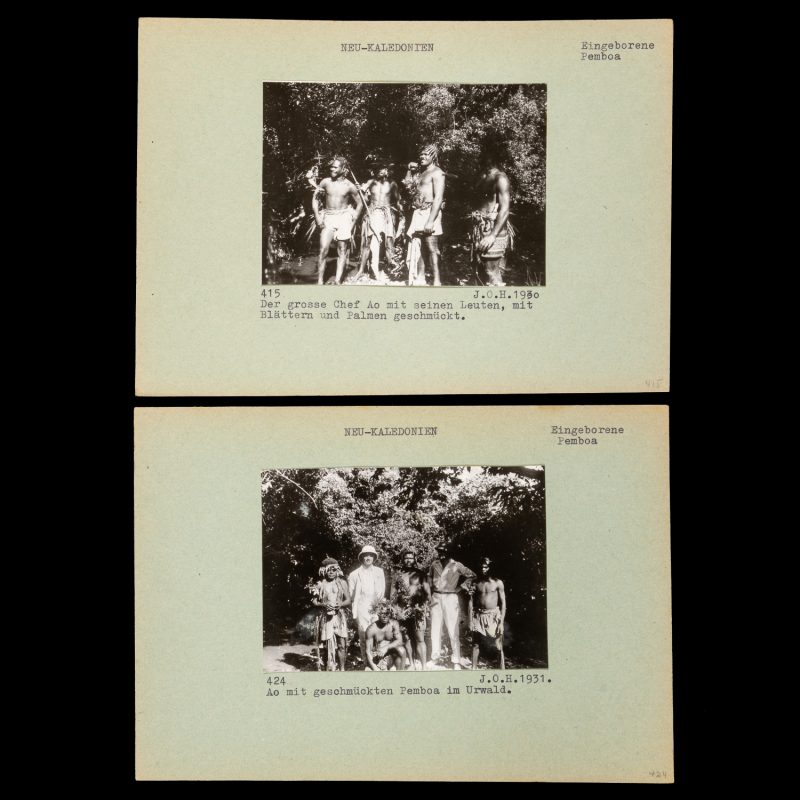
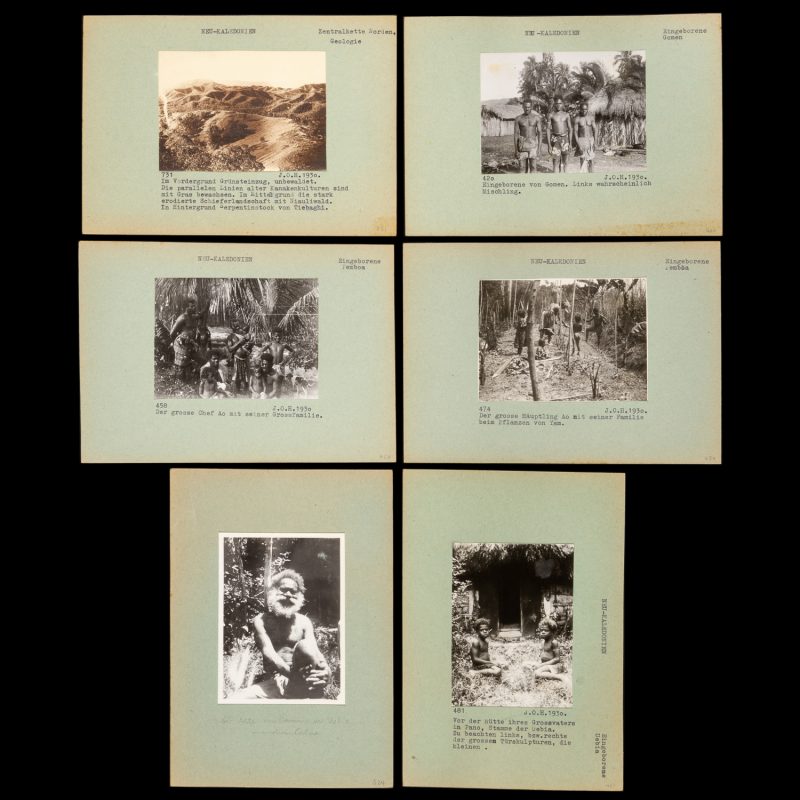
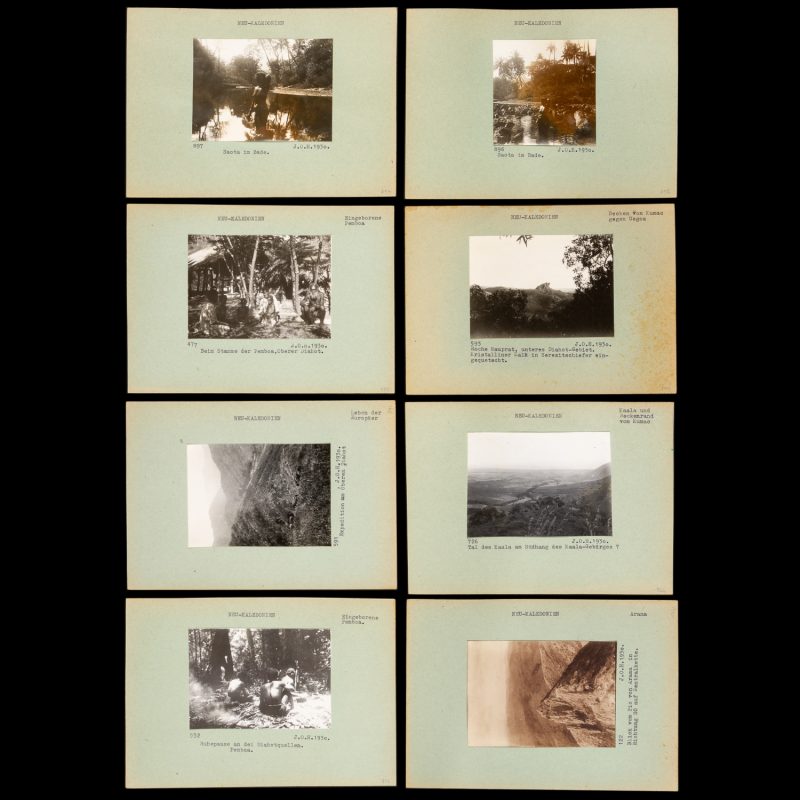
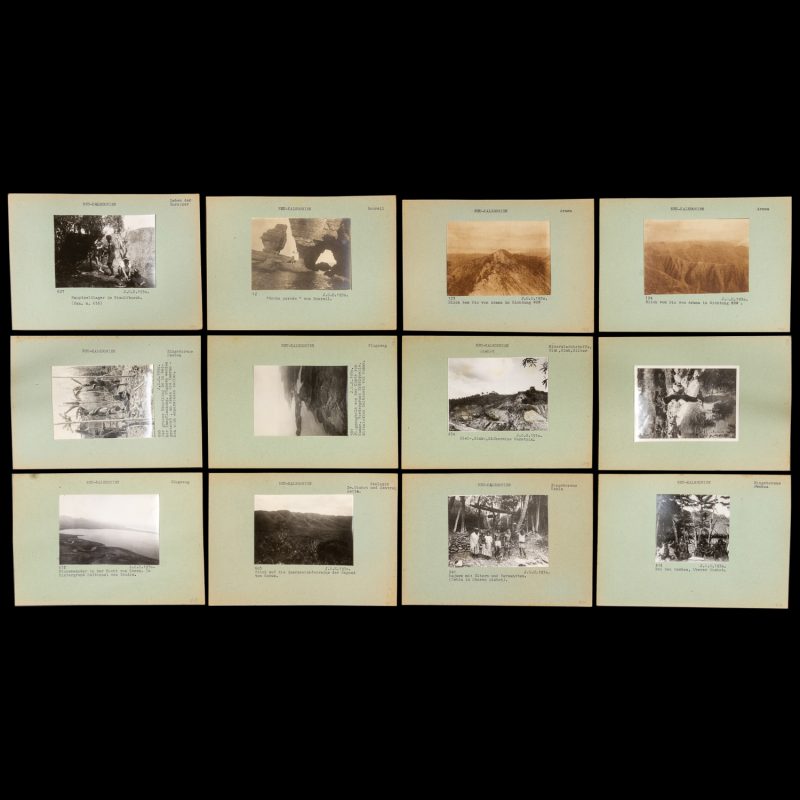
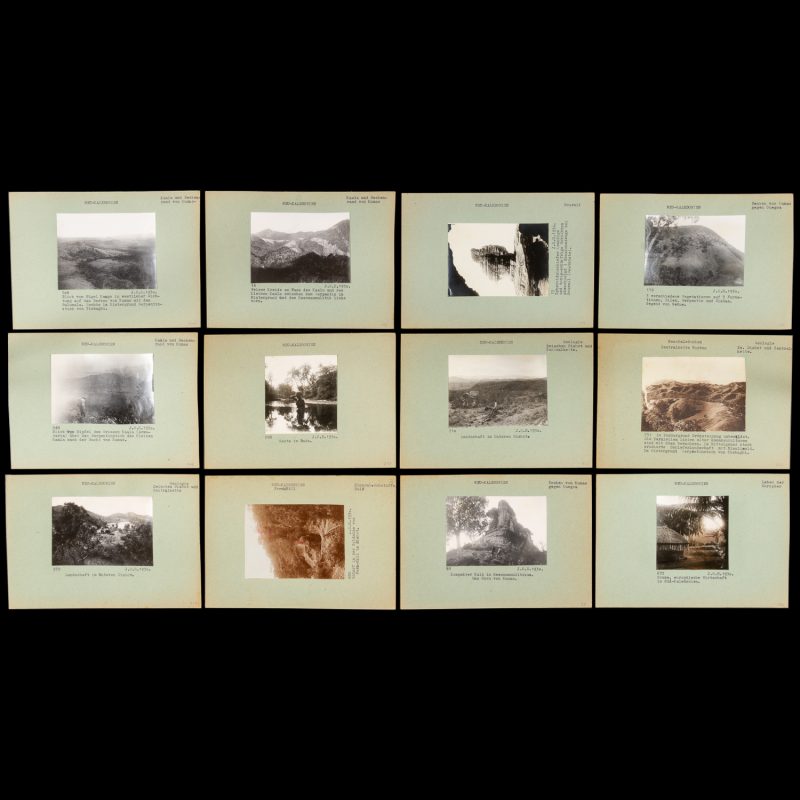
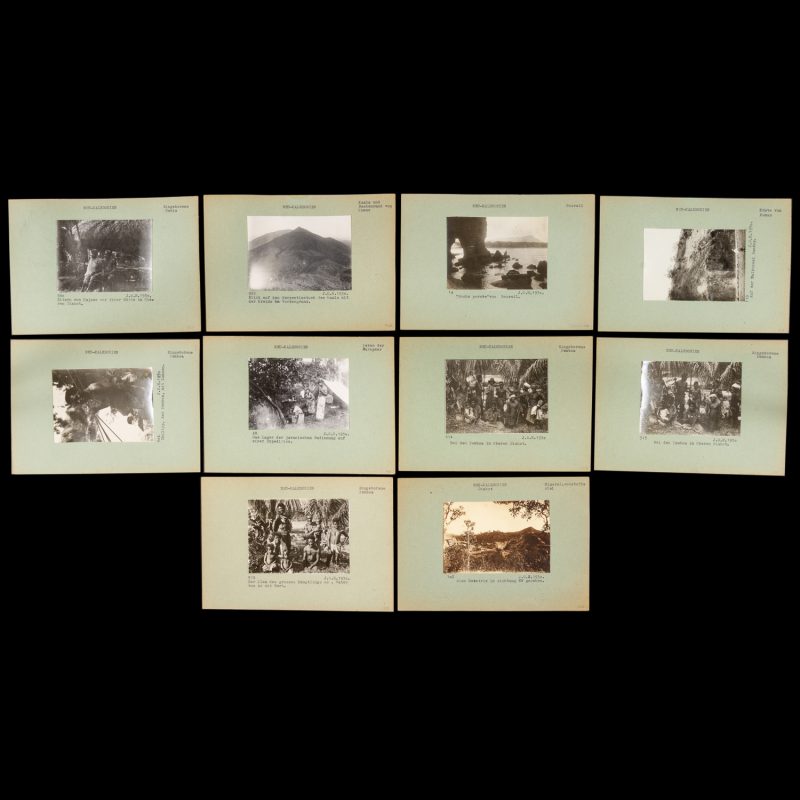
Group of 58 (fifty-eight) gelatin silver print photographs, in uniform 80 x 110 mm format, all neatly mounted on green paper backing sheets, 140 x 210 mm, each with the meticulous cataloguing of the photographer in the form of typed information in German, including in the upper margin a main heading ‘Neu-Kaledonien’ and a sub-heading, and in the lower margin the photographer’s initials ‘J. O. H.’, a sequence number, date (either 1930 or 1931), and a main caption detailing the location and subject matter of the image; the archive has been exceptionally well preserved: all of the prints are sharp and unfaded and the mounts are likewise virtually flawless.
The photographs in this substantial and potentially significant archive were taken by a very competent non-professional photographer who was evidently a German-speaking geologist connected with the mining industry; the images have quite possibly never been published. The archive documents many places and activities in New Caledonia’s North Province on Grande Terre, around the Diahot and Koumac Rivers (Arama, Pemboa, Ouegoa, Gomen, Pano, Bonde, Uebla, etc.), and includes many photographs of the Kanak population (a pilou-pilou dance, the great chief Ao of Pemboa with his family, tending yam crops, building the church at Bonde, etc.); geological formations (prominent colonist Victor Weiss is identified in one of these shots); the Mérétrix copper-silver-lead mine on the Diahot; and an expedition to the Upper Diahot, using Javanese servants.
The areas recorded in this archive had been explored and photographed some 30 years earlier by John Ulster Kearney, an English marine and mining engineer. Kearney’s photographs are held in the Pitt Rivers Museum. The images in the present archive therefore have the potential to allow researchers to study the extent to which the mining industry and European settlement had impacted the environment along the Diahot and Koumac during the intervening three decades.


