


# 49881
GULICK, John Thomas et al.
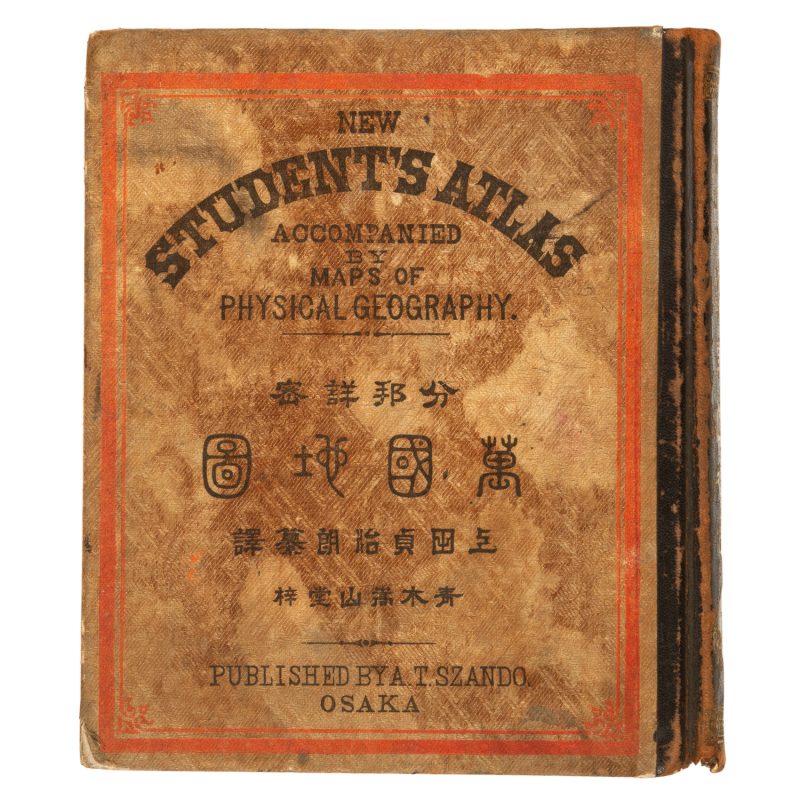
New student atlas accompanied by maps of phisical geography
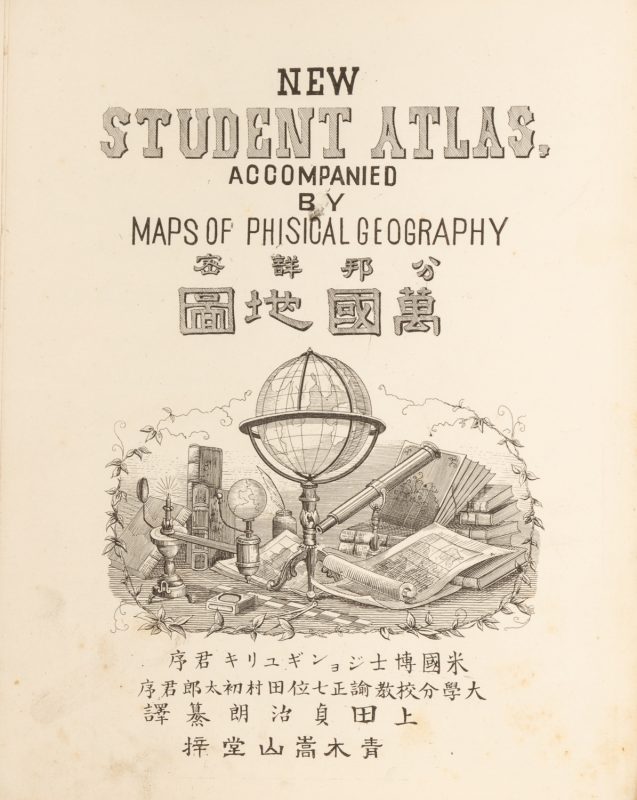
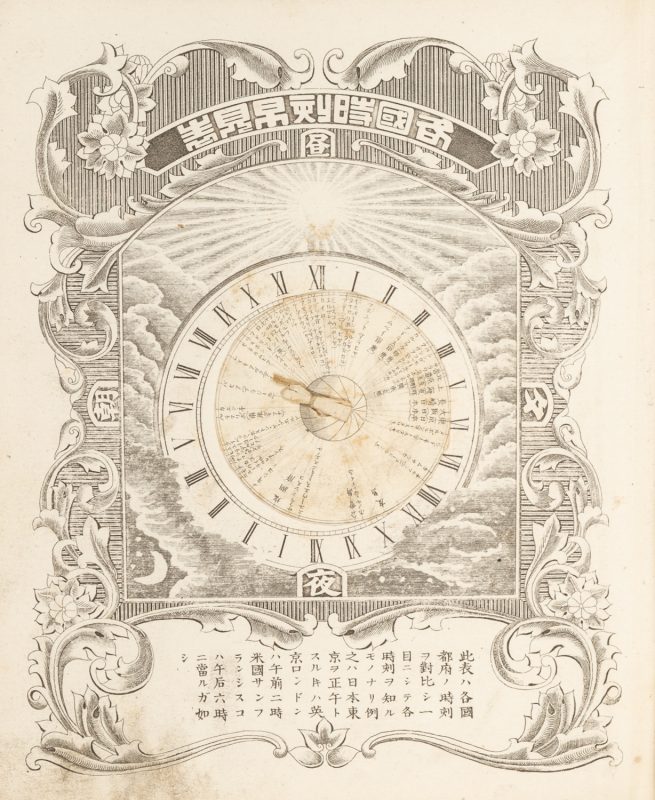
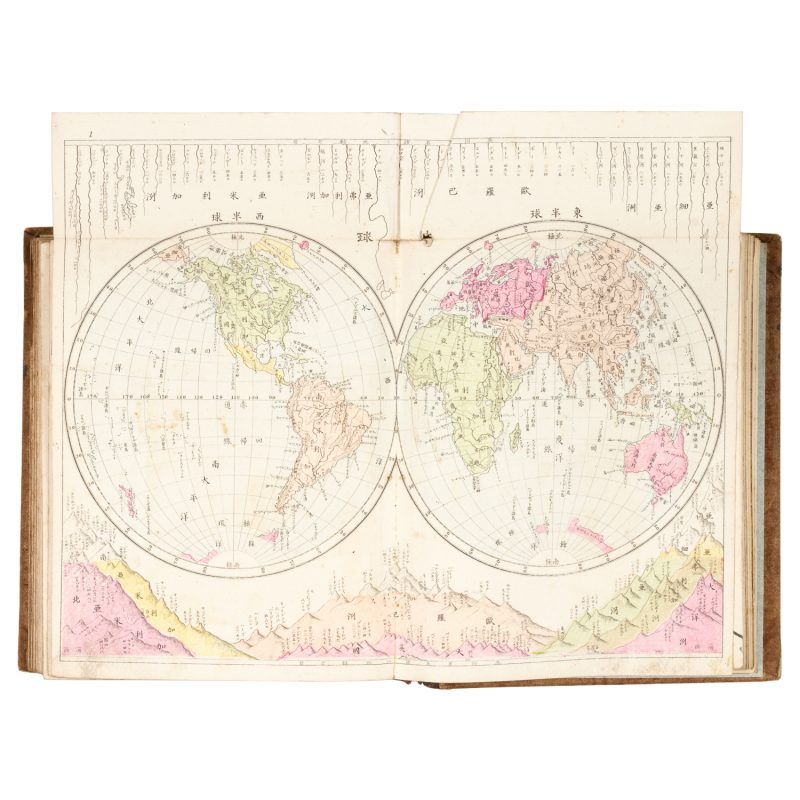
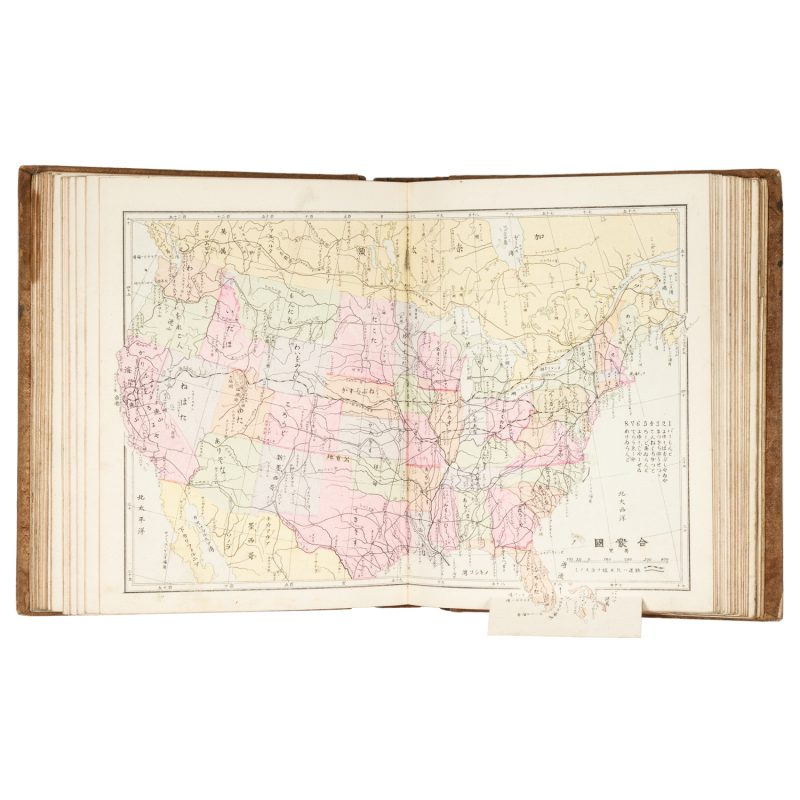
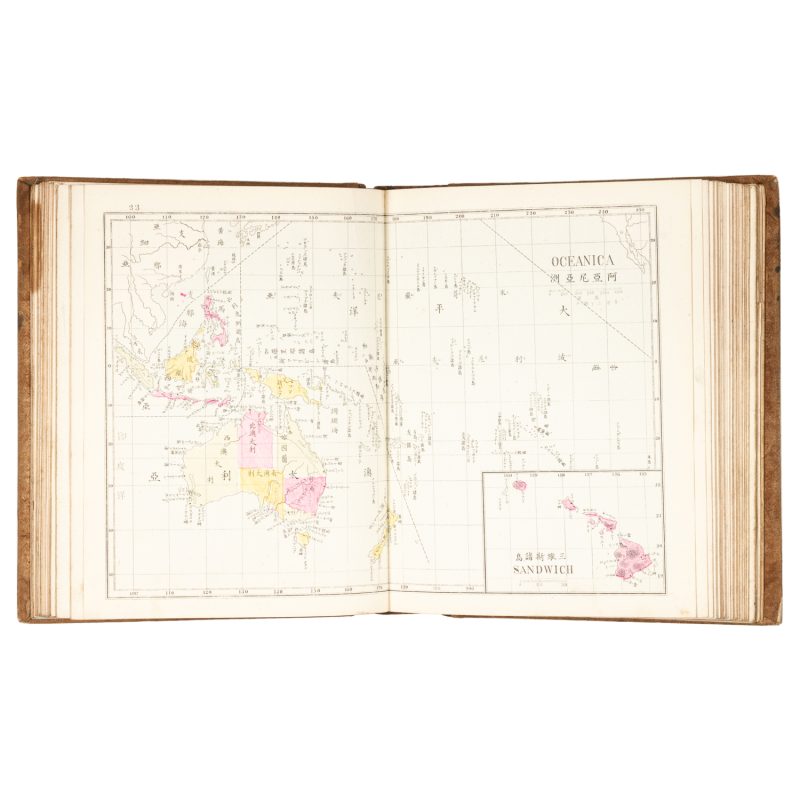
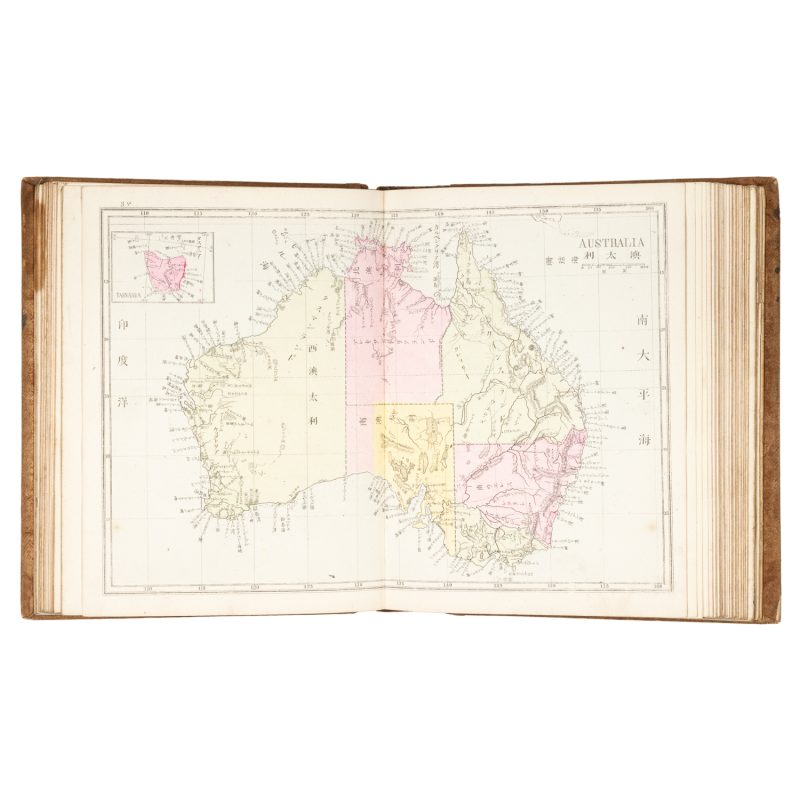
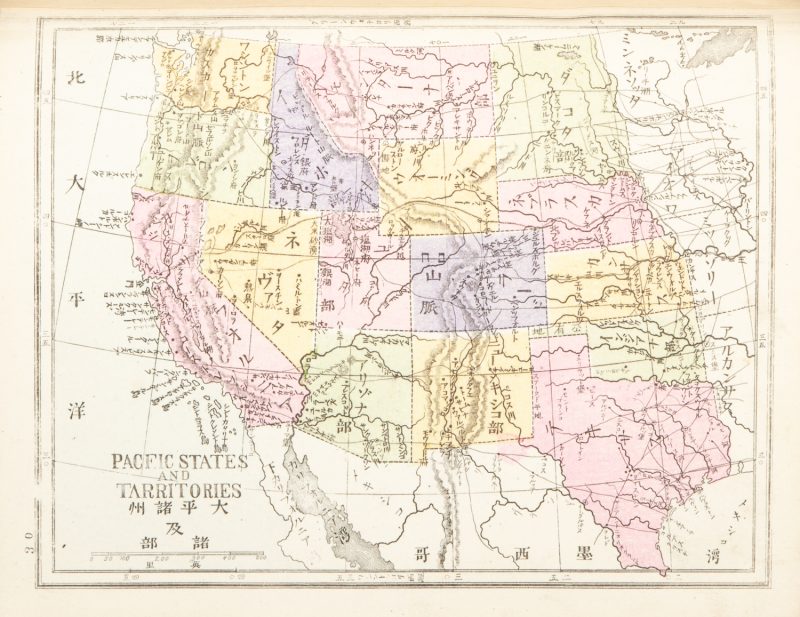
Osaka : A. T. Szando[w] (ie: Aoki Sūzandō), Meiji 29 (1896). Small quarto, 200 x 170 mm, quarter calf over lettered silk bound boards (generally rubbed), spine lettered in gilt in English and Japanese, patterned endpapers, title page in English and Japanese (misspelling ‘physical’) with vignette illustration of a globe, tellurium, telescope, charts and atlases, four page introduction by John T. Gulick in English, being photolithography of his handwriting, six page introduction in Japanese, pp. [4], lithographed plate with volvelle, two double page folding world maps with extension flaps, 48 further full page or double page maps of the world, all with original colouring, including Japan; Chinese Empire; Corea; Thibet and India; Turkey, Persia, Beloochistan, Afghanistan, and Turkestan; Siberia, Africa, British isles, North America (with six of the United States), ‘Oceanica’ (with inset map of ‘Sandwich’), Australia, the ancient world (the ‘Poman Empire’), and numerous climate maps of the world.
Aoki Sūzandō (transliterated to A. T. Szandow on the title page, A. T. Szando on the upper board, and Awoki Szandow on the lower board), was a Meiji-era publishing company based in Osaka and Tokyo founded by Aoki Tsunesaburō (1863-1926), which published a number of guide books and maps for the internationally minded Japanese traveller.
John Thomas Gulick (1832 – 1923) was an American missionary born in Hawaii and a noteworthy conchologist who developed his own theory on the evolution of land snails prior to his reading of Darwin’s On the origin of species, published in 1859. In 1864 he was ordained as a missionary in China, and in 1872 travelled to England where he met with Charles Darwin to discuss his own view on the theory of evolution, publishing a paper there as a result. In 1874 he moved to Japan where he continued his study of snails and shells, publishing further works in various reputable journals. Gulick’s interest in the natural environment and climatic conditions is apparent in the introduction he writes for this atlas, in which he has assisted in the translation of place names into Japanese, and also into kana.
Rare.


