


# 48533
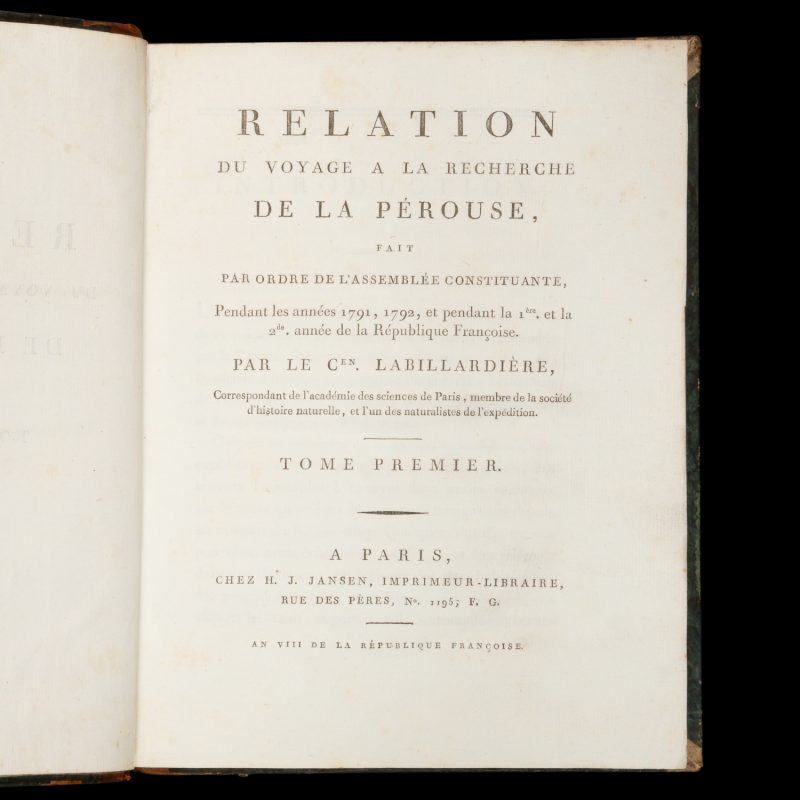
LABILLARDIERE, [Jacques Julien Houten de].
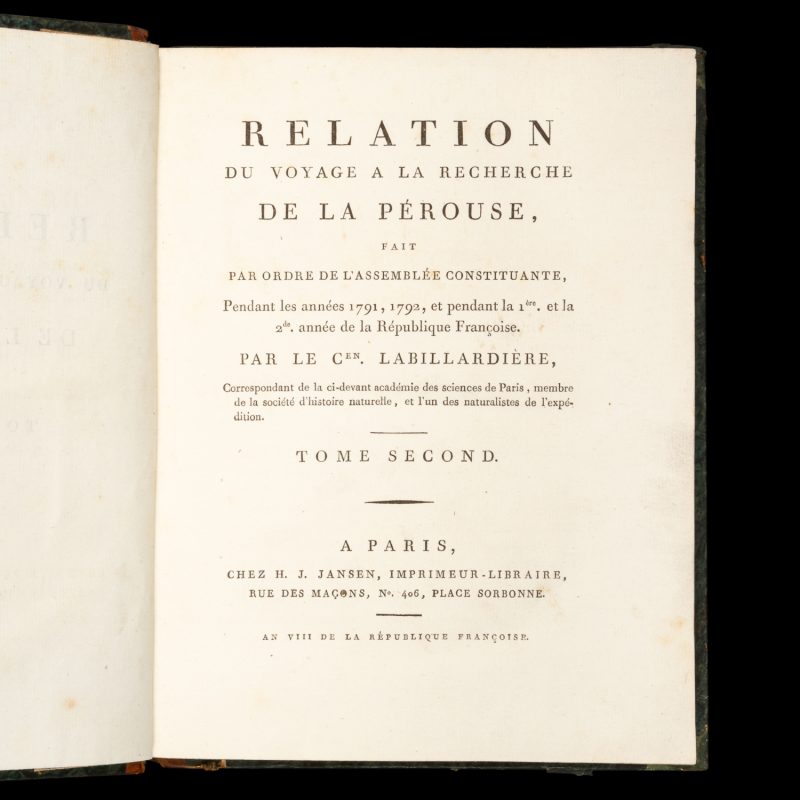
Relation du voyage a la recherche de La Pérouse,
$15,000.00 AUD
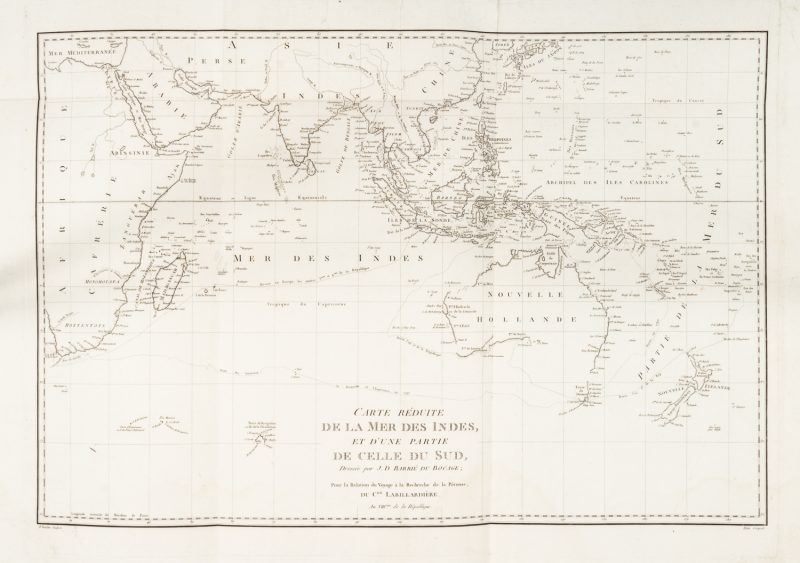
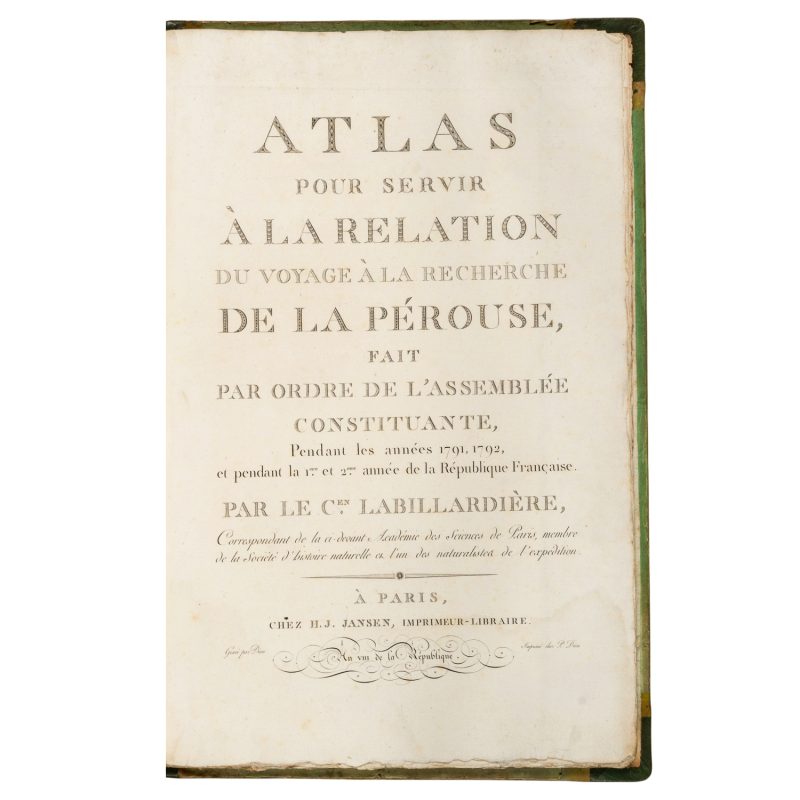
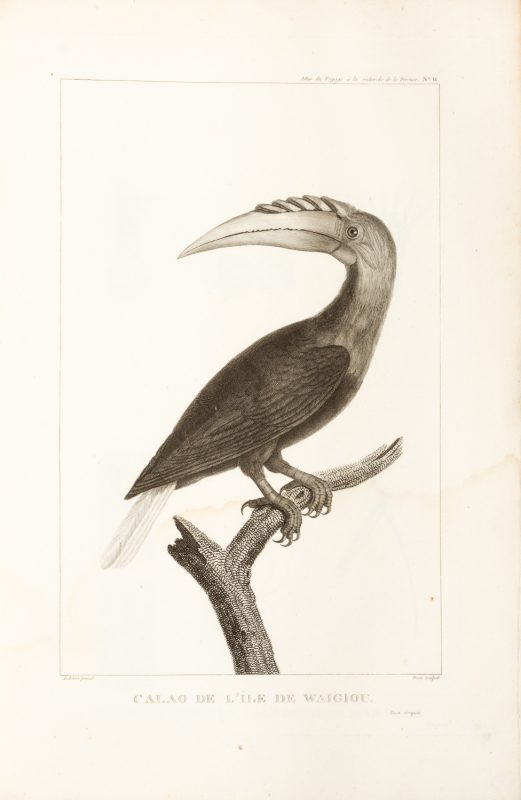
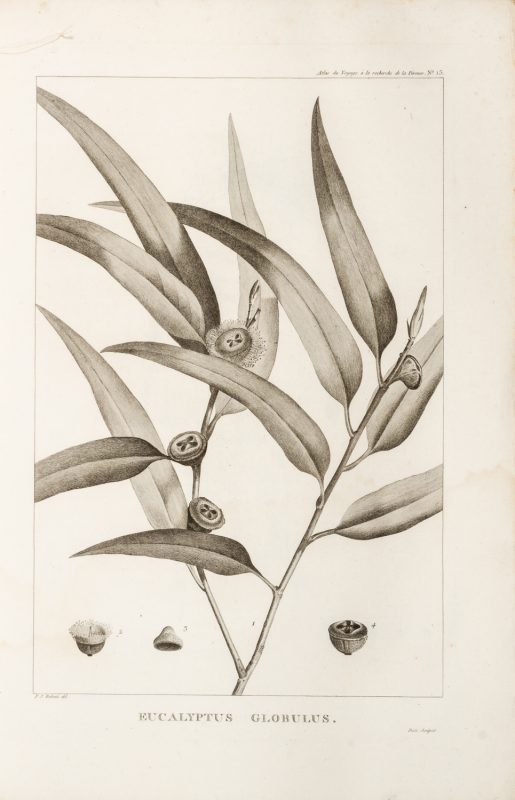
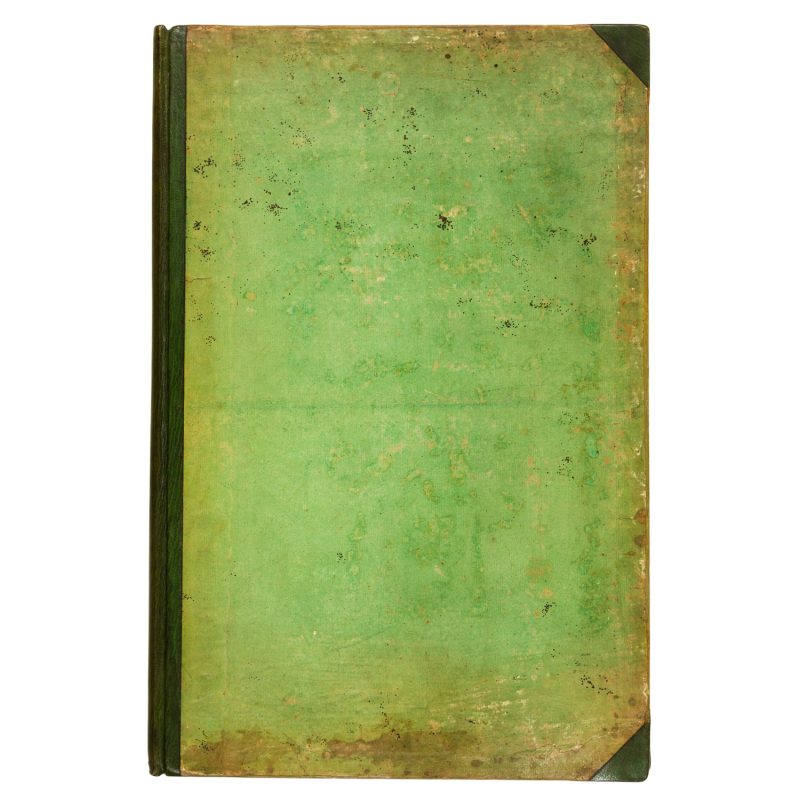
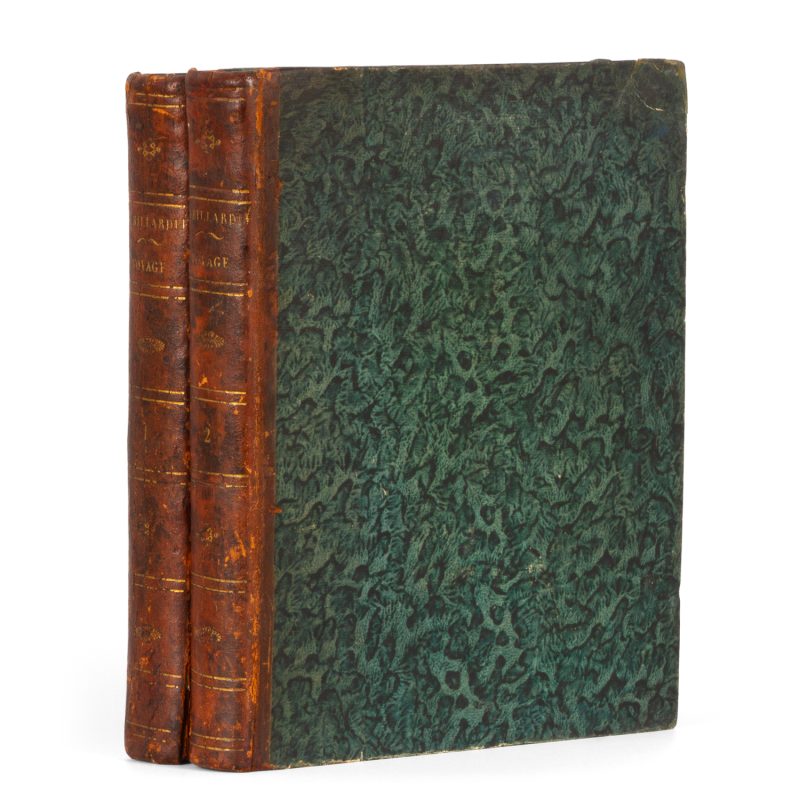
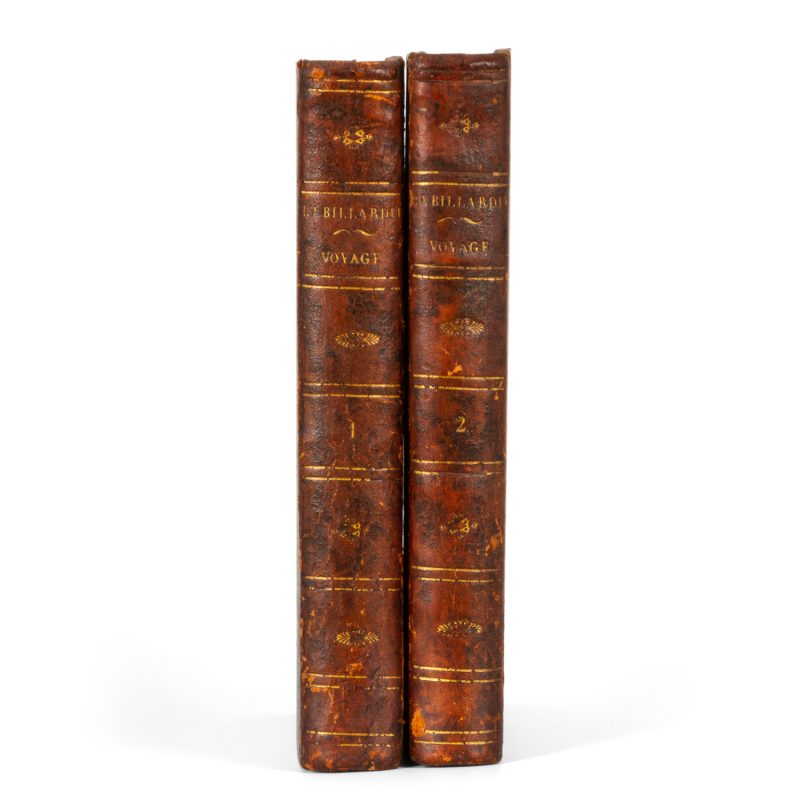
fait par ordre de l’Assemblée Constituante, pendant les années 1791, 1792, et pendant la 1ere et la 2me année de la République Francoise. Paris : Chez H. J. Jansen, an VIII de la République Francoise [1800]. Two volumes quarto plus atlas folio, the two text volumes in early quarter papered boards with gilt-lettered calf spines (corners bumped, spines rubbed, joints split, but solid), a few spots of light foxing. Vol 1: pp. xvi; 442; vol 2: 332; 113, [errata]; folio atlas in contemporary green papered boards, spine in modern morocco lettered in gilt : engraved title page, 44 plates after Piron and Redoute including a double page map, pale water stain to lower portion of several plates, a very good, complete set.
First edition of this account by Labillardière of d’Entrecasteaux’s voyage in search of La Pérouse.
Three years after last contact was made with La Pérouse at Botany Bay, the official search expedition under D’Entrecasteaux set sail from Brest to discover his fate. In addition to this prime objective were instructions to survey coastlines, obtain natural history specimens, and gain further scientific data on the islands of the Pacific. The naturalist on the voyage was Labillardière, who along with artist Piron recorded numerous specimens in Van Diemen’s Land, south-west New Holland (including famously the first detailed study of the black swan), Tonga, New Guinea and New Caledonia. The expedition spent two years searching and studying in the southern ocean before sickness swept through the two ships, D’Entrecasteaux himself dying from scurvy in late 1793. In disarray they sailed to Java, where they learned from the Dutch of the French Revolution, and suspected Republicans (including Labillardière and Piron) were arrested. On the voyage back home they were captured by the British and all their scientific papers were seized, to the despair of the naturalist. However Labillardière’s ally in science Joseph Banks negotiated the return of their research papers, ‘in order that he may be able to publish his Observations on Natural History in a complete manner’, which he duly did in 1800.
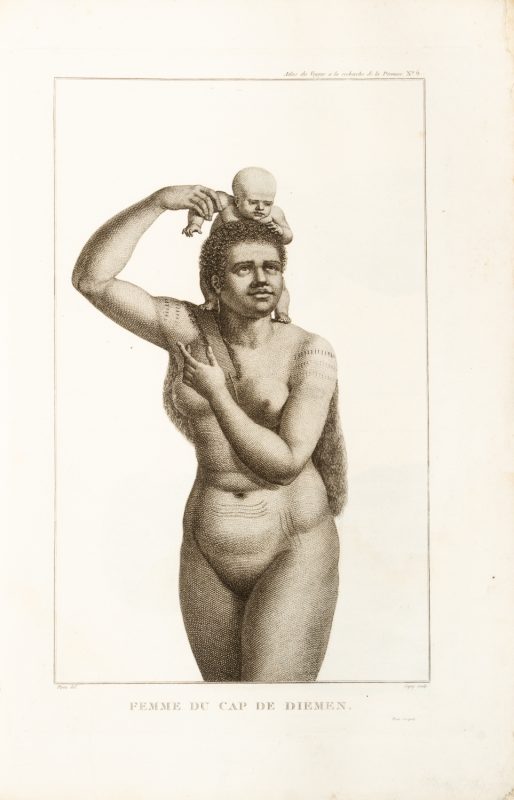
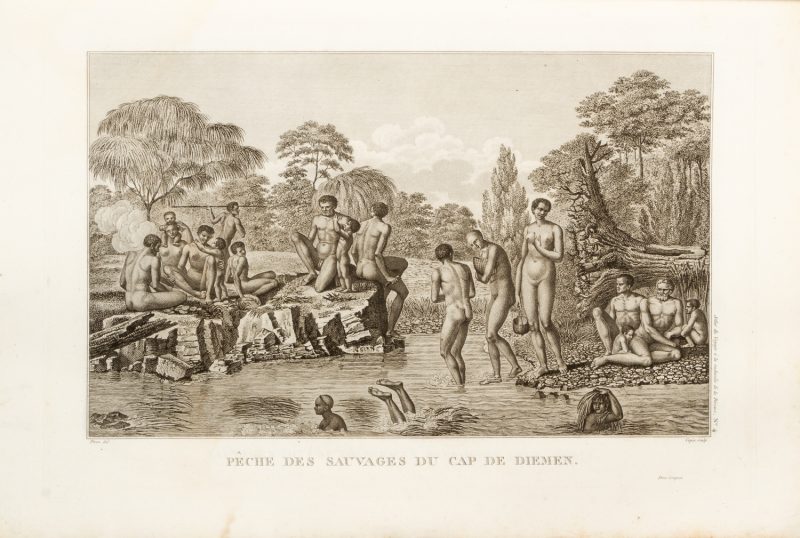
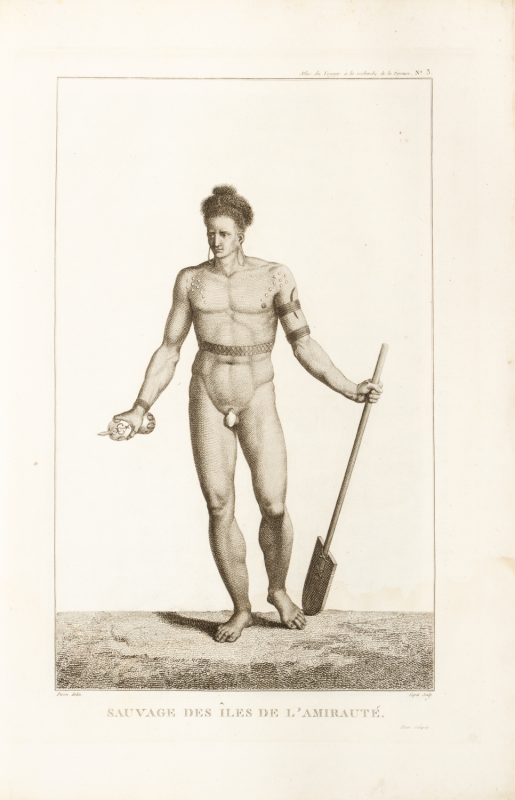
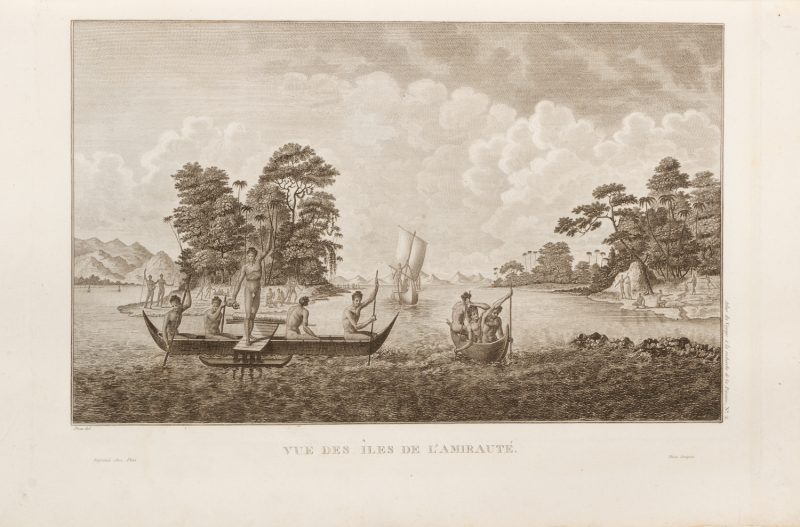
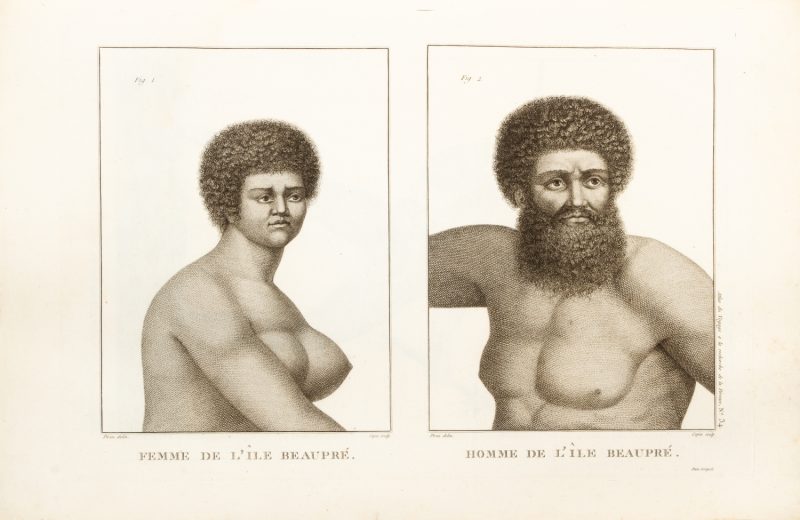
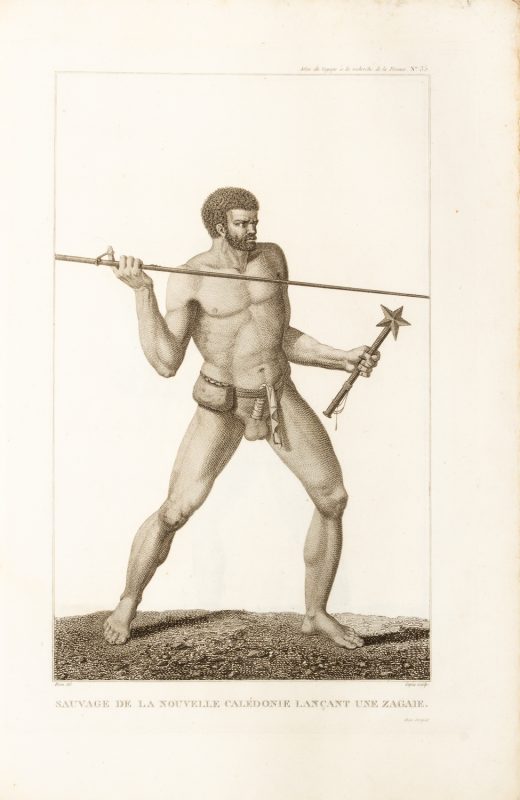
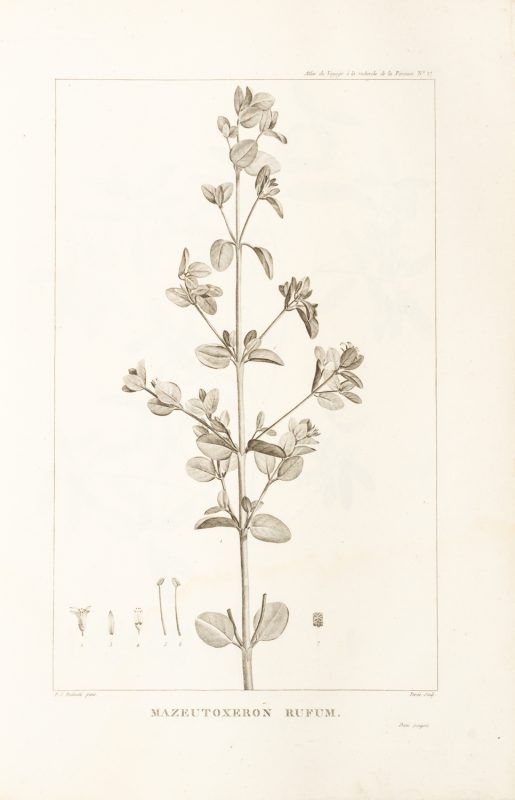
Labillardière’s account is the first that was published from the famous expedition: the official account would not be published for another eight years, upon the restoration of the monarchy. The quality of the plates in the atlas volume is exceptional, depicting with great sensitivity the indigenous people who inhabited the islands and continent. The botanical plates, which were completed in France under the direction of Pierre-Joseph Redoute, the most accomplished artist of the era, depict in large scale eucalypts, banksias and new specimens gathered on the journey. The superb plates are complemented by a lengthy and detailed text, which includes a supplement of vocabularies of languages encountered on the voyage. The interest in Labillardière’s account of the voyage was so great that in the year it was first published in French it underwent four English editions. It remains a desirable record of one of the great French voyages to the southern hemisphere.
The wreck of La Pérouse’s ship ‘L’Astrolabe’ was located on Vanikoro in the Solomon Islands by Dumont D’Urville in 1829 (his other ship, ‘La Boussole’, was located nearby in 1986). The search for La Pérouse, or the discovery of evidence explaining the true fate of his expedition, had been of paramount importance to the French government for decades and had captured the imagination of the public, not only in France but across Europe.


