


# 51767
WILDE, Oscar (1854 - 1900)
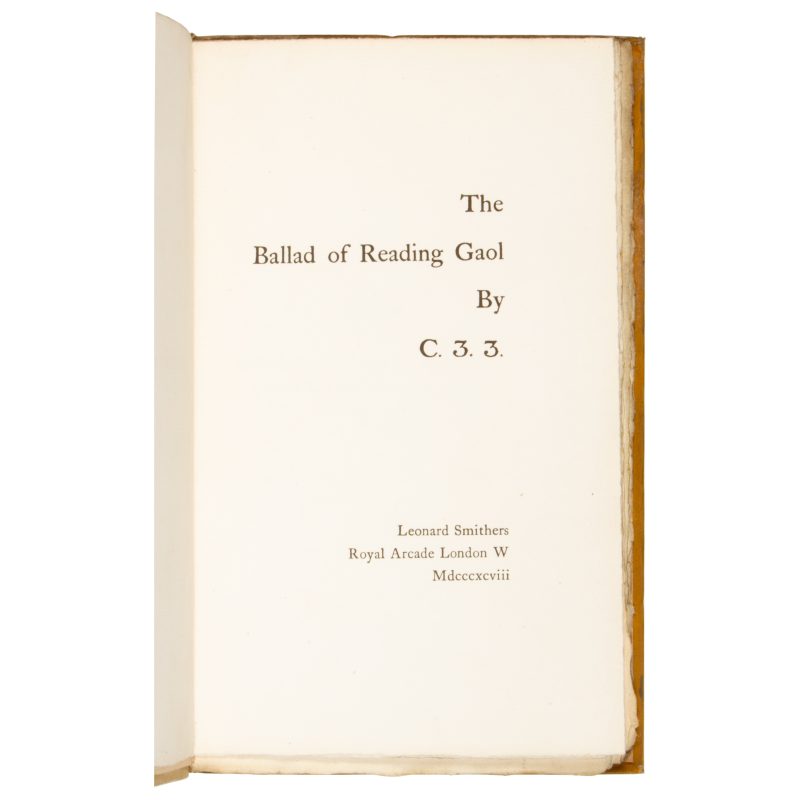
The Ballad of Reading Gaol. By C. 3. 3.
$2,750.00 AUD
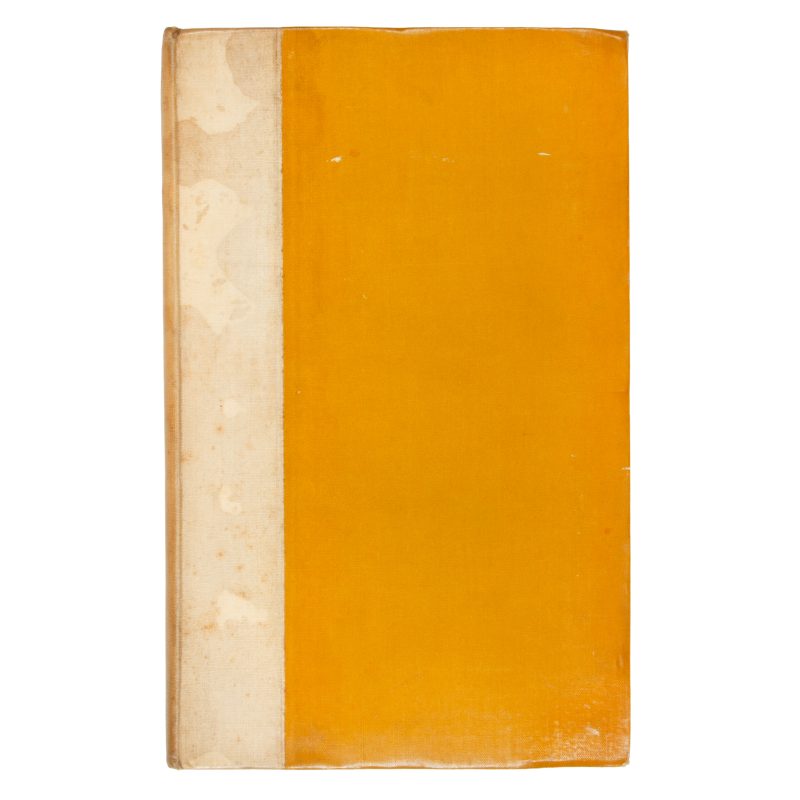
London : Leonard Smithers, 1898. First edition. Octavo, two toned gilt-lettered cloth (spine discoloured), offsetting to endpapers, fore and lower edges uncut, pp. [viii]; 31; (1), printed rectos only, internally clean, a very good copy. Printed in an edition of 800 copies on handmade paper and 30 copies on Japanese vellum.
The true first edition of one of Oscar Wilde’s most important works.
The Ballad of Reading Gaol was written in exile by Oscar Wilde after his release from prison in May 1897, after being convicted of ‘gross indecency’ under Section 11 of the Criminal Law Amendment Act 1885, for consensual homosexual acts in 1895. The poem was published by Leonard Smithers on 13 February 1898 under the pseudonym “C.3.3.”, which stood for cell block C, landing 3, cell 3. Oscar Wilde’s name was not included on the title page until the 7th printing in June 1899. Wilde made small alterations to the text of all the first seven editions. Despite the absence of Wilde’s name, all 800 copies sold out within a week, and the work was reprinted two weeks later.
The Ballad of Reading Gaol is the last published work by Wilde before his death in 1900. The publisher issued several unauthorised editions later between 1899 and 1907. The poem describes the execution of a prisoner that took place during Wilde’s incarceration, and is a critique of the cruel conditions of prison life and its effect on the human spirit.
In addition to its contribution to Wilde’s literary output, The Ballad was also directly influential in improving prison conditions in Britain, with Irish MPs Michael Davitt and T.P. O’Connor quoting directly the ballad in parliamentary debates of the time. This lead to the 1898 Prison Reform Act which adopted some of the recommendations that Wilde had made in his letters published in 1897 and 1898 detailing the inhuman conditions of the prison. The 1898 Act saw torturous measured such as the treadmill abolished, ensured solitary confinement could only be used for a maximum of 28 days, and ensured that children were separated from adult prisoners.
The Mitchell Library holds David Scott Mitchell’s copy of the second edition of The Ballad of Reading Gaol.
We cannot locate any examples of the first edition of this important work by Oscar Wilde in Australian libraries.
