


# 48397
HAWKINS, Sir Richard, c. 1562 - 1622
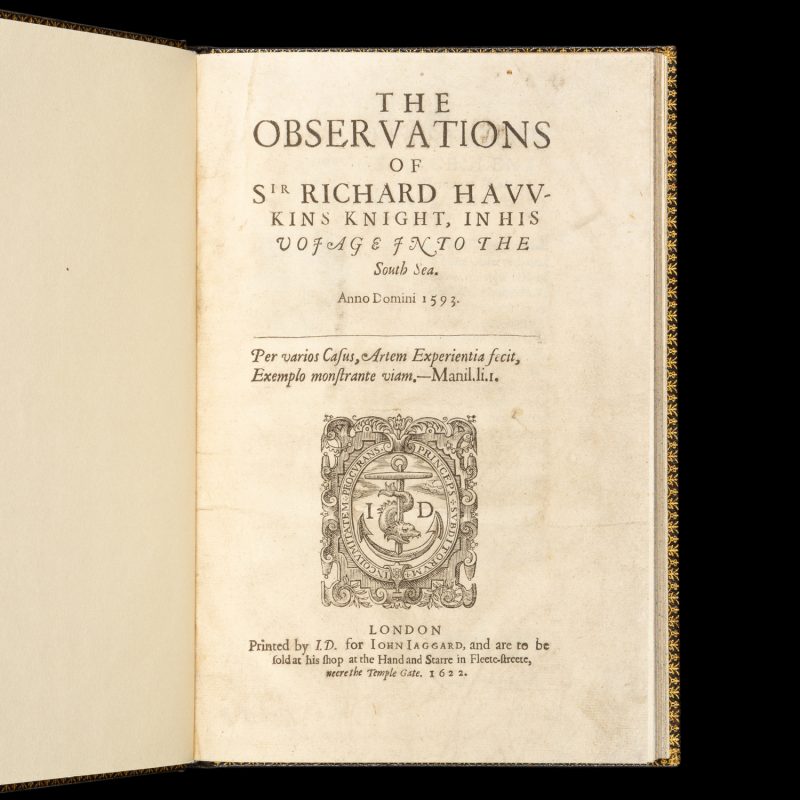
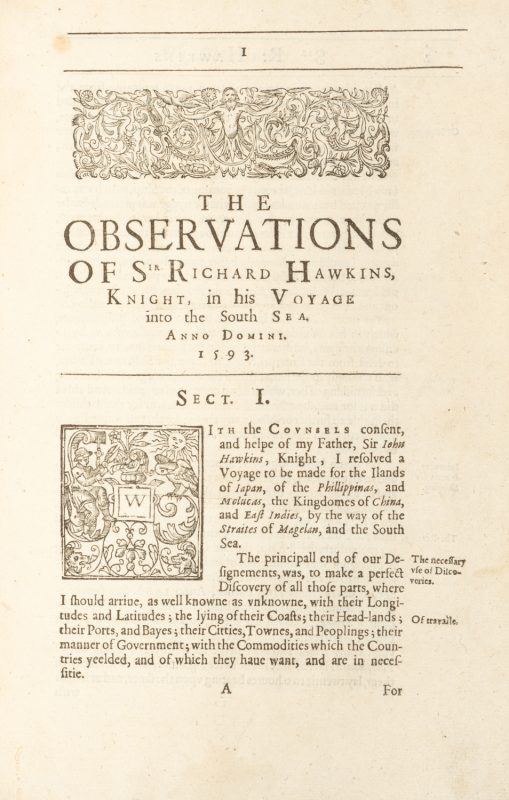
The observations of Sir Richard Hawkins, Knight, in his voyage into the south sea : Anno Domini 1593.
$12,500.00 AUD
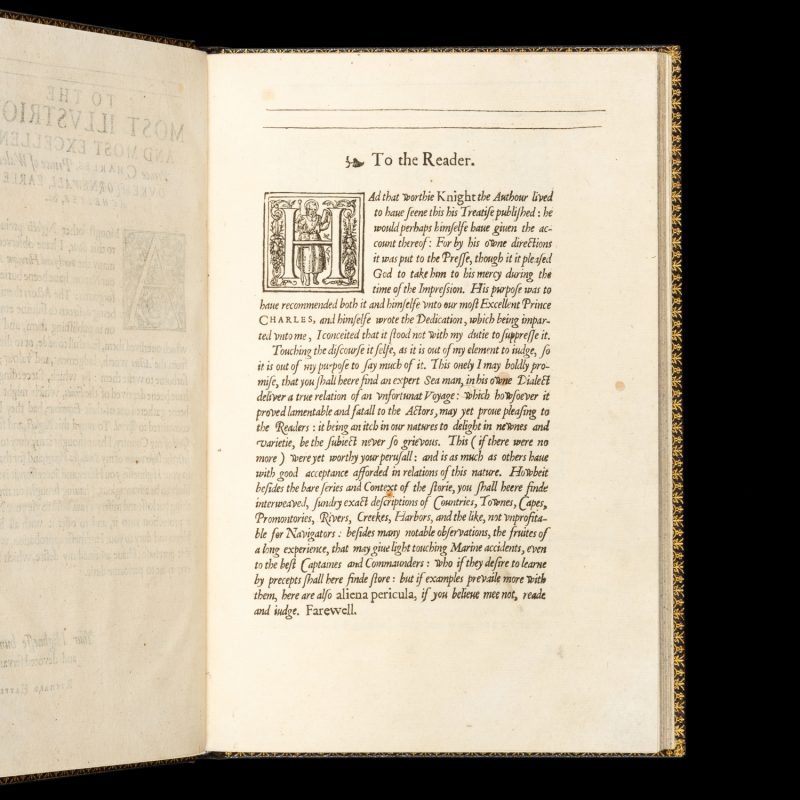
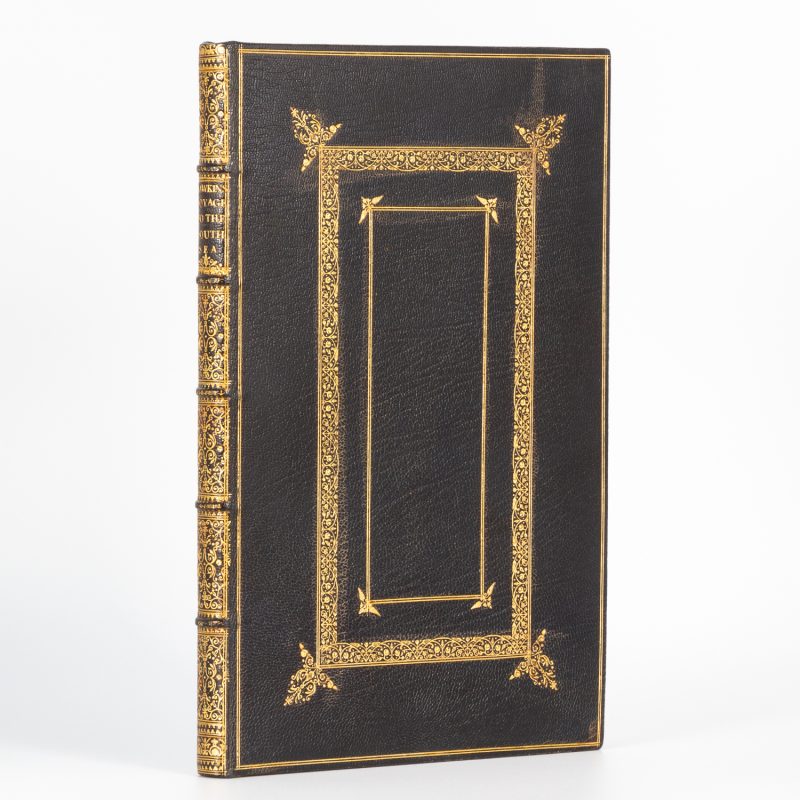
London : Printed by I. D[awson] for John Jaggard, and are to be sold at his shop at the Hand Starre in Fleete-streete, neere the Temple Gate, 1622. Folio, finely bound in full crushed blue Morocco, elaborate gilt rules and tooling, spine in compartments with raised bands, tooled and lettered in gilt, gilt dentelles, marbled endpapers, title leaf; dedication leaf; ‘To the Reader’ leaf; pp. 169 (with pp. 163 – 166 in expert facsimile); errata page; (5 – table, with the lower right hand side of the final leaf replaced in expert facsimile) ornamental head- and tail-pieces and initials, a very good copy.
The rare original account of Hawkins’ English expedition into the South Seas, commissioned by Queen Elizabeth I in 1593. Hawkins sailed up the west coast of South America, plundering Spanish towns along the way, ultimately failing to make his way across the Pacific. The expedition was ultimately a failure, Hawkins was captured and imprisoned in a Spanish gaol, returning to England in 1603. The English would not venture into the Pacific in pursuit of trade for another century. A little known aspect of Hawkins’ account is his keen observation of the properties of lemons and oranges to prevent scurvy, ‘This is a wonderful secret of the power and wisedome of God, that hath hidden so great and unknown virtue in this fruit, to be a certaine remedie for this infirmitie’.
‘The original account of a famous English voyage. Hawkins had originally intended to circumnavigate the globe, trading with Japan, the Philippines, the Moluccas, China, and India. However, upon entering the Pacific in 1594, in his ship the Dainty, Hawkins plundered Valparaiso. Later in the year he was trapped by two Spanish ships carrying a force outnumbering his own by ten to one in the Bay of San Mateo in Peru. A three-day fight ensued and defeat was inevitable. Hawkins was released by the Spanish in 1602 and died suddenly in the Council Chamber of London, shortly before the above volume was published’ – Hill.
Hill (2004) 784; Sabin 30957; Spence 572; STC 12962

