


# 13440
ALVARES, Francisco, 1465-c.1541; CORSALI, Andrea, 1487-?
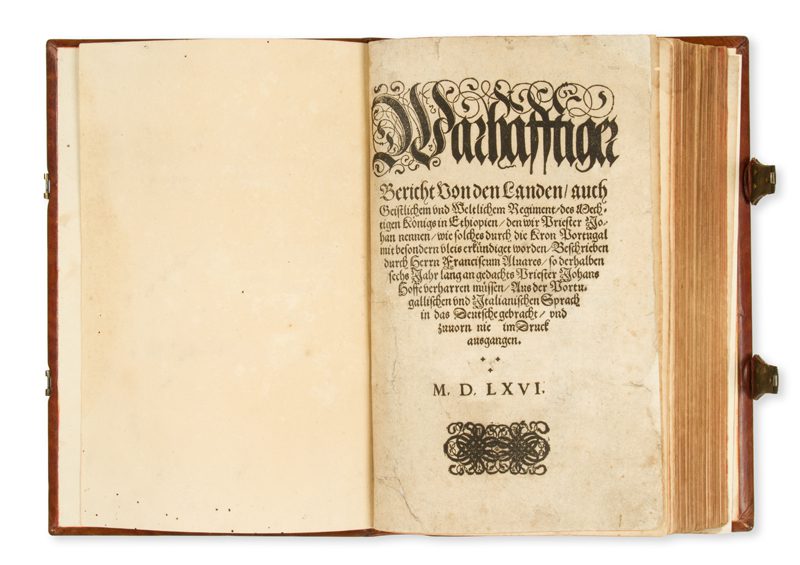
Warhafftiger Bericht von den Landen,
$50,000.00 AUD
auch geistlichem vnd weltlichem Regiment, des Mechtigen Könige in Ethiopien : den wir Priester Johan nennen, wie solches durch die Kron Portugal mit besondern vleis erfündiget worden. beschrieben durch Herrn Franciscum Aluares, so derhalben sechs Jahr lang an gedachts Priester Johans Hoffe verharren müssen ; aus der Portugallischen vnd Italianischen Sprache in das Deutsche gebracht, vnd zuuorn nie im Druck ausgangen.
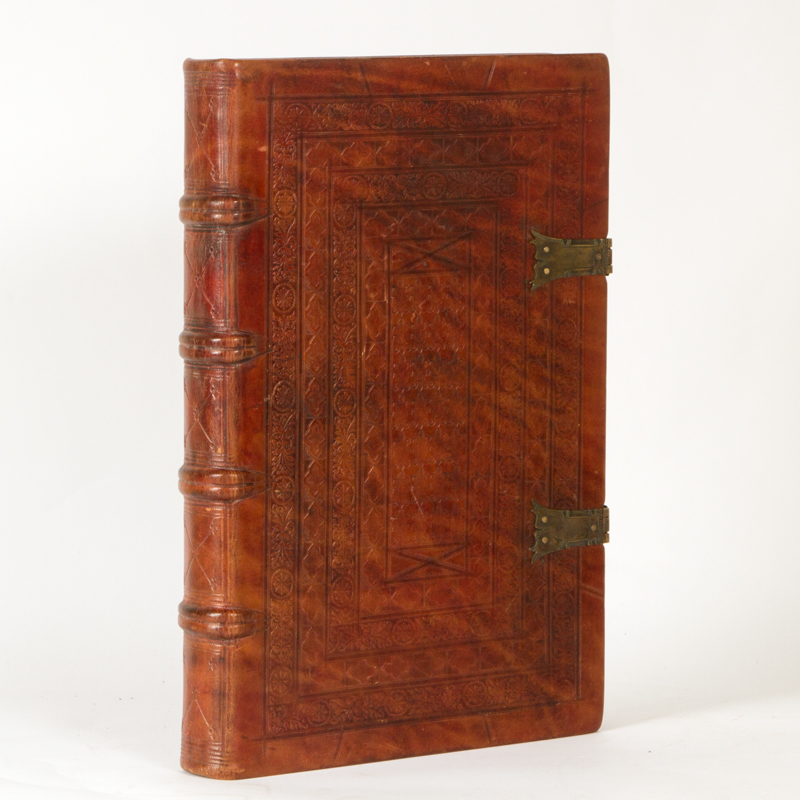
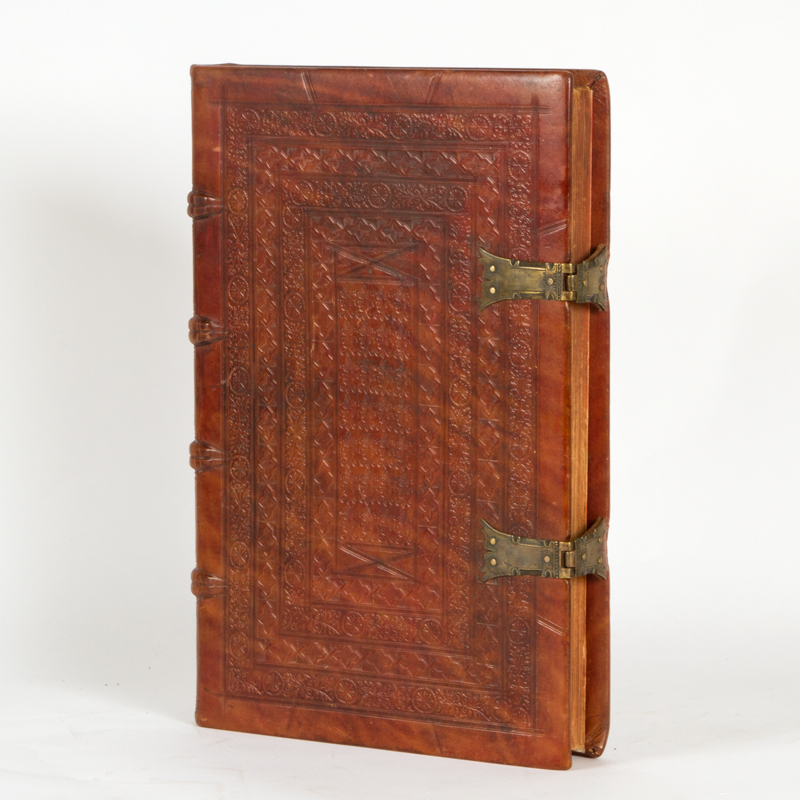
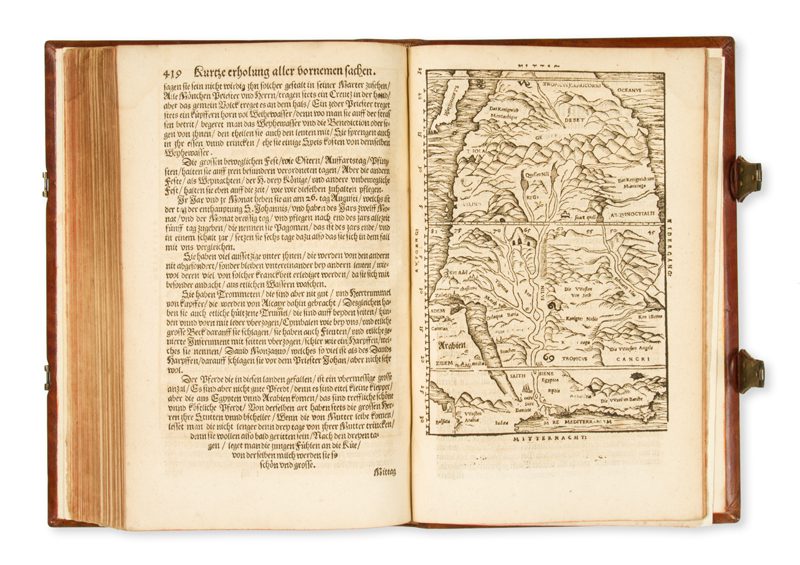
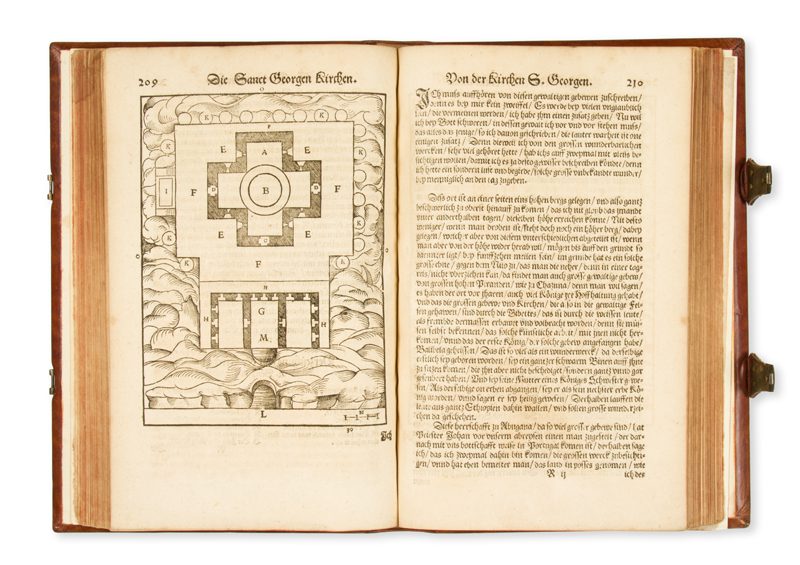
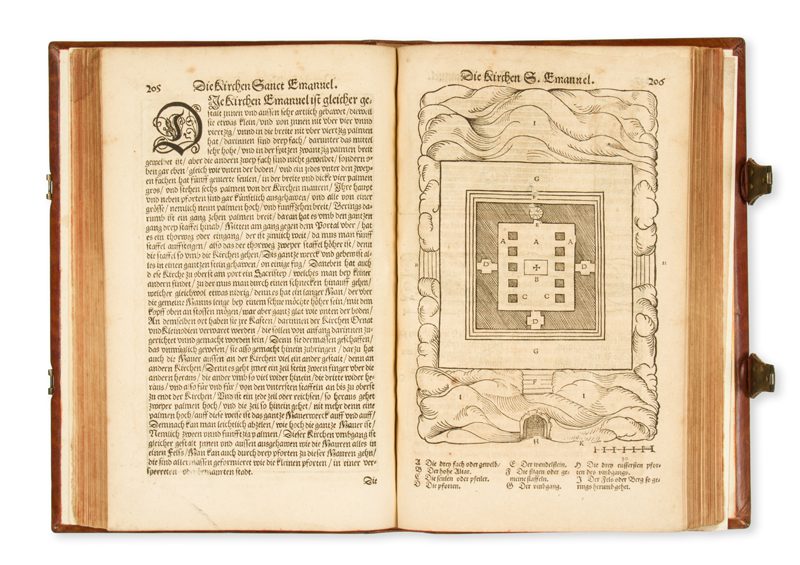
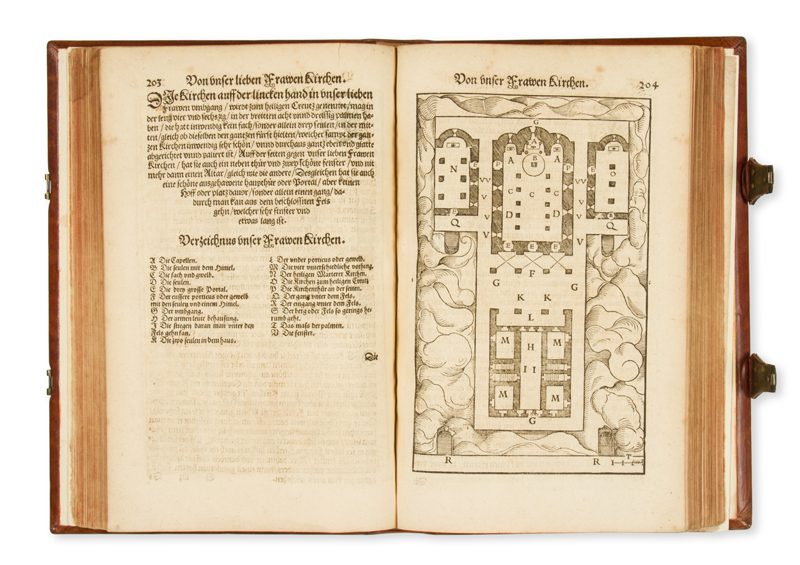
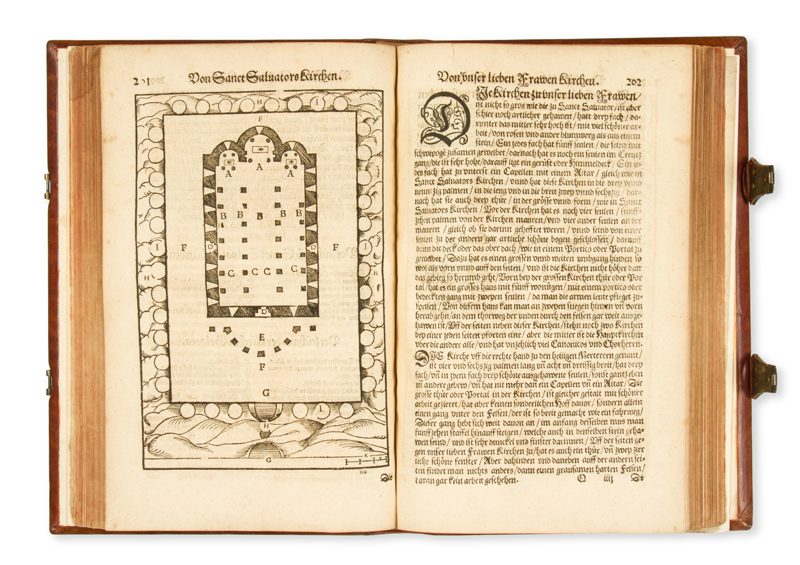
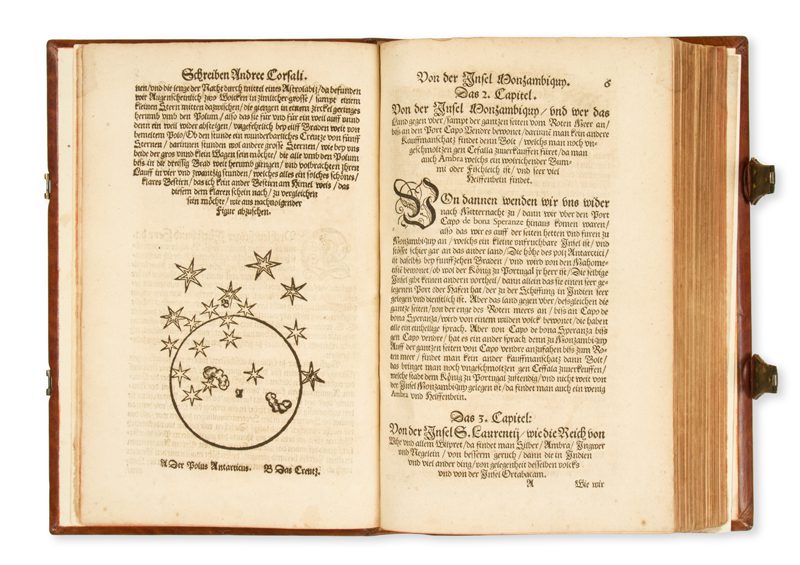
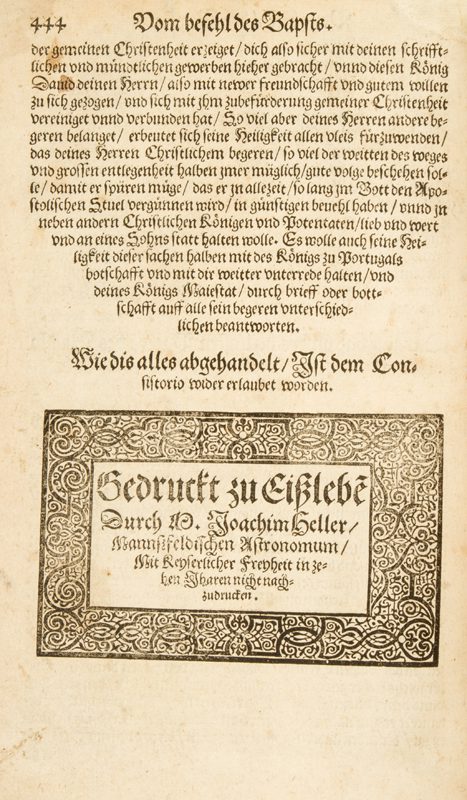
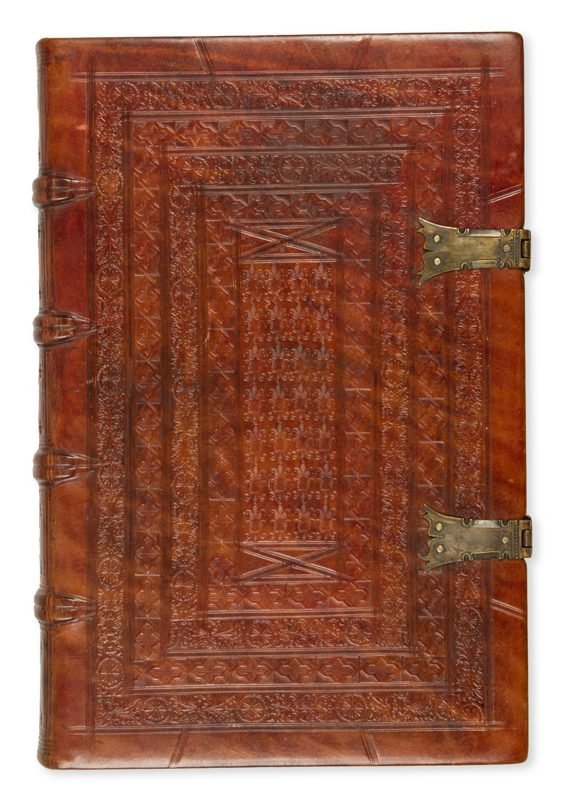
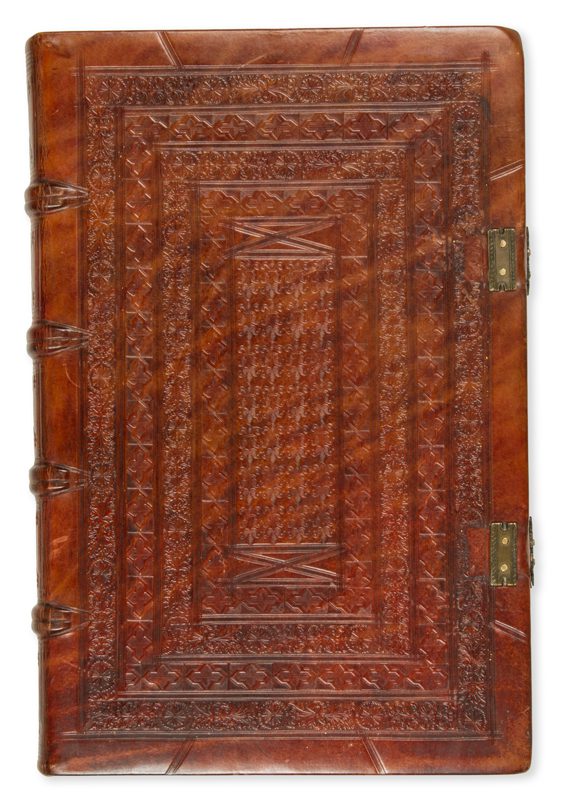
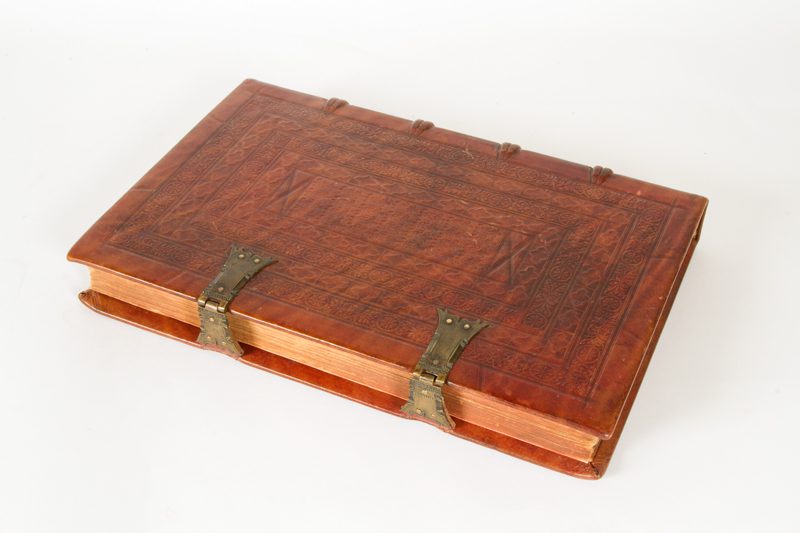
Gedruckt zü Eisslebẽ : Durch M. Joachim Heller, 1566. Folio, bound in ornately tooled modern calf with brass clasps; all edges stained red; pp [x], 444 [i.e. 436]; title with a couple of closed tears and repairs at edges; pale damp stain at upper outer corner of approximately first and last 40 leaves; illustrated with the important woodcut diagram of the Southern Cross constellation; plan of the Church of Golgotha; plan of the Church of Saint Salvator; plan of the Church of Our Lady; plan of the Church of St. Emanuel; elevations of the Church of St. Emanuel; plan of the Church of St. George; map of Africa from the Mediterranean to the Tropic of Capricorn; decorative initials and tail-pieces.
The first edition in German of this important Renaissance travel work. Father Francisco Alvares’ account of the Portuguese embassy to Ethiopia between 1520 and 1527 remained the most detailed and reliable source of information on that region of Africa for over a century. Part of Alvares’ work was originally published in Portuguese, in Lisbon in 1540, as Verdadera informaçam das terras do Preste Ioam; the first separate French edition, Historiale description de l’Ethiopie …, was published in Antwerp in 1558. Significantly, the German edition (like the French edition of 1558) also contains copies of letters from Helena, Queen of Abyssinia, to Manuel I of Portugal; Negus David II of Ethiopia to King John I of Portugal; and from the Italian explorer, Andrea Corsali, to his Florentine patron, Giuliano de Medici.
The inclusion of the two letters of Andrea Corsali is due to the fact that the explorer had spent the last period of his life in Ethiopia. In 1514-1515 he had travelled on board a Portuguese merchant ship on a voyage that made its way around Africa, across the Indian Ocean to Goa, then on to Cochin and the East Indies. Corsali was the first Westerner to identify the Southern Cross, and his description and illustration of this constellation (reproduced on page 6 in the present work), which he had carefully observed while crossing the Indian Ocean, were originally published in his Lettera (Florence, 1516). The letter is dated January 6, 1515 and was sent to his patron, Giuliano de Medici, from Cochin in India. Only three known copies of the 1516 edition survive; a second edition was printed in 1517, also an extreme rarity. The cruciform analogy used by Corsali to describe the constellation was adopted by navigators very early on, and by the early seventeenth century the terminology had become fixed in the various languages of the European maritime powers.
Corsali was the first European to identify the island of New Guinea, and the first letter also contains references to this discovery. Corsali also postulates the existence of a continent to the south of New Guinea, a highly significant early allusion to Terra Australis. The second of Corsali’s two letters, dated September 18, 1517, was sent to the Medicis from the Red Sea.
Along with the 1558 French edition of Alvares, the German edition of 1566 remains the most realistically obtainable of the earliest editions to include Corsali’s Lettera and diagram of the Southern Cross.
No copy recorded in Australian collections

