


# 50152
WELLS, H. G. (1866-1946)
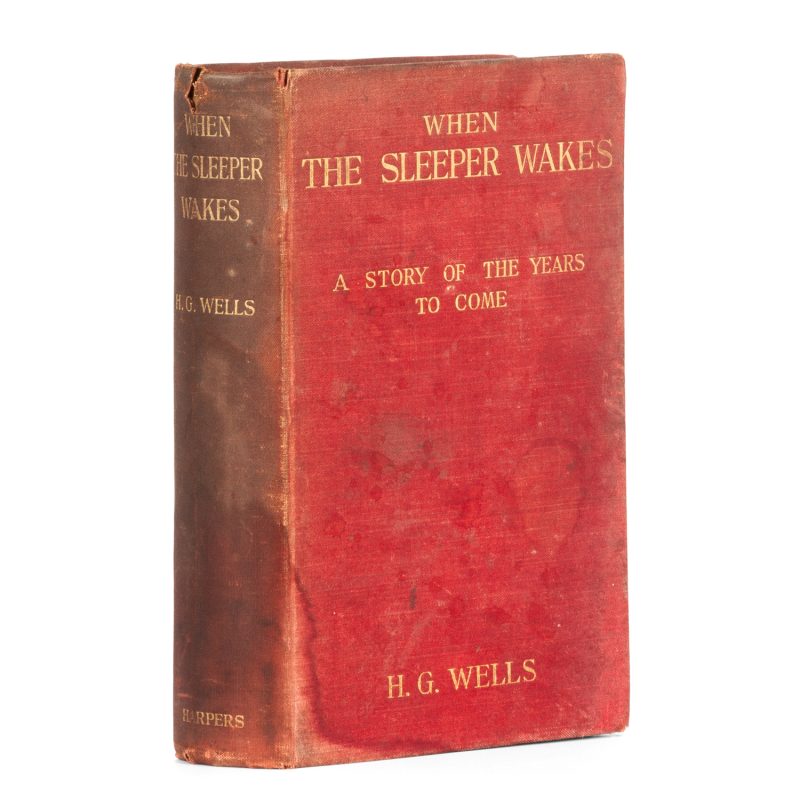
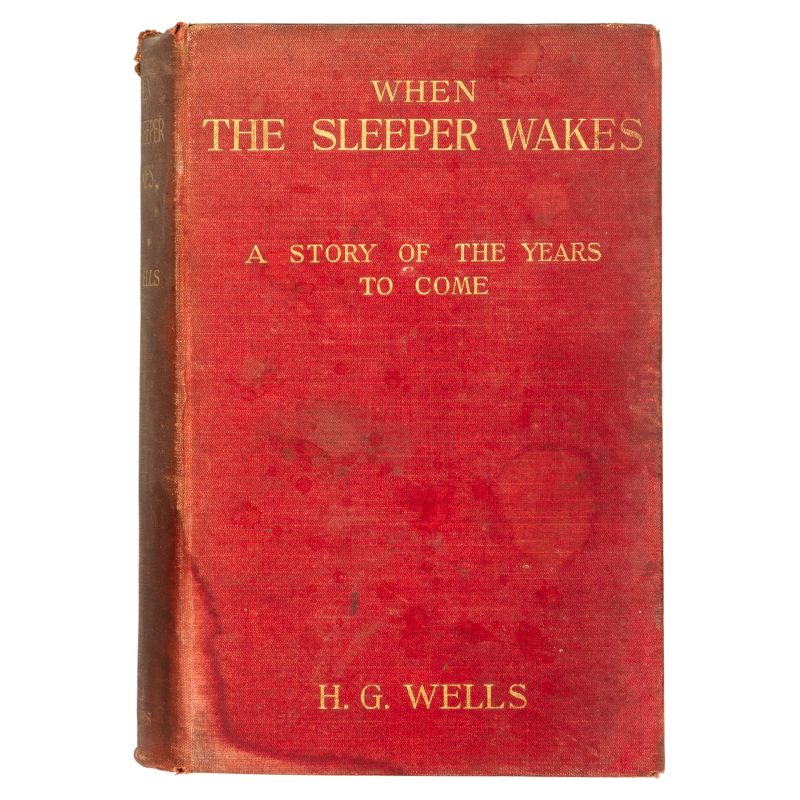
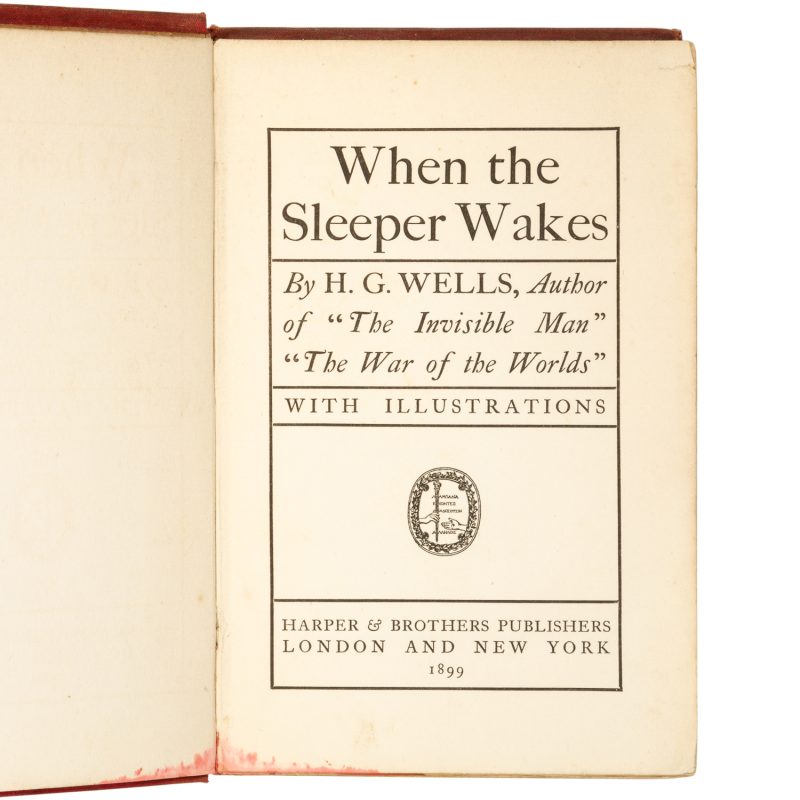
When the sleeper wakes : a story of the years to come. (Presentation copy inscribed by H. G. Wells for Hubert Bland)
$4,500.00 AUD
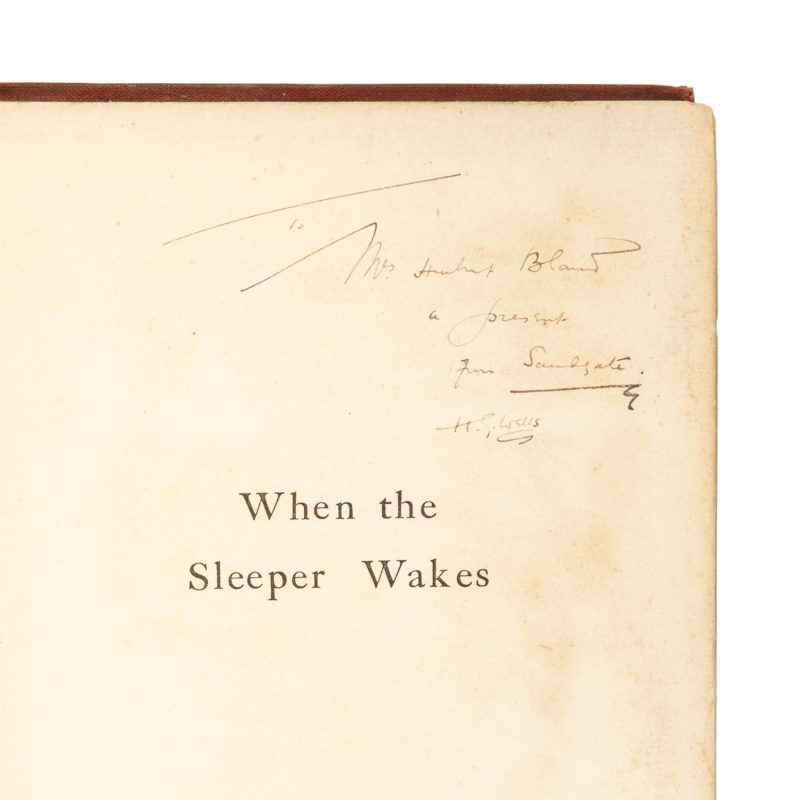
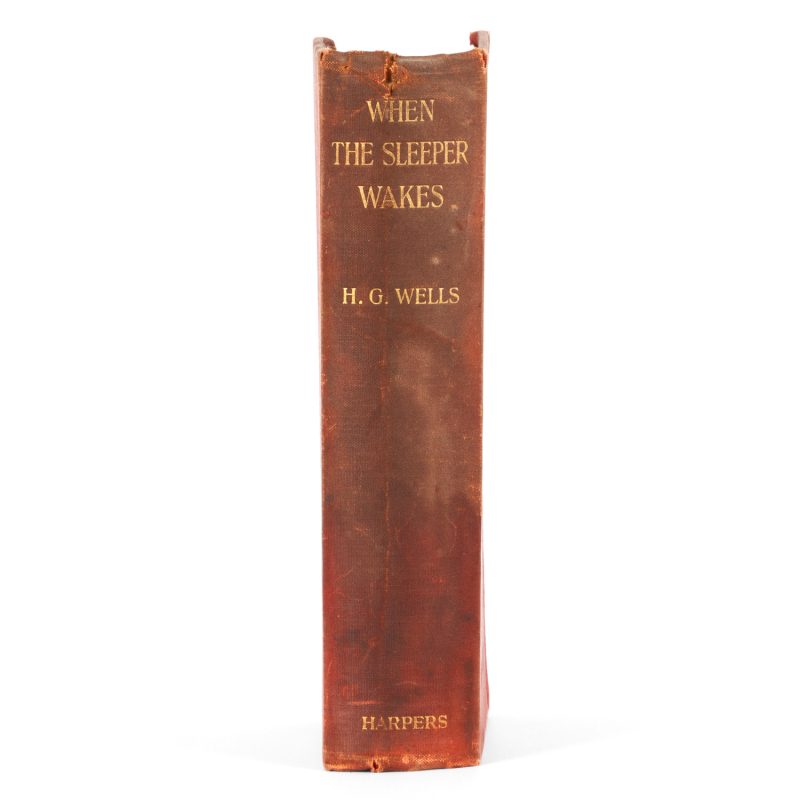
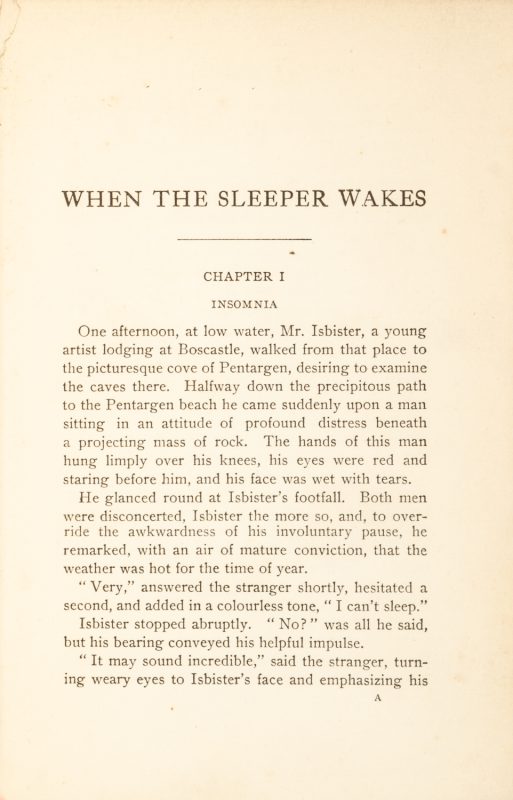
London and New York : Harper & Brothers Publishers, 1899. First edition. Octavo (200 x 130 mm), publisher’s gilt-lettered red cloth (boards heavily waterstained, spine darkened and frayed at ends); half-title with a presentation inscription in ink signed by the author: ‘To Mr. Hubert Bland / a present from Sandgate. H. G. Wells’; pp. [8], 329; illustrated with 2 (of 3) plates (lacking the frontispiece plate); front hinge split, text block starting to loosen in places, ex libris removed from pastedown.
It is well known that because of poor health, H. G. Wells rented two houses in the Kent seaside town of Sandgate in 1899-1900. In December 1900 he based himself there permanently when he moved into Spade House, which had been designed for him by C. F. A. Voysey. It was there that the writer would spend much of the next decade. Whether Wells was already ensconced at Spade House when he inscribed this copy of his dystopian novel When the sleeper wakes for Hubert Bland, is not clear. Bland was the husband of Wells’s close friend, the children’s writer and fellow Fabian, Edith Nesbit, whom Bland had married in 1880.
Provenance: Enid (Steele) Kelsey and Cyril E. Kelsey; thence by descent.
Through her membership in the Fabian Society, Enid Frances Emma Steele (1885-1939), along with her future husband Cyril E. Kelsey, was associated with such important figures as H. G. Wells, Edith Nesbit and her husband Hubert Bland, George Bernard Shaw, and the Pankhursts. After their marriage in 1911, Enid and Cyril Kelseys’ residence was 17 Northway (and later, 12 Wordsworth Walk), Temple Fortune, London, NW11, close to Hampstead, an area well known for its concentration of middle-class intellectuals including Fabians and Socialists. Both Enid and Cyril were silversmiths, and as members of the Guild of Handicraft were prominent in the Arts & Crafts movement. Enid was also a keen amateur thespian, and she and her husband co-wrote a play in the 1930s entitled The Stars.
How did Enid Steele (and/or Cyril Kelsey) come into possession of Hubert Bland’s copy of an H. G. Wells novel personally inscribed to him by the celebrated science-fiction writer? The answer almost certainly lies in the bitter falling out between Edith Nesbit and Wells that occurred in 1908, owing to the pair’s serious ideological differences within the Fabian Society and also to the unprincipled conduct of the philanderer Wells, who had been carrying on a sexual affair with Rosamund Bland, Edith Nesbit’s adopted daughter. (Rosamund was, in fact, Hubert Bland’s biological daughter by another partner, Alice Hoatson, born six years into his marriage with Edith). Surely the latter circumstance alone would have been sufficient reason for the Blands to banish from their household any object – including a signed book – that reminded them of Wells.
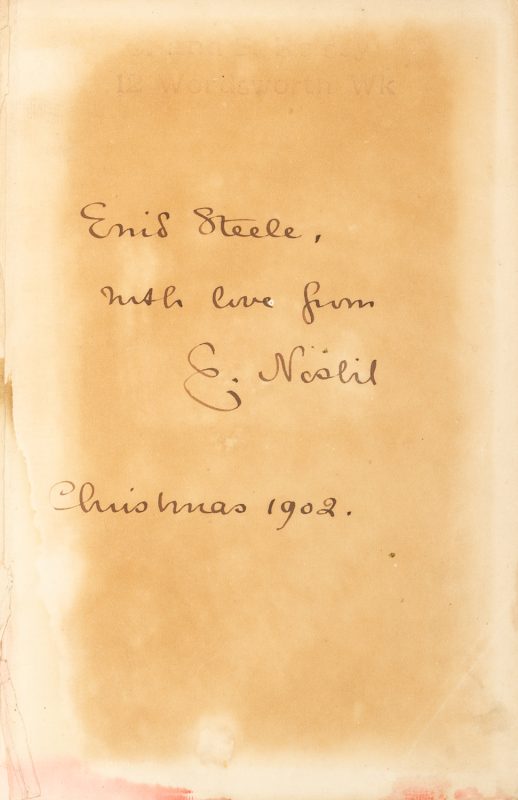
[TOGETHER WITH] NESBIT, Edith. Five Children and It. London: T. Fisher Unwin, George Newnes, 1902. First edition. Octavo, publisher’s gilt red cloth. A severely defective copy, heavily waterstained, and with cracked hinges and text block starting to separate; however, it is a presentation copy from the author Edith Nesbit (wife of Hubert Bland) to Enid Steele, inscribed in ink on the (loose) front free-endpaper: ‘Enid Steele, with love from E. Nesbit / Christmas 1902’. This confirms that the Blands were close friends of Enid Steele long before her marriage to Cyril Kelsey in 1911; it would therefore not be surprising if they had indeed passed on to Enid their inscribed copy of When the sleeper wakes, which would explain how an H. G. Wells book presented to Hubert Bland ended up in the Kelseys’ library.

